Cama LED
Información
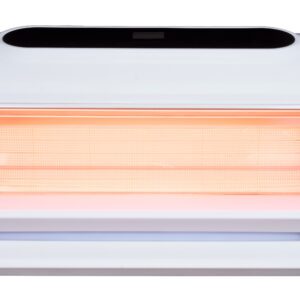
Las camillas de terapia LED proporcionan una exposición a la luz de cuerpo completo durante sesiones de tratamiento cortas que suelen durar entre 10 y 20 minutos.Los centros de bienestar, los estudios de recuperación y las clínicas estéticas utilizan estas camillas para sesiones no invasivas dirigidas principalmente a la piel, con efectos secundarios observados en el tejido musculoesquelético (1). Estos sistemas no utilizan luz ultravioleta. En cambio, funcionan con longitudes de onda específicas de luz roja e infrarroja cercana, comúnmente utilizadas en la fotobiomodulación (2).
Sistemas de terapia LED de cuerpo completo para uso profesional
La mayoría de los sistemas comerciales están equipados con grandes conjuntos de LED de grado médico diseñados para cubrir todo el cuerpo., generalmente dispuestas en formato de dosel y banco o cápsula de 360° y funcionan con luz roja de 630-660 nm e infrarrojo cercano de 810-850 nm. Estas longitudes de onda son absorbidas por la citocromo c oxidasa dentro de las mitocondrias, lo que favorece la producción de ATP y ayuda a reducir el estrés oxidativo a nivel celular (3).
Las camillas de fototerapia comerciales están diseñadas para un alto volumen de pacientes. En entornos clínicos, las sesiones de tratamiento suelen ser breves, mientras que los temporizadores automáticos y los sistemas de control integrados simplifican el funcionamiento para el personal (4). La irradiancia oscila entre aproximadamente 30 y 100 mW/cm². En el extremo superior, las sesiones se acortan y una clínica puede programar más citas al día (5). Los dispositivos con autorización FDA Clase II 510(k) y certificación de seguridad fotobiológica IEC 62471 proporcionan a las clínicas la documentación reglamentaria necesaria para su uso profesional (6).
Aplicaciones y beneficios de las camas de terapia LED
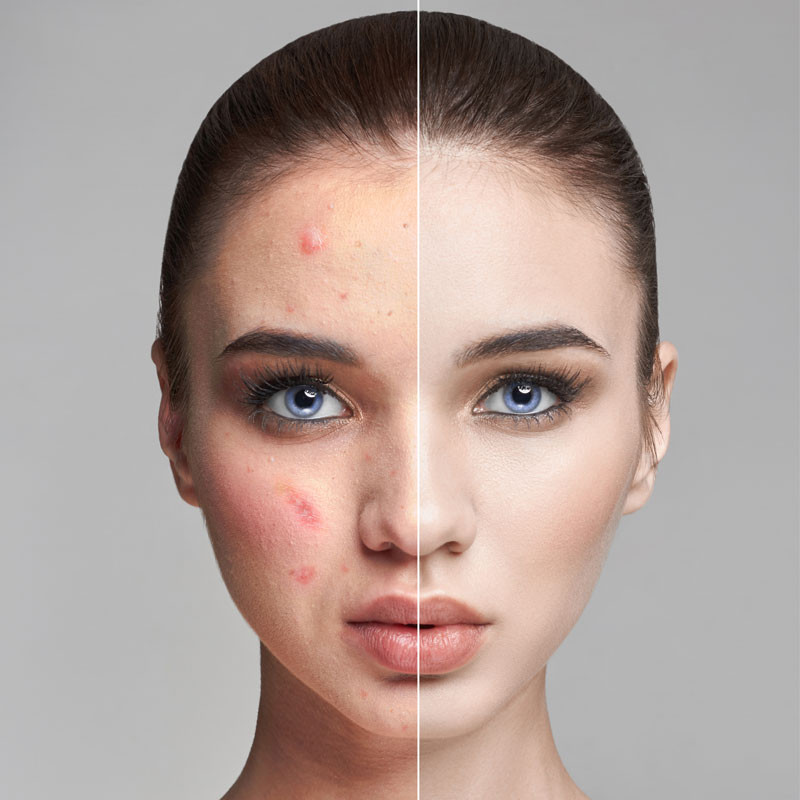
Las camillas de terapia LED se utilizan actualmente en centros de bienestar, recuperación y estética. En los spas médicos, estos sistemas se incluyen con frecuencia en programas de bienestar centrados en la piel y en procedimientos de rejuvenecimiento no invasivos, y la literatura clínica informa de mejoras observadas en parámetros de apariencia de la piel como la textura, la elasticidad y el tono (7).
Los centros de recuperación y rehabilitación siguen incorporando sistemas de cuerpo completo a su cartera de servicios. En muchos centros, estos sistemas se combinan con procedimientos no invasivos para la piel, mientras que los centros deportivos y de recuperación suelen integrarlos en servicios orientados a la recuperación muscular y al rendimiento.
Comercialmente, las camas de relajación suelen considerarse servicios recurrentes, no procedimientos puntuales. Las estructuras de precios, los modelos de membresía y los paquetes de bienestar combinados varían considerablemente según el modelo de negocio y el público objetivo. Dado que los tratamientos no son quirúrgicos y generalmente no requieren tiempo de recuperación, muchos centros los integran en su oferta de servicios existente sin grandes cambios operativos.
Cómo elegir la camilla de terapia LED adecuada para uso comercial
Las clínicas que comparan equipos LED profesionales van mucho más allá del diseño visual de la unidad. La configuración de cobertura suele ser el primer aspecto a considerar, ya que algunos sistemas están diseñados para una exposición focalizada, mientras que otros ofrecen tratamientos de cuerpo completo con configuraciones tipo dosel o de paneles envolventes. La configuración de la longitud de onda es otro factor clave, pues muchos sistemas combinan luz roja e infrarroja cercana, y algunas plataformas ofrecen longitudes de onda adicionales para una mayor flexibilidad en los protocolos. Las características operativas tienen mayor peso en las clínicas con alto volumen de pacientes. Algunos sistemas comerciales incluyen protocolos de tratamiento programables, controles automatizados, sistemas de posicionamiento ajustables o funciones de elevación motorizadas. Los compradores también suelen revisar la vida útil estimada de los componentes, la cobertura de la garantía, el acceso a repuestos y los servicios de soporte del fabricante antes de tomar una decisión final de compra.
Suministros UVTREAT equipos de fototerapia y Sistemas de terapia LED Brinda apoyo para la incorporación, documentación de cumplimiento y asistencia técnica a clínicas que operan en diferentes regiones. Si bien el término «camas de fototerapia» se usa comúnmente en búsquedas en línea, los sistemas profesionales de fototerapia se fabrican con mayor frecuencia como gabinetes, paneles o dispositivos portátiles, según la aplicación clínica.
Referencias
- ASociedad Estadounidense de Medicina y Cirugía Láser. Fotobiomodulación. aslms.org
- Biblioteca Nacional de Medicina, base de datos MeSH. Entrada de fotobiomodulación, 2016.
- Hamblin MR. Mecanismos y señalización redox mitocondrial en la fotobiomodulación. Fotoquímica y fotobiología, 2018 (PMC5523874).
- Red Light Wellness. Camilla profesional de terapia de luz roja Max Miracle 9600. redlight-wellness.com
- Red Light Wellness. Las mejores camas de terapia de luz roja: Guía del comprador 2026. redlight-wellness.com
- Base de datos de notificaciones previas a la comercialización 510(k) de la FDA de EE. UU. accessdata.fda.gov
- Wunsch A, Matuschka K. Ensayo controlado para determinar la eficacia del tratamiento con luz roja e infrarroja cercana en la satisfacción del paciente, la reducción de líneas finas, arrugas, aspereza de la piel y el aumento de la densidad de colágeno intradérmico. Fotomedicina y cirugía láser, 2014.
- Terapia de fotobiomodulación de cuerpo entero con cama de luz sobre la creatina quinasa y la interleucina-6 salival en hombres entrenados: un estudio cruzado aleatorizado. PMC7739664.
- Medicina de Stanford. Terapia con luz roja: Lo que dice la ciencia, 2025. med.stanford.edu
- Red Light Wellness. Camas de terapia de luz roja comerciales: La guía completa del comprador. redlight-wellness.com
- Camas de terapia de luz roja RRC LED. arrcled.com
- Hue Light USA. Cómo elegir un dispositivo de terapia de luz roja. huelightusa.com
- LightStim. Cama LED Pro para entornos comerciales.lightstim.com
- Cápsula de luz Prism. Especificaciones y garantía. thespabutler.com
- Especificaciones de TheraLight 360. davincimedicalusa.com
- Clínica Cleveland. Resumen de referencia para pacientes sobre la terapia con luz roja.clevelandclinic.org
- Transpire Insight. Informe de mercado de camas de terapia de luz roja, 2026-2033.
- Fotobiomodulación: Revisión sistemática de la seguridad oncológica de la terapia con luz de baja intensidad para el rejuvenecimiento estético de la piel. PMC10309024.
- IEC 62471: Norma sobre seguridad fotobiológica de lámparas y sistemas de iluminación.
Preguntas frecuentes
- La camilla de fototerapia LED es un dispositivo de fotobiomodulación de cuerpo completo que utiliza luz roja e infrarroja cercana, sin rayos UV. Las longitudes de onda rojas actúan sobre los tejidos superficiales, mientras que la luz infrarroja cercana alcanza estructuras más profundas. Las sesiones son cortas y no requieren tiempo de recuperación, por lo que las clínicas suelen incluirlas en protocolos de bienestar y recuperación no invasivos.
- En el ámbito estético: spas médicos, clínicas dermatológicas y consultorios de dermatología, generalmente dentro de programas centrados en el cuidado de la piel. En el ámbito de la rehabilitación: consultorios quiroprácticos, clínicas de fisioterapia e instalaciones para el rendimiento deportivo. Los gimnasios, los estudios de biohacking y los centros de bienestar con membresías de recuperación también los están incorporando.
- Comience con el estado regulatorio: autorización de Clase II de la FDA, además de las certificaciones de seguridad eléctrica y fotobiológica pertinentes. Luego, compare la irradiancia medida a la distancia de tratamiento, no el recuento bruto de LED ni las cifras de marketing. Confirme si la cobertura es localizada o realmente de cuerpo completo. Después, revise los requisitos de instalación, el espacio disponible, la alimentación eléctrica, la garantía, la vida útil de los LED, el acceso a las piezas y el soporte del fabricante. Las clínicas de alto volumen también querrán protocolos programables y controles orientados al flujo de trabajo.
- Profundidad de penetración y tejido objetivo. La luz roja a 630–660 nm se absorbe cerca de la superficie y se utiliza para mejorar el tono de la piel y obtener resultados cosméticos. La cama de luz infrarroja cercana a 810–850 nm penetra más profundamente en músculos, articulaciones y tejido conectivo. La mayoría de los equipos profesionales incorporan ambas bandas en un solo dispositivo (18).