Psoriasis vs Fungal Infection: How to Tell the Difference
Hardly a week goes by without someone walking in with a red, flaky patch they’ve been treating with the wrong cream for a month. The patch itches, it scales, it won’t go away and by the time they show up, they’ve tried antifungal ointment, tea tree oil, and whatever their neighbor recommended. The trouble is thatskin rash causes overlap visually more than people expect. Psoriasis and fungal infections are probably the most commonly swapped diagnoses I encounter. And the swap matters, because treating one as the other doesn’t just fail, it can make things worse.
What surprises most patients is how often this confusion happens even among physicians. GW University researchers published a survey in the JAAD where they showed dermatologists clinical photos of fungal skin infections. Half got the diagnosis wrong (20).
Psoriasis vs infección fúngica: comparación rápida
La psoriasis es una enfermedad cutánea autoinmune: el sistema inmunológico ataca tus propias células de la piel y las obliga a reproducirse demasiado rápido. Una infección fúngica está causada por un organismo real que vive en la piel. Mecanismos completamente diferentes, tratamientos completamente diferentes.
Pero como pueden parecer sorprendentemente similares a simple vista, aquí tienes una comparación que cubre las diferencias prácticas:
Erupción en forma de anillo, con aclaramiento central
Ubicación
Codos, rodillas, cuero cabelludo, zona lumbar
Pliegues cutáneos, ingles, pies
Patrón
A menudo bilateral
Generalmente unilateral
Evolución
Crónica
Se extiende hasta tratarse
Escama
Gruesa, plateada, adherida
Más fina, principalmente en los bordes
Uñas
Punteado, separación de la lámina
Amarillas, gruesas y quebradizas
Tratamiento
Biológicos, antiinflamatorios, fototerapia
Cremas antifúngicas o medicamentos orales
¿Curable?
No, pero manejable
Sí
Qué es la psoriasis
Alrededor de 125 millones de personas en todo el mundo padecen psoriasis, y en Estados Unidos se considera la enfermedad autoinmune más común. Actualmente entendemos bastante bien su mecanismo celular. Los linfocitos T, que deberían atacar amenazas reales, funcionan incorrectamente y provocan inflamación en la piel. Esa señal inflamatoria acelera el ciclo de crecimiento de los queratinocitos a un ritmo anormal. Las células que normalmente tardan unos 28 días en madurar alcanzan la superficie en tres o cuatro días. Se acumulan. Se forman placas.
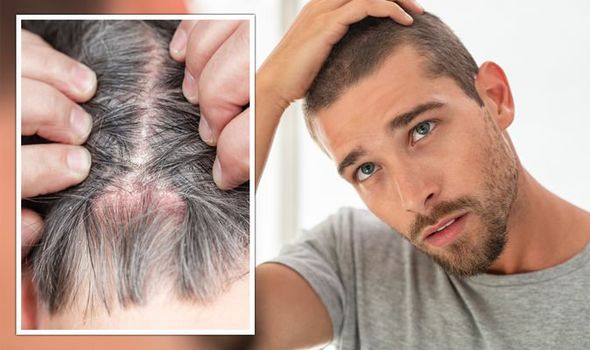
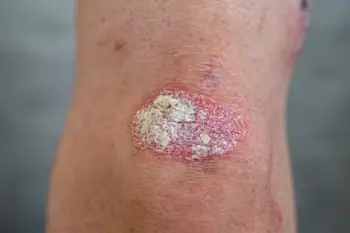
La psoriasis en placas es, con diferencia, la forma más común. Estas placas tienen un aspecto característico: elevadas, con bordes bien definidos y una escama blanco-plateada que se adhiere a la superficie. Suelen aparecer en codos, rodillas, cuero cabelludo y zona lumbar. Un patrón clínico tiene un peso diagnóstico importante: la simetría bilateral. Placas casi idénticas en ambos codos o ambas piernas orientan fuertemente hacia psoriasis. Las manchas rojas y escamosas en la piel pueden ser difíciles de identificar al principio, pero se vuelven más claras cuando se observa esta distribución bilateral.
¿La psoriasis es un hongo? Me hacen esta pregunta al menos una vez a la semana. No. La psoriasis no está causada por ningún tipo de infección. No es contagiosa, no se transmite a tu pareja ni a tus hijos, y tiene un fuerte componente genético. Aproximadamente el 30% de los pacientes desarrollan artritis psoriásica a lo largo de la enfermedad. A diferencia de las lesiones cutáneas, el daño articular es irreversible, lo que hace que un diagnóstico temprano y una guía estructurada de tratamiento de la psoriasis sean especialmente importantes.
Qué es una infección fúngica
Tiña. Getty Images/phanasitti
La mayoría de las infecciones fúngicas que imitan la psoriasis están causadas por dermatofitos, principalmente especies de Trichophyton. Candida aparece en pliegues cutáneos, mientras que Malassezia afecta zonas sebáceas. Diferentes organismos, pero todos se alimentan de queratina, lo que determina su localización en el cuerpo: piel, uñas y cabello. Las cifras son altas: una de cada cuatro personas en el mundo tiene una infección dermatofítica en algún momento.
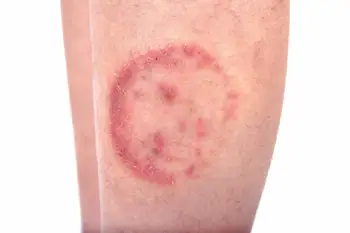
La tiña es la más conocida, aunque no implica ningún gusano. Clínicamente se denomina tinea corporis: una lesión en forma de anillo con borde rojo, escamoso y en expansión, y aclaramiento parcial en el centro. Otras formas comunes incluyen pie de atleta (tinea pedis), tiña inguinal (tinea cruris) y hongos en las uñas de los pies (onicomicosis).
La diferencia clave es que los dermatofitos se propagan: de toalla a piel, del suelo del gimnasio al pie, de mascotas a personas, y entre miembros de la familia.
Diferencias clave en los síntomas
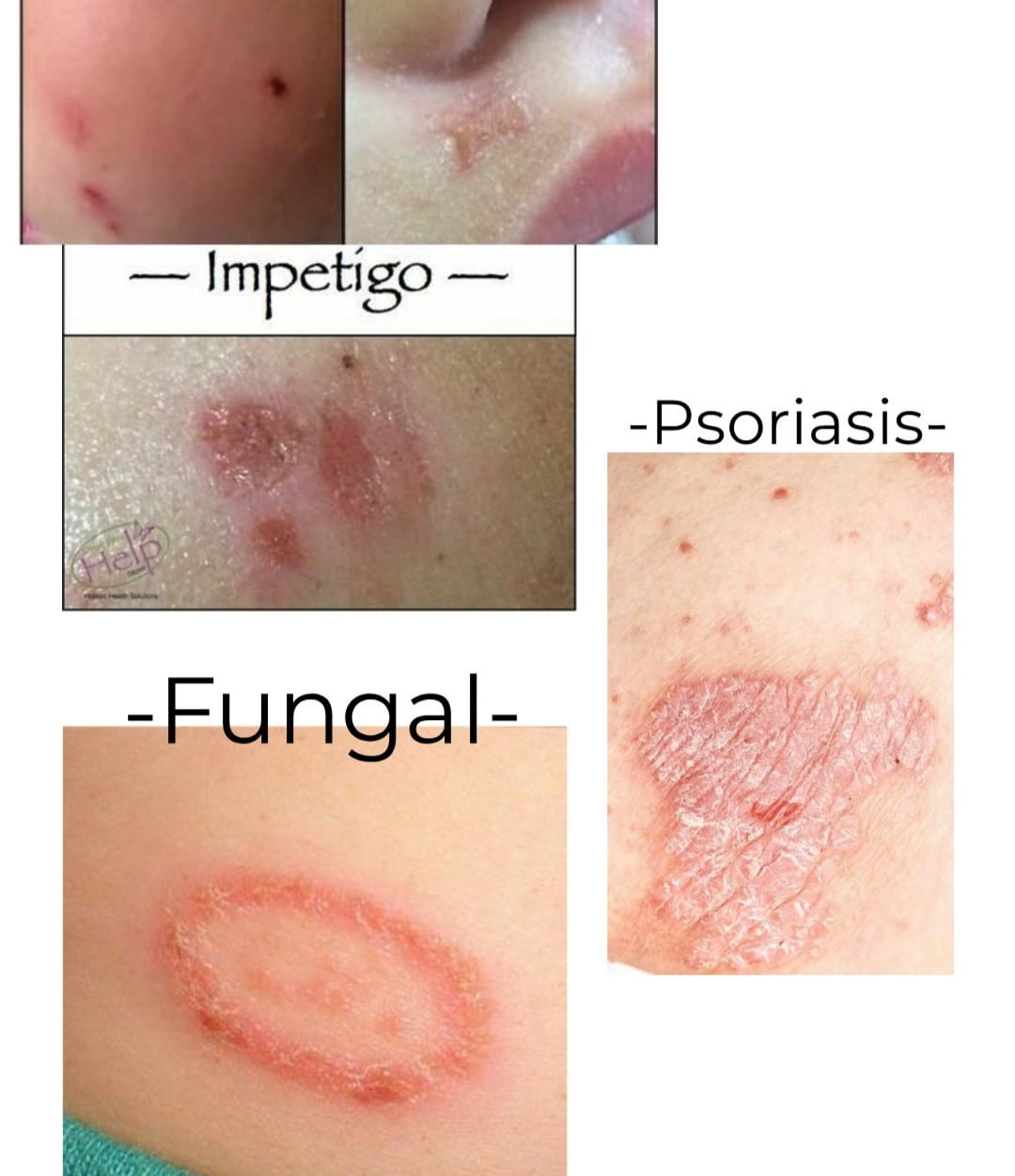
La forma más rápida de diferenciar los síntomas de una infección por hongos de los de la psoriasis radica en su forma. Las placas de psoriasis son sólidas. Presentan inflamación uniforme, están cubiertas de una gruesa capa de escamas adherentes y carecen de anillos o arcos. Las lesiones por dermatofitos tienen un aspecto diferente: la infección es más activa en su borde en expansión, lo que produce ese característico reborde elevado, mientras que el interior cicatriza parcialmente. Si observa un anillo, piense en hongos. Si observa una placa sólida con escamas plateadas, piense en psoriasis.
La ubicación de la lesión también es importante. La afectación cutánea por infecciones por hongos y por psoriasis presenta preferencias anatómicas diferentes. Los hongos buscan la humedad: entre los dedos de los pies, en la ingle, debajo de los senos. La psoriasis prefiere las superficies más secas y expuestas. Sin embargo, existe una particularidad que suele confundir a muchos médicos. La psoriasis inversa aparece en los pliegues de la piel y no se parece en nada a la psoriasis en placas típica. Es lisa, brillante, a veces húmeda, prácticamente idéntica a la tiña inguinal. Aproximadamente el 25 % de los pacientes con psoriasis presentan esta variante (19). Si intentas decidir si se trata de psoriasis o tiña y la erupción se encuentra en la ingle o la axila, no adivines. Hazte una prueba.
Las uñas complican aún más las cosas. Las uñas psoriásicas desarrollan hoyuelos y onicólisis: la placa se separa del lecho ungueal. Las uñas con hongos se vuelven amarillas, gruesas y quebradizas (2). Suena sencillo en teoría, pero la superposición es enorme. Entre el 10 y el 56 por ciento de los pacientes con psoriasis ungueal también presentan una infección por hongos (17). Una preparación con hidróxido de potasio (KOH), que consiste en raspar la uña y disolver la queratina con hidróxido de potasio para buscar elementos fúngicos, permite un diagnóstico rápido.
El tiempo también es importante. La psoriasis es crónica: se agrava durante periodos de estrés, remite y luego reaparece. Una infección por hongos no sigue un ciclo. Simplemente crece hasta que se elimina el microorganismo. ¿Una mancha que ha permanecido en el mismo lugar durante meses sin expandirse? Es mucho más probable que sea psoriasis.
Diferencias en el tratamiento
Aquí es donde la distinción entre psoriasis e infección fúngica tiene las consecuencias más prácticas.
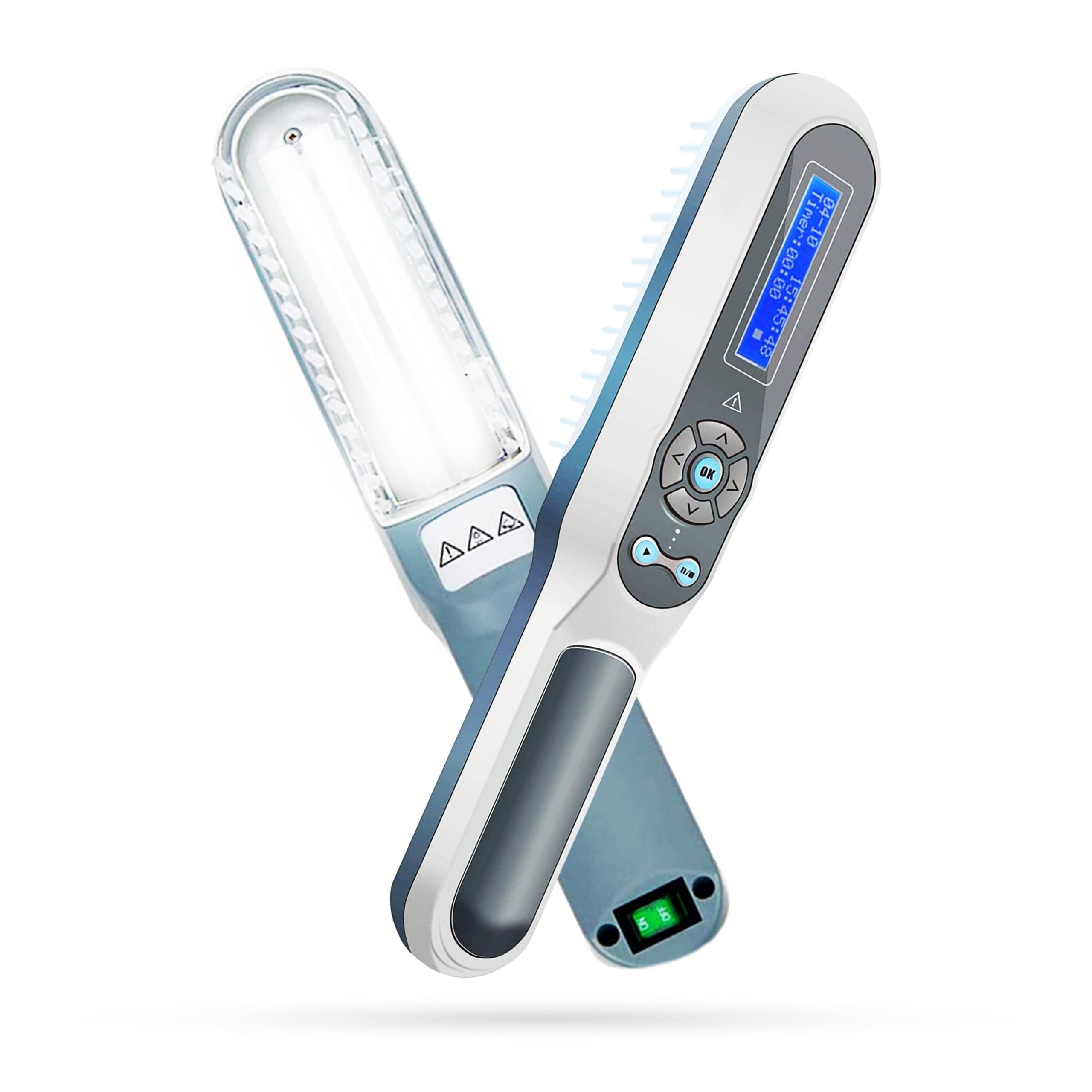
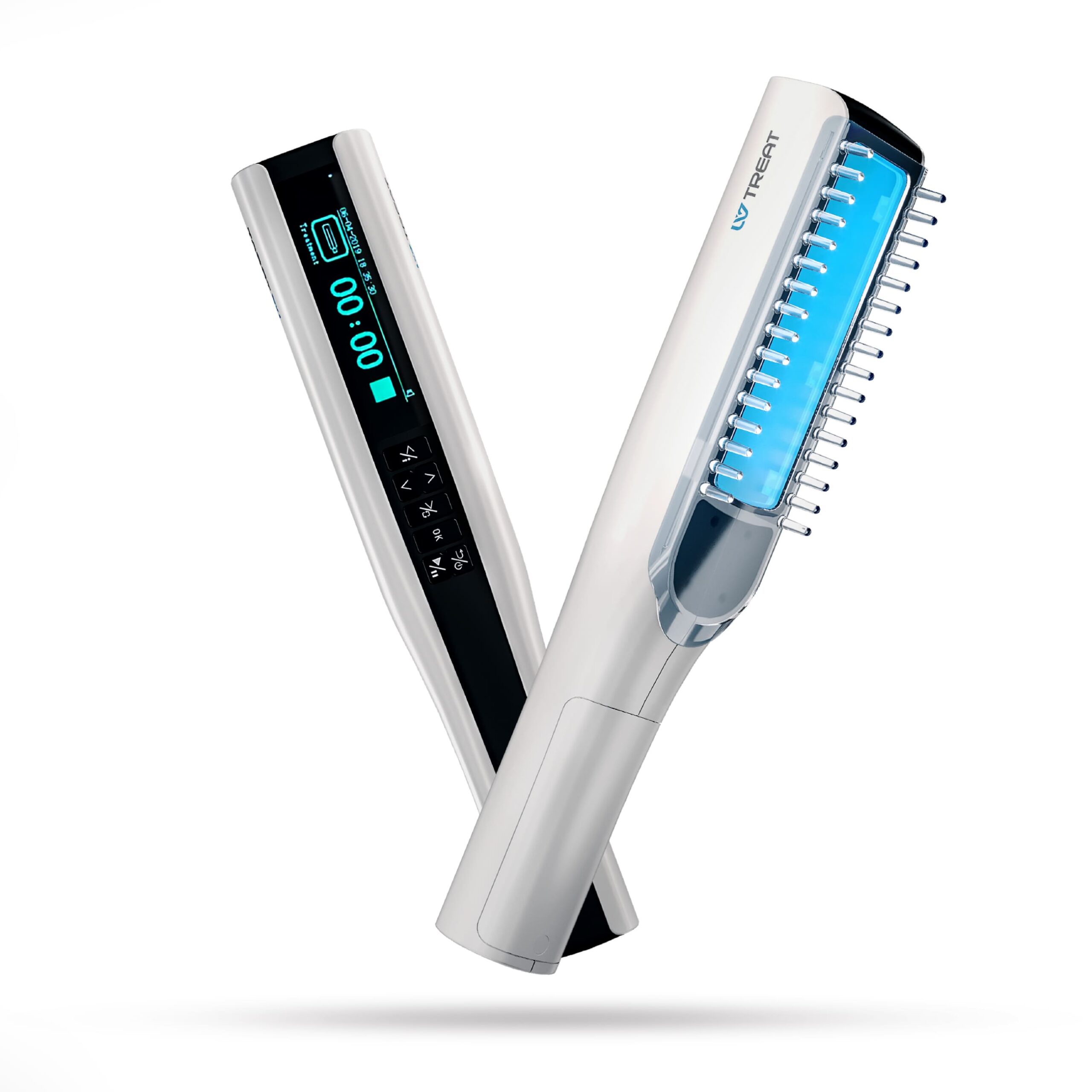
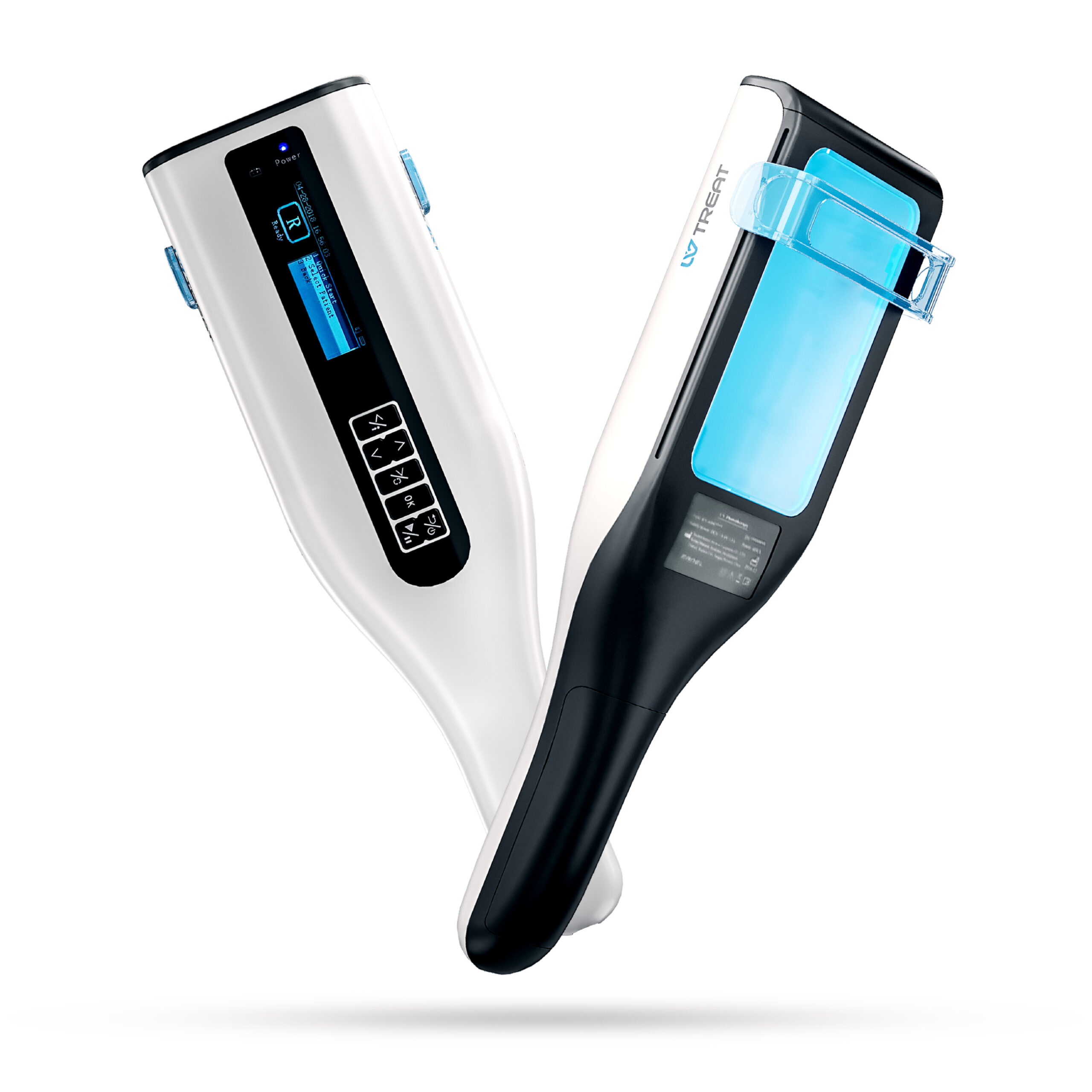
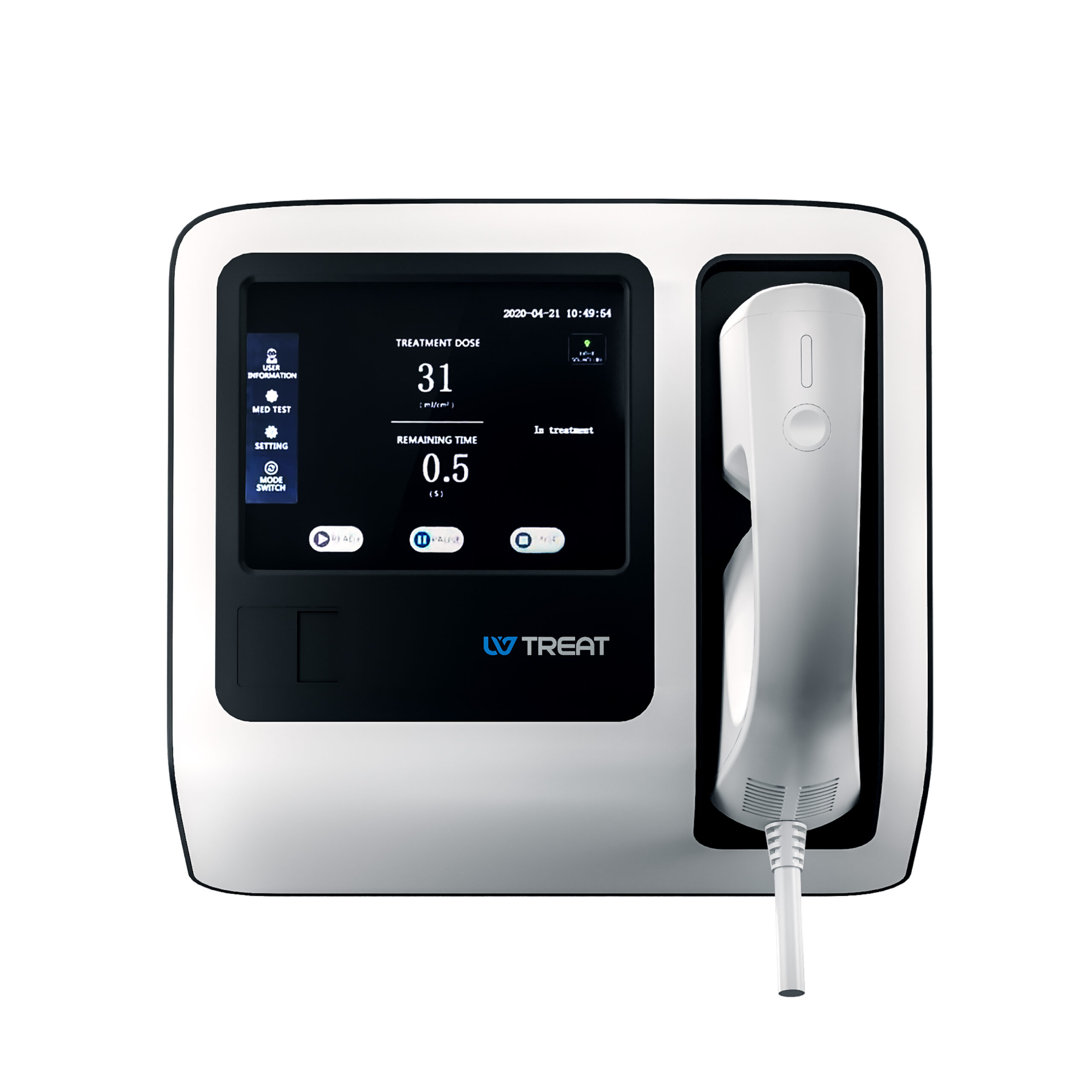
El manejo de la psoriasis en la enfermedad leve a moderada generalmente comienza con corticosteroides tópicos y análogos de la vitamina D como el calcipotriol (3). Cuando eso no es suficiente —y en un número considerable de pacientes no lo es—, la fototerapia UVB de banda estrecha es el siguiente paso estándar. Los datos de las guías de fototerapia de la AAD/NPF sitúan la tasa de respuesta PASI-75 para los protocolos completos de NB-UVB en aproximadamente el 70 por ciento —un umbral clínicamente significativo que representa una reducción del 75 por ciento o más en la carga de la enfermedad (11). Y el ensayo LITE publicado en JAMA Dermatology en 2024 —un sólido estudio pragmático que involucró a 783 pacientes en 42 centros en Estados Unidos— mostró que la terapia de luz UV para la psoriasis realizada en casa funcionó igual de bien que el tratamiento en consulta, con mejor adherencia (9). Cuando la fototerapia no logra una mejoría suficiente —y en un subgrupo de pacientes no lo hará—, la escalera de tratamiento pasa al ámbito sistémico. El metotrexato y la ciclosporina siguen siendo opciones. Los biológicos dirigidos contra IL-17, IL-23 o TNF-α han cambiado de manera sustancial el panorama para los fenotipos de moderados a graves (3, 4)
Las infecciones dermatofíticas localizadas responden a tratamientos antifúngicos tópicos de venta libre tratamientos antifúngicos —clotrimazol, miconazol, terbinafina. La afectación ungueal o la afectación extensa requieren terbinafina oral o itraconazol (18). La distinción crítica: la terapia antifúngica termina con la curación. La terapia para la psoriasis no
Ahora bien, ¿qué sale mal con el tratamiento incorrecto? La crema antifúngica sobre la psoriasis no hace absolutamente nada —no hay ningún hongo que eliminar. La inflamación autoinmune continúa, y has perdido semanas sin ningún beneficio (16). Ir en la dirección opuesta es peor. Los esteroides tópicos sobre una infección fúngica reducen la respuesta inmunitaria local, y el hongo se expande. La forma clásica en anillo desaparece, la erupción se transforma en algo atípico —una condición llamada tinea incognito. Un caso publicado involucró a un hombre de 64 años cuyos años de uso de esteroides tópicos enmascararon una infección dermatofítica en expansión. Necesitó antifúngicos sistémicos para eliminar el hongo antes de que su psoriasis pudiera ser abordada en absoluto (14).
Cuándo consultar a un médico
Dos semanas de tratamiento de venta libre (OTC) sin una mejoría visible justifican una derivación a dermatología. Lo mismo se aplica a cualquier lesión que esté expandiéndose activamente o cambiando su morfología. Una preparación de KOH a pie de cama puede realizarse e interpretarse en menos de cinco minutos. El cultivo fúngico requiere más tiempo, pero proporciona una identificación definitiva del organismo y datos de sensibilidad
Desde el punto de vista morfológico, estos dos diagnósticos pueden superponerse hasta un grado que engaña incluso a ojos experimentados. Desde el punto de vista patológico, pertenecen a categorías completamente distintas — autoinmune frente a infecciosa — y cada una empeora bajo el protocolo de tratamiento de la otra. Una suposición clínica incorrecta desde el inicio a menudo se traduce en semanas o meses de progresión evitable de la enfermedad.
Share
References
Cleveland Clinic; Psoriasis vs. Ringworm: What It Looks Like and Differences
Cleveland Clinic; Nail Psoriasis vs. Nail Fungus: Differences & Treatments
National Health Service (NHS). Psoriasis: Treatment.
Mayo Clinic. Psoriasis: Diagnosis and Treatment.
National Psoriasis Foundation. Psoriasis Statistics.
Gelfand JM, Armstrong AW, Lim HW, et al. Home- vs Office-Based Narrowband UV-B Phototherapy for Patients With Psoriasis: The LITE Randomized Clinical Trial. JAMA Dermatol. 2024;160(12):1320-1328. d oi:10.1001/jamadermatol.2024.3897
Elmets CA, Lim HW, Stoff B, et al. Joint AAD-NPF Guidelines of Care for the Management and Treatment of Psoriasis with Phototherapy. J Am Acad Dermatol. 2019;81(3):775-804.
Successful Management of Psoriasis and Treatment-induced Tinea Incognito: A Case Report. Skin. 2020.
Increased Risk of Superficial Fungal Infections Among Psoriasis Patients Receiving Systemic Treatment. Ann Dermatol. 2024.
A Clinician’s Guide to the Diagnosis and Treatment of Candidiasis in Patients with Psoriasis. Am J Clin Dermatol. 2016.
Fungal Infections and Nail Psoriasis: An Update. J Fungi. 2022.
Healthline. Psoriasis vs. Fungal Infection: Tips for Identification. https://www.healthline.com/health/psoriasis/psoriasis-vs-fungal-infection
MyPsoriasisTeam. Psoriasis vs. Fungal Infections: Photos and Differences in Symptoms.
ScienceDaily / George Washington University. Fungal skin infections commonly misdiagnosed. 2016.
FAQ
The clinical weight falls differently. Psoriasis is a chronic systemic inflammatory condition. Beyond the skin, it drives psoriatic arthritis in roughly 30 percent of cases, elevates cardiovascular risk markers, and erodes quality of life in ways that are well-quantified in the literature. Fungal infections resolve with appropriate antifungal selection. One clinical overlap deserves attention: patients maintained on immunosuppressive psoriasis regimens — IL-17 inhibitors in particular — demonstrate increased susceptibility to superficial mycotic disease (15).
No. Psoriasis is an immune-mediated condition. The inflammatory cascade originates from dysfunctional T cells, not from any external organism. No study has ever linked a fungal, bacterial, or viral agent to its pathogenesis (5). The confusion exists only because the rashes can look alike.
Start with geometry and distribution. Solid plaques, silvery scale, bilateral elbows or knees Look at the shape. Psoriasis forms solid, thick plaques with silvery scale, usually on both elbows, both knees, or the scalp. Ringworm creates a ring-shaped rash with raised edges and clearing in the center that grows outward over time.
In certain anatomic zones, yes — enough to mislead even experienced clinicians. Inverse psoriasis mimics tinea cruris. Palmoplantar disease mimics tinea pedis. Nail involvement can go either way, and often does: KOH or culture is the only reliable arbiter there (17, 19).
Antifungals have zero effect on psoriatic plaques — there is no organism to target, so the immune-driven process rolls on unchanged. Now reverse the mistake. A steroid on a dermatophyte knocks out the very immune response keeping the fungus partially in check. It spreads. The telltale ring vanishes. You're left with tinea incognito, and at that point even experienced clinicians struggle to identify what they're looking at(14).
To provide the best experiences, we use technologies like cookies to store and/or access device information. Consenting to these technologies will allow us to process data such as browsing behavior or unique IDs on this site. Not consenting or withdrawing consent, may adversely affect certain features and functions.
Functional Always active
The technical storage or access is strictly necessary for the legitimate purpose of enabling the use of a specific service explicitly requested by the subscriber or user, or for the sole purpose of carrying out the transmission of a communication over an electronic communications network.
Preferences
The technical storage or access is necessary for the legitimate purpose of storing preferences that are not requested by the subscriber or user.
Statistics
The technical storage or access that is used exclusively for statistical purposes.The technical storage or access that is used exclusively for anonymous statistical purposes. Without a subpoena, voluntary compliance on the part of your Internet Service Provider, or additional records from a third party, information stored or retrieved for this purpose alone cannot usually be used to identify you.
Marketing
The technical storage or access is required to create user profiles to send advertising, or to track the user on a website or across several websites for similar marketing purposes.