Colposcopes

Info
A colposcope is a low-power magnifying instrument used to examine the cervix, vagina, and vulva during gynecological evaluation (1,2). Colposcopy is commonly recommended after abnormal Pap smear or HPV screening results, helping physicians identify suspicious tissue areas and determine whether a biopsy may be necessary(1,3). These systems are widely used in gynecology clinics, hospitals, and women’s health practices. Many newer systems include digital imaging and integrated documentation tools alongside standard optical magnification making exam documentation and patient follow-up more convenient for clinical staff.
Modern Colposcopy Systems and How They Work
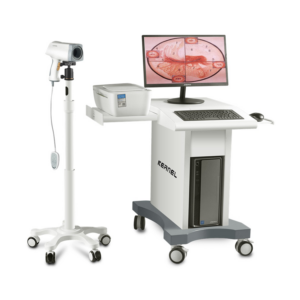
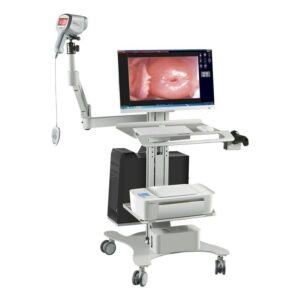
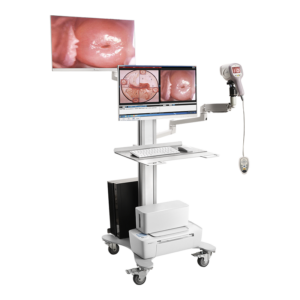
Most colposcope machines are mounted on adjustable stands positioned near the examination chair with the viewing head aligned for close visual examination during the procedure (4). The optical system provides magnified binocular viewing for detailed tissue assessment, with magnification levels that vary depending on the system configuration (4,5). Integrated illumination helps improve visibility during examination, and a green filter is used to enhance vascular detail (4). Digital colposcopy equipment adds a CCD or CMOS camera, an HD or 4K monitor. Some systems also support image storage, comparison tools, and electronic medical record integration (5). Both optical and digital systems are commonly used in clinical practice, depending on documentation and workflow needs, so the choice often comes down to documentation and workflow needs rather than accuracy (5).
Where Colposcopes Are Used
Colposcopy machines are deployed across the full range of women’s health care:
- Gynecology and OB/GYN clinics – for follow-up after abnormal cervical cancer screening, per ASCCP risk-based guidelines (3,6).
- Hospitals – within outpatient OB/GYN departments, gynecologic oncology services, and dedicated colposcopy clinics tied to cervical cancer screening programs.
- Diagnostic and women’s health centers – for high-volume HPV and cytology triage, including referral colposcopy (6).
- Academic and resident training programs – where image capture and live monitor display support case review and teaching.
Clinic selection of a specific colposcopy device depends on patient volume, exam room layout, whether documentation must be archived in an EMR, and how the colposcopist prefers to work – through eyepieces directly, or via monitor.
Choosing Professional Colposcopy Equipment
A purchase decision for any colposcope equipment should weigh several practical points:
- When comparing systems, clinics often pay attention to image sharpness, color accuracy, and vascular visualization quality
- In routine practice, most examinations are performed within the standard mid-range magnification levels (4).
- Many clinics now prefer systems that support photo capture, external monitors, and easier digital record management (5).
- Ergonomics – stand stability, smooth fine-focus, articulated arm reach, and reduced eyepiece strain over long clinic days.
- The physical setup also matters, since different clinics may prefer mobile floor units, articulated arms, or smaller tabletop systems.
- In the United States, colposcopy systems are regulated medical devices and should be reviewed for appropriate FDA clearance before purchase.
- Total cost – colposcope cost varies widely. Entry-level optical units start near $2,000, full digital and video colposcopy machines run roughly $4,000–$8,000, and advanced imaging platforms can exceed $11,000 (8).
When evaluating colposcopes for sale, clinics should also factor in service, warranty, and accessory availability – camera adapters, monitor stands, biopsy instruments. Practices expanding their gynecology and dermatology capabilities often pair diagnostic systems with treatment equipment such as phototherapy devices and UVB lamps used in adjacent women’s health and skin care services. UVTREAT supplies professional Kernel colposcopy systems – both optical and digital – configured for U.S. clinics, hospitals, and medical centers that need reliable, FDA-cleared diagnostic equipment.
References
- American College of Obstetricians and Gynecologists (ACOG). https://www.acog.org/womens-health/faqs/colposcopy
- MedlinePlus – U.S. National Library of Medicine. https://medlineplus.gov/lab-tests/colposcopy/
- American Society for Colposcopy and Cervical Pathology (ASCCP). https://www.asccp.org/guidelines/
- Kernel Medical Equipment. https://www.kernelmed.com
- Hilal Z, et al. J Low Genit Tract Dis. PubMed. https://pubmed.ncbi.nlm.nih.gov/25950890/
- AAFP. ASCCP Management Guidelines for Abnormal Cervical Cancer Screening. https://www.aafp.org/pubs/afp/issues/2024/0300/pocg-abnormal-cervical-cancer-screening.html
- U.S. FDA. 21 CFR 884.1630 https://www.accessdata.fda.gov/scripts/cdrh/Cfdocs/cfpcd/classification.cfm?regulationnumber=884.1630
- News-Medical / Bimedis. https://www.news-medical.net/Clinical-and-Diagnostics/Colposcopes
FAQ
- A colposcope is a binocular magnifier with a built-in light, used by gynecologists to inspect the cervix, vagina, and vulva (1,2).
- In any setting that performs cervical cancer follow-up: gynecology clinics, hospitals, women's health centers, and teaching programs (1,3).
- Three formats are common - traditional optical binocular scopes, video/digital systems with monitor and image capture, and portable handheld devices (4,5).
- You need to consider a magnification range, image quality, light source, digital and EMR integration, ergonomics, FDA clearance, and total cost of ownership (5,7).