HomeArticlesTraining Medical Staff for Phototherapy: Essential Standards and Programs
Written byAbby Gould,MD; Board-Certified Dermatologist
Published on January 29, 2026
Training Medical Staff for Phototherapy: Essential Standards and Programs
Introduction
We use phototherapy every day for psoriasis, vitiligo, eczema, atopic dermatitis or other skin disorders. The results can be impressive. But here’s the thing, UV radiation doesn’t discriminate between therapeutic and harmful effects. I’ve seen burns from improper dosing. I’ve watched patients develop complications because someone forgot to check their medication list for photosensitizers.
Training for phototherapy isn’t about handing someone an equipment manual. It’s patient selection, getting the dose calculations right, tracking how much UV exposure they’ve accumulated over years, catching problems early, and making sure everything fits into your clinic’s documentation system (1). That’s what actually keeps patients safe.
Why Phototherapy Staff Training Matters
The British Association of Dermatologists defines training as non-negotiable. Their standards connect it to your audit trail, how you report incidents, your governance structure (1,2). You need documented baseline severity scores, post-treatment scores, DLQI data, cumulative UV records updated after every treatment course (1).
Why does this matter? Two reasons. First, it backs up your clinical decisions with actual data. Second, when something goes wrong, and eventually something will, you have documentation showing you followed proper protocols. That’s your medicolegal protection.
The precision required here is unforgiving. Wrong dose calculation? Burns. Missed a photosensitizing drug? Burns. Inadequate monitoring? You might not catch the problem until significant damage has occurred. We’re talking about photoaging, increased skin cancer risk years down the line. Your staff needs to recognize when a case is high-risk and what to do about it.
Core Standards for Phototherapy Training
BAD Phototherapy Service Guidance mandates formal incident reporting with governance review (1). Something goes sideways? You document what happened, sit down with your team, figure out why it happened, and adjust your protocols. Training becomes this continuous loop of improvement rather than a box you check once when hiring someone.
The British Photodermatology Group points out that medical staff training spans the whole operation—calibrating equipment, assessing patients, monitoring long-term (3,7). They’re explicit about cumulative exposure tracking. It’s not optional. BAD standards require maintaining accessible records of total UVB and PUVA exposure, with updates after each course (1).
This becomes critical for patients returning multiple times over decades. You’re not just treating today’s flare. You’re managing their lifetime UV exposure and the cancer risk that comes with it.
What Staff Actually Need to Know
Patient selection starts simple: verify the paperwork. Referral documentation? Check. Pre-assessment done? Check. Prescription in the chart? Check (1). But then you screen for cases that need special handling. Pediatric patients respond differently. Someone with autism might need modified communication. Language barriers require interpreters, not guesswork.
Photodermatology knowledge separates competent from dangerous practice. Your training curriculum should cover chronic actinic dermatitis, polymorphic light eruption, solar urticaria, porphyrias, drug-induced photosensitivity (7). These aren’t rare — you’ll see them. Miss one and you’ve just made their condition worse with the treatment.
Medication reconciliation can’t be passive. Active checking at every visit. “Any new medications since last time?” should be automatic (1,7). Photosensitizers are everywhere—tetracyclines, thiazides, NSAIDs, numerous others. One missed drug equals one preventable burn.
MED and MPD testing needs standardization. BAD spells this out: document the anatomic site, your erythema criteria, how you masked the area, exposure sequence, dose ratios (1,2). Without standardization, you can’t compare results across time or between different staff members. And you definitely can’t audit your outcomes meaningfully.
When reactions happen, documentation becomes crucial. Record everything. Have clear rules about when nurses escalate to physicians (1,7). Grade the erythema. Know your thresholds for holding treatment, reducing dose, or stopping entirely. These shouldn’t be judgment calls every time—you need protocols.
Equipment, Dosimetry, and Calibration
Here’s where I’ve seen clinics make mistakes that affect every single patient they treat. British Photodermatology Group is clear: UV radiometer calibration is technically difficult. Send it to specialist labs that can trace calibration to national standards (3,4). Once a year is standard practice (3,4).
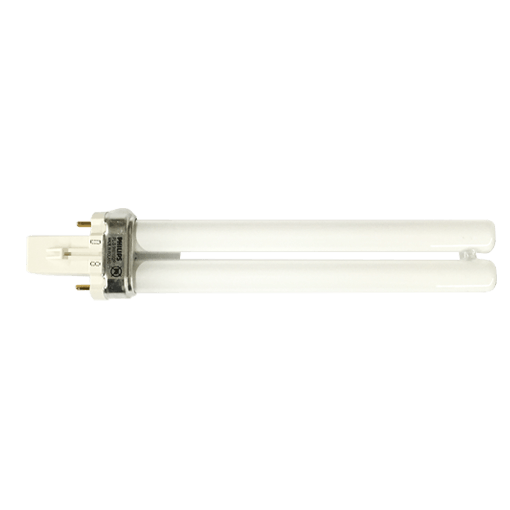
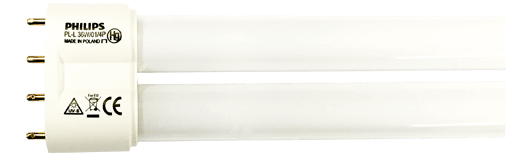
But there’s a catch most people miss. Calibration has to match your lamp type (3,4). You calibrated your meter at 365 nm? Great for that specific application. Not great for different phototherapy lamps. UV detectors don’t respond uniformly across wavelengths (3). So if you’re running TL-01 narrowband UVB and PUVA UVA lamps, you need separate calibrations for each (3,4).
“We calibrated once” doesn’t cut it with multiple lamp types. You’re systematically getting the wrong measurements on at least one of your devices. Every dose calculation downstream is wrong. Every patient treated with that device gets incorrect exposure.
Angular response problems (cosine response) create another layer of error. Whole-body cabinets emit UV from multiple angles. Some sensors underestimate irradiance at higher angles of incidence (3,4). Put the sensor in the wrong spot, get the wrong reading. Use the wrong sensor type, get systematic underestimation. Staff need training on placement technique and why sensor specifications actually matter (3).
Designated patient irradiance (DPI) measurements need structure (3,4). The guideline recommendation: keep all irradiance values for dose calculations within 10% of your measured DPI (3,4). That 10% isn’t arbitrary—it’s the acceptable margin between safe and potentially problematic.
Temperature affects lamp output. You need about 5 minutes of warm-up before measurements stabilize (4). Include this in training: warm-up protocols, where to take measurements, what DPI means, that 10% tolerance window, how to document everything properly (3,4).
Don’t separate infection control and lamp replacement from “real” training. These are safety competencies (3,4). Dosimetry guidelines require formal policies for equipment cleaning and lamp replacement that maintain consistent irradiance and ensure correct lamp installation (3,4). Skip this and you’re introducing variables that affect treatment consistency.
Occupational Safety
ICNIRP published exposure limits for UVR between 180-400 nm (5,6). These guide occupational exposure control. Eye protection during therapeutic exposures isn’t optional (5,6).
Training should mandate eye protection policies for everyone in the treatment area—patients and staff. Engineering controls to minimize stray UV exposure. Risk assessments for staff exposure backed by actual environmental measurements (4,5,6). Your staff face cumulative occupational exposure over years or decades. Protect them.
Structuring Medical Training Programs
Effective programs have three components. Knowledge base: UV physics (UVA versus UVB, why we chose TL-01 narrowband), which conditions respond, which don’t, photosensitivity disorders overview, how to screen for drug photosensitizers (7).
Practical skills: operating the equipment, positioning patients correctly, running MED/MPD tests with documentation that’ll hold up in audit, assessing erythema, managing reactions, recording doses and adverse events and cumulative exposure (1,7).
Quality assurance: this is what private clinics often skip. How to handle radiometers. Understanding calibration requirements: annual schedule, traceability, lamp-specific protocols. DPI measurement fundamentals and tolerance ranges. Incident reporting workflows. Competency verification with documented sign-off and scheduled refreshers (1,3,4,7).
Photodermatology training documents acknowledge that services vary significantly in structure. They emphasize competencies over rigid protocols (7). By the end of UVB treatment training, staff should be capable of setting up a phototherapy unit independently. That’s the benchmark—understanding principles deeply enough to build and run safe services, not just following someone else’s checklist.
Certification and Accreditation
Healthcare staff training programs differ by region and institution. The underlying principle doesn’t change: prove competency through documentation. Align your training with BAD and British Photodermatology Group standards (1,2,3,7). Keep competency assessment records. Don’t let anyone work independently until they’ve completed required modules.
Training isn’t an event. It’s ongoing. It’s part of service governance and quality improvement (1,2). Treat it that way and you’ll see the difference in outcomes.
Continuous Education
Technology changes. We get better lamps. Dosing protocols get refined based on new research. Long-term outcome data shifts our understanding of risk. Continuous phototherapy education keeps your staff current instead of practicing yesterday’s medicine.
Use your incident reports. Review them regularly with governance discussions (1). When something goes wrong, that’s learning material. Update protocols based on what you find. Schedule refreshers at set intervals. Trigger additional phototherapy certification when you change equipment, modify protocols, or see concerning patterns in your quality metrics (1,2).
Challenges in Training
Cost hits smaller practices hard. Quality training programs aren’t evenly distributed geographically. Balancing training time against patient care creates real scheduling conflicts.
The more concerning issue? Technical and QA aspects get shortchanged. Clinical protocols get attention because they’re visible. Dosimetry physics, calibration, equipment maintenance feel less urgent until systematic errors surface (3,4). By then you’ve been treating patients incorrectly for months or years.
Solving this requires institutional commitment. Training has to be core service quality, not administrative paperwork you complete to satisfy some external requirement. Management either understands this or they don’t. When they don’t, patients pay the price.
Future Directions
Digital platforms, VR simulation, and tele-education offer real potential. Simulate dose calculations, erythema assessment, adverse event management before touching actual patients. Online modules with built-in competency checks could standardize training across geographically dispersed sites while cutting travel costs and time away from clinics.
But digital tools supplement hands-on training, they don’t replace it. Operating phototherapy equipment involves tactile learning. Erythema assessment requires nuanced clinical judgment you don’t get from screenshots. Patient education needs interpersonal skills developed through supervised practice.
Hybrid models probably represent the future. Use digital tools for knowledge acquisition and standardization. Preserve hands-on training for skill development. Combine them intelligently and you get efficiency without sacrificing quality.
Conclusion
Training for phototherapy goes well beyond showing someone which buttons to push. It’s about patient safety, clinical governance, quality assurance, and managing long-term risks. BAD and British Photodermatology Group make this explicit: training integrates into service governance, connects to documentation, audit, incident reporting, continuous quality improvement (1,2,3,7).
Staff need demonstrated competence in patient selection, dose testing, monitoring, adverse event management, equipment calibration, dosimetry, occupational safety (1,3,4,5,7). Document it. Verify it. Maintain it through ongoing education and refreshers.
Inadequately trained staff delivering phototherapy isn’t acceptable. The harm potential is too significant. The medicolegal exposure is too high. As phototherapy evolves technically, our commitment to rigorous training has to stay constant. That’s how we deliver real therapeutic benefits while protecting patients from unnecessary harm.
Share
References
1. British Association of Dermatologists. BAD 2022 Phototherapy Guidance and Services Standards.
2. British Association of Dermatologists. Phototherapy Service Standards.
3. British Photodermatology Group / British Association of Dermatologists. Guidelines for Dosimetry and Calibration in Ultraviolet Therapy.
4. Moseley H, et al. Guidelines on measurement of ultraviolet radiation levels in ultraviolet phototherapy. British Association of Dermatologists and British Photodermatology Group.
5. International Commission on Non-Ionizing Radiation Protection. Guidelines on limits of exposure to ultraviolet radiation of wavelengths between 180-400 nm. Health Phys. 2004;87(2):171-186.
6. ICNIRP 2004 UV exposure limits. PubMed.
7. British Photodermatology Group. Photodermatology Handbook: Training Curriculum Competencies.
FAQs
Patient selection and assessment, dose determination via MED or MPD testing, device operation and safety, erythema assessment and adverse event management, cumulative exposure documentation, equipment calibration and dosimetry, integration with governance and incident reporting (1,3,7). Clinical skills and quality assurance both matter.
Annual calibration through specialist labs with national standard traceability (3,4). Critical point: calibration must repeat for each UV source type. Single-wavelength calibrations don't work across different lamp types (3,4). Multiple devices require lamp-specific protocols.
Clinical necessity for long-term risk management in patients needing multiple treatment courses (1). Reduces medicolegal vulnerability through accessible records of total UVB and PUVA exposure. BAD standards make this mandatory—update records after each course (1).
Evaluate for chronic actinic dermatitis, polymorphic light eruption, solar urticaria, porphyrias, drug-induced photosensitivity (7). Medication reconciliation is critical—systematic photosensitizer checks at every visit (1,7). Screen for special populations needing protocol modification: pediatric patients, neurodevelopmental differences, communication barriers (1).
Define authorization levels clearly: who assesses, who initiates, who adjusts doses post-reaction, who clears restart after missed treatments (7). Competency frameworks expect physician supervision of allied health professional delivery with explicit escalation pathways for adverse events (7).
To provide the best experiences, we use technologies like cookies to store and/or access device information. Consenting to these technologies will allow us to process data such as browsing behavior or unique IDs on this site. Not consenting or withdrawing consent, may adversely affect certain features and functions.
Functional
Always active
The technical storage or access is strictly necessary for the legitimate purpose of enabling the use of a specific service explicitly requested by the subscriber or user, or for the sole purpose of carrying out the transmission of a communication over an electronic communications network.
Preferences
The technical storage or access is necessary for the legitimate purpose of storing preferences that are not requested by the subscriber or user.
Statistics
The technical storage or access that is used exclusively for statistical purposes.The technical storage or access that is used exclusively for anonymous statistical purposes. Without a subpoena, voluntary compliance on the part of your Internet Service Provider, or additional records from a third party, information stored or retrieved for this purpose alone cannot usually be used to identify you.
Marketing
The technical storage or access is required to create user profiles to send advertising, or to track the user on a website or across several websites for similar marketing purposes.