HomeArticlesReimbursement and Insurance Coverage for Phototherapy Treatments
Written byAbby Gould,MD; Board-Certified Dermatologist
Published on February 18, 2026
Reimbursement and Insurance Coverage for Phototherapy Treatments
Introduction
Phototherapy has become a standard intervention for moderate to severe psoriasis, atopic dermatitis, vitiligo, and various other skin conditions. The clinical evidence base is strong, yet the financial viability of these programs hinges on practitioners’ ability to navigate complex reimbursement pathways. Medicare rates dropped 2.83% in 2025. Dermatology denial rates average 14%, considerably above the 5-10% benchmark seen across healthcare. Understanding coverage mechanisms, dermatology phototherapy billing protocols, and documentation standards has become essential for these services.
Insurance Coverage Overview
Both Medicare Part A and Part B cover phototherapy when the treatment meets medical necessity standards. Whether phototherapy qualifies as reasonable and necessary for diagnosis or treatment determines coverage. Part B applies to outpatient services—the relevant category for most dermatology practices. Patients in 2025 pay a $257 annual deductible, followed by 20% of the Medicare-approved treatment amount (1). Medicare Advantage plans must match Original Medicare at minimum, though their networks and cost structures vary.
Commercial insurance varies significantly across plans and conditions. Psoriasis phototherapy generally receives favorable coverage. Vitiligo presents a different challenge—a 2022 analysis documented that many insurers exclude office-based vitiligo phototherapy outright, despite published efficacy data (2). Conditions with reliable coverage include moderate to severe plaque psoriasis, atopic dermatitis, cutaneous T-cell lymphoma, lichen planus, and pruritus related to systemic disease.
Documentation determines eligibility. Physicians must provide a confirmed diagnosis with ICD-10 codes, severity scores using validated instruments, treatment history showing conventional therapy failures, and justification for selecting phototherapy. PUVA requires additional rigor: documentation must demonstrate severe, intractable disease with functional impairment and resistance to standard interventions (1).
CPT Codes & Billing Structures
CPT coding accuracy directly affects both reimbursement levels and approval rates. Code 96900 describes actinotherapy—UV light without topical agents—and carries the lowest reimbursement. Code 96910 applies to photochemotherapy combining tar or petrolatum with UVB. The higher reimbursement requires documentation proving staff applied the topicals; patient self-application at home doesn’t qualify for this code (3).
Code 96912 covers PUVA therapy, which combines psoralen medication with UVA exposure through oral or topical administration. Given the higher risk profile, this code demands comprehensive medical necessity documentation. Code 96913 describes intensive photochemotherapy with 4-8 hours of direct physician supervision and multiple daily treatments. Medicare records show under 100 annual billings for this code. Most insurers provide minimal or no reimbursement for 96913.
Excimer laser uses area-based phototherapy coding guidelines: 96920 covers areas under 250 square centimeters, 96921 applies to 250-500 square centimeters, and 96922 handles areas exceeding 500 square centimeters. Precise area documentation measured in square centimeters is mandatory.
Supervision requirements vary by treatment. Standard narrow-band UVB needs general physician supervision—the physician must be available within the facility but not necessarily present during treatment. PUVA and Goeckerman protocols require direct supervision given treatment complexity (3).
Typical schedules involve 2-3 weekly sessions over several weeks to months. Each treatment bills once daily. Medicare generally authorizes up to 30 sessions; additional treatments require documented clinical improvement. Billing E/M codes same-day as phototherapy requires modifier 25 plus separate documentation demonstrating significant, separately identifiable services (4).
Documentation Requirements
Most phototherapy claim denials stem from documentation deficiencies rather than lack of medical necessity. Practitioners should also be aware of the regulatory and liability framework surrounding these treatments — covered in detail in our overview of the Legal Aspects of Phototherapy. Initial authorization demands a confirmed diagnosis with specific ICD-10 codes, severity assessment using validated instruments like PASI or TBSA, functional impact documentation, and records showing which previous treatments failed and why (5).
Treatment plans must specify the phototherapy type, frequency, expected duration, target anatomical areas, and measurable treatment goals. Each session requires documentation of the service date, UV dosage delivered, exposure duration, treated body regions, and clinical response observations. Treatment logs track cumulative UV exposure with clinical rationale for any dosage adjustments (5).
Insurers require documented clinical improvement after 12 weeks of office-based phototherapy to authorize continued treatment. Targeted modalities like excimer lasers often trigger this requirement after just 12 treatments (5). Home phototherapy equipment requires detailed prescriptions, medical necessity letters explaining why home-based treatment is appropriate, evidence from successful 1-3 month office-based trials, and documentation that patients can safely operate the equipment (6).
Common errors include vague diagnostic terminology, incomplete lesion measurements for targeted treatments, insufficient medical necessity justification, incomplete dosage records, and inadequate demonstration of treatment response. Electronic health record templates with pre-populated fields for dosage, body surface area, and response tracking reduce documentation time while ensuring all required elements are captured.
Reimbursement Rates & Variability
Medicare calculates phototherapy treatment reimbursement rates using conversion factors applied to physician fee schedules. The 2025 conversion factor fell to $32.35 from $33.29 in 2024. Analysis of 2001-2023 data shows Medicare physician reimbursement declined 26% after inflation adjustment. Private practice settings experienced steeper declines than hospital-based facilities—38.9% versus 33.5% between 2003 and 2024 (7).
Medicare Administrative Contractors establish regional rates based on geographic practice cost indices. Treatment codes reimburse differently depending on location. Commercial insurance generally reimburses 150-200% of Medicare rates, though specific contract terms vary. The payer mix substantially affects financial viability. Practices serving predominantly commercial patients reach profitability faster than those dependent on Medicare.
From 2000-2015, phototherapy utilization grew 5% annually while inflation-adjusted Medicare spending increased 13% annually (8). This pattern reflects declining per-treatment reimbursement coupled with rising treatment volume. Photodynamic therapy data from 2012-2017 shows metropolitan regions captured 90.9% of total Medicare reimbursements, with 4.0% annual growth compared to 0.8% in rural areas (9).
Financial models should account for 2-3% annual Medicare rate reductions. Regular payer mix monitoring identifies revenue impacts from shifts in patient insurance composition independent of volume changes.
Challenges & Claim Denials
Dermatology’s 14% denial rate exceeds the 5-10% healthcare benchmark. Coding errors constitute the leading denial category. Some of the most frequent mistakes include picking the wrong CPT codes for the treatments that were actually delivered, mismatching diagnosis and treatment codes, using codes that are no longer current because they haven’t been updated in a year, getting the number of service units wrong and incorrectly bundling or unbundling treatment codes.
Problems with the documentation itself came in a close second. Insurers end up rejecting phototherapy insurance claims when the treatment logs don`t have all the required information, the records of UV exposure are incomplete, the justification for medical necessity falls short, or, most importantly, they don’t have the right doctor input in the paperwork.
Medical necessity denials occur when diagnoses fail to support treatment intensity, documentation lacks evidence of conventional therapy failures, severity documentation is inadequate, or treatments fall outside coverage criteria (3).
Modifier errors generate considerable denials. Modifier 25, indicating significant and separately identifiable E/M services, requires clear documentation showing service separation. Modifier 59 for distinct procedural services must demonstrate appropriate unbundling. National Correct Coding Initiative edits exist specifically to prevent inappropriate code combinations.
Timely filing creates additional denial risk. Medicare allows 12 months from service date for claim submission. Commercial payers often impose 90-180 day deadlines. Submissions missing these deadlines result in automatic denials without appeal options.
Prevention strategies include pre-submission claim scrubbing using clearinghouse services, real-time eligibility verification before each visit, authorization tracking with proactive renewal requests, and quarterly internal audits identifying systematic coding errors. Beyond coding audits, structured Clinical Safety Audits are an essential component of phototherapy program compliance and risk management.
Improving Reimbursement Success
Achieving clean claim rates above 95% requires systematic coding, documentation, and workflow approaches. Coding accuracy depends on ongoing education addressing annual CPT updates (effective January 1), October ICD-10 revisions, and quarterly HCPCS modifications. Regular training maintains staff proficiency with current requirements.
Optimal practices include using the most specific codes available, ensuring CPT and ICD-10 codes align to demonstrate medical necessity, and verifying appropriate linkage of add-on codes to primary procedures. Documentation completeness demands system-level solutions: electronic health record templates prompting required elements, pre-populated treatment logs, automated dosage calculations, and procedure-specific checklists (4).
Eligibility verification systems should confirm coverage for specific procedures rather than just general insurance status. Patients with multiple policies require identification of primary versus secondary payers. Authorization tracking databases maintain authorization numbers, expiration dates, and approved session limits. Automated alerts 30 days before expiration enable timely renewals with updated clinical documentation.
Electronic submissions within 24-48 hours of service optimize processing timelines. Electronic claims generally process in 14-30 days compared to 30-45 days for paper. Unpaid claims warrant follow-up within 14-21 days.
Financial Impact on Clinic Revenue
Well-managed phototherapy services can achieve gross margins approaching 87%. For a broader analysis of how phototherapy compares to other treatment modalities from a revenue perspective, see our dedicated guide on the Economic Benefits of Phototherapy. The cost structure combines high fixed equipment costs with relatively low per-treatment variable expenses. Revenue per session depends on CPT code complexity. Basic actinotherapy provides baseline reimbursement, while codes incorporating topical agents or PUVA therapy generate higher revenue through increased relative value units. Excimer laser codes command premium rates.
Phototherapy equipment for clinics investment ranges from $6,000-$16,000 for two narrow-band UVB units to over $200,000 when including excimer laser systems. Programs with strong execution achieve first-month breakeven and seven-month capital recovery. Financial viability requires maintaining minimum 60% equipment utilization in Year 1, building toward 90% by Year 5.
Reducing denial rates directly impacts profitability. Decreasing denials from 14% to 5% represents a 64% reduction in lost revenue. Each percentage point improvement flows directly to bottom-line performance. Regular payer mix monitoring identifies revenue implications of patient population shifts.
Medicare Parts A and B usually cover phototherapy for medical conditions that need this kind of treatment and the coverage is only given if the treatment is deemed medically necessary. Medicare Advantage plans typically offer the same level of coverage or even better. But the situation is very different with commercial insurance plans, as they all vary when it comes to phototherapy, some are very broad when it comes to conditions like psoriasis or atopic dermatitis, but can be stricter for conditions such as vitiligo. (2) To be able to get it covered you need a confirmed diagnosis, details on the severity of your condition, and proof that you've already tried other treatments that didn't work.
Primary CPT codes include 96900 (Actinotherapy, using UV light) , 96910 (Photochemotherapy with tar/petrolatum plus UVB) , 96912 (PUVA therapy) and 96913 (Intensive photochemotherapy that requires extended supervision) - these are the major ones. There are also Excimer laser codes 96920-96922, which depend on the size of the treatment area (the larger the area, the higher the code number). One important thing to note is that you can't bill multiple phototherapy codes for the same session. (4)
The electronic claims process takes anywhere from 14 to 30 days for most payers, that's standard. However, if you're submitting a paper claim, you're looking at 30-45 days. Medicare's a bit faster, and they process claims in 14-21 days typically. If there's an issue with the claim, then it can add an extra 30-45 days to the processing time.
You'll need a diagnosis with an ICD-10 code to confirm what the treatment is for. Then there's the severity assessment, that's done using PASI or TBSA. You'll also need a treatment plan that says what type of phototherapy is being used, how often, and so on. And to top it all off, you'll need the previous treatment records as well. On top of that, you'll need to document the specifics of each session - date, UV dosage, how long the patient was exposed, which areas were treated and how they responded to it.
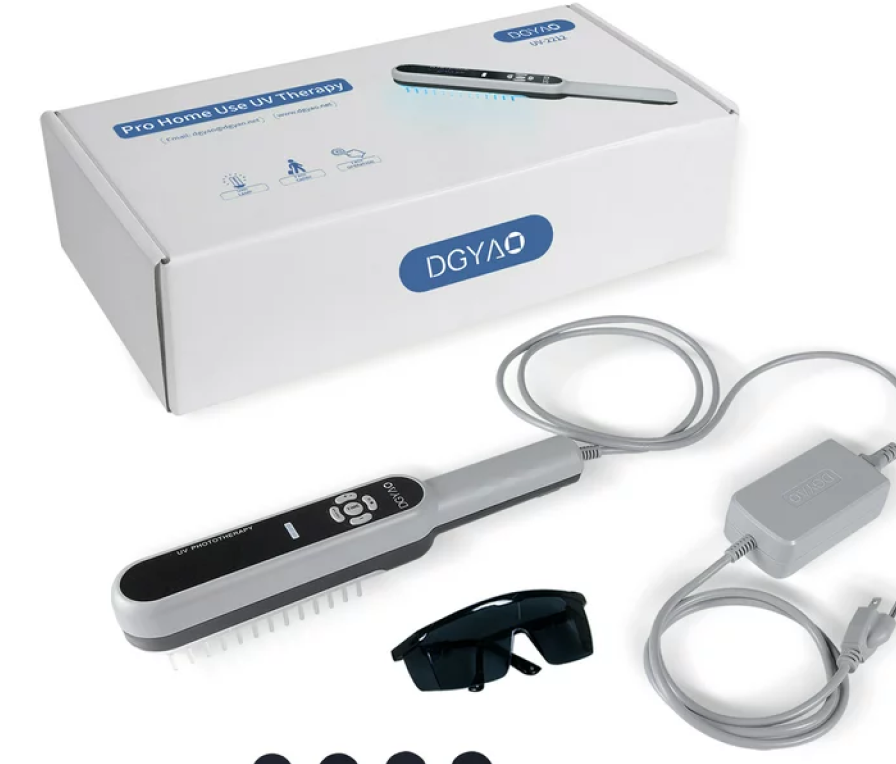
Home devices qualify as durable medical equipment under Medicare Part B. Medicare pays 80% of approved amounts after annual deductible; patients pay 20% coinsurance (1). Coverage requires medical necessity insurance phototherapy documentation, successful 1-3 month office treatment trial, and justification for home-based therapy. Medical phototherapy insurance coverage varies significantly by plan.
To provide the best experiences, we use technologies like cookies to store and/or access device information. Consenting to these technologies will allow us to process data such as browsing behavior or unique IDs on this site. Not consenting or withdrawing consent, may adversely affect certain features and functions.
Functional
Always active
The technical storage or access is strictly necessary for the legitimate purpose of enabling the use of a specific service explicitly requested by the subscriber or user, or for the sole purpose of carrying out the transmission of a communication over an electronic communications network.
Preferences
The technical storage or access is necessary for the legitimate purpose of storing preferences that are not requested by the subscriber or user.
Statistics
The technical storage or access that is used exclusively for statistical purposes.The technical storage or access that is used exclusively for anonymous statistical purposes. Without a subpoena, voluntary compliance on the part of your Internet Service Provider, or additional records from a third party, information stored or retrieved for this purpose alone cannot usually be used to identify you.
Marketing
The technical storage or access is required to create user profiles to send advertising, or to track the user on a website or across several websites for similar marketing purposes.