Written by
Anika Goel,MD; Board-Certified Dermatologist
Published on January 29, 2026
Phototherapy in Dermatology and Beyond
Introduction
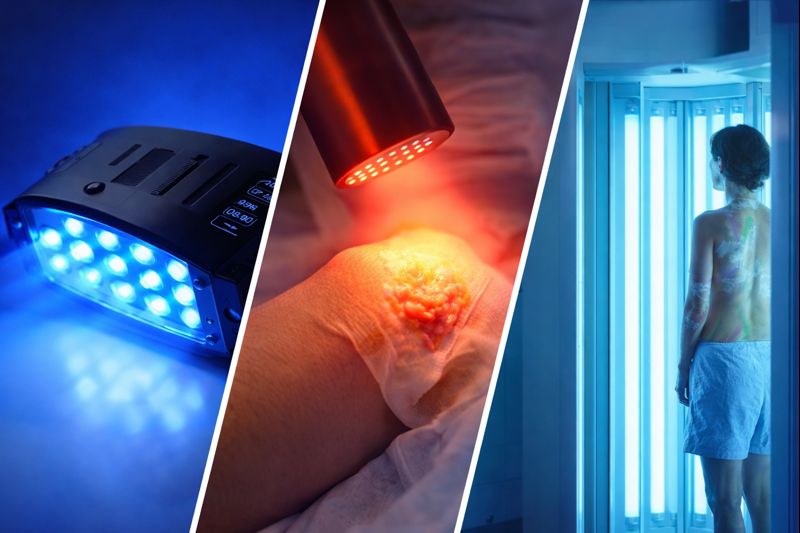
Phototherapy, also known as light therapy, is the therapeutic use of light for medical treatment. It has evolved from ancient sunlight remedies to a sophisticated medical modality backed by rigorous clinical evidence. Fast forward to the 1890s when Niels Finsen discovered that a UV-rich “chemical ray” could be used to treat lupus vulgaris. He even won the Nobel Prize back in 1903. Ever since then, dermatologists have been using UV and visible light to treat a range of skin problems, but it turns out that phototherapy has a whole lot more to offer. New research has shown that light-based treatments could play a key role in all sorts of medical conditions – from autoimmune conditions to wound healing. This article looks at both the well-established uses of phototherapy in dermatology and at the new and exciting areas of research where light is starting to make a big impact.
Phototherapy in Dermatology
Psoriasis
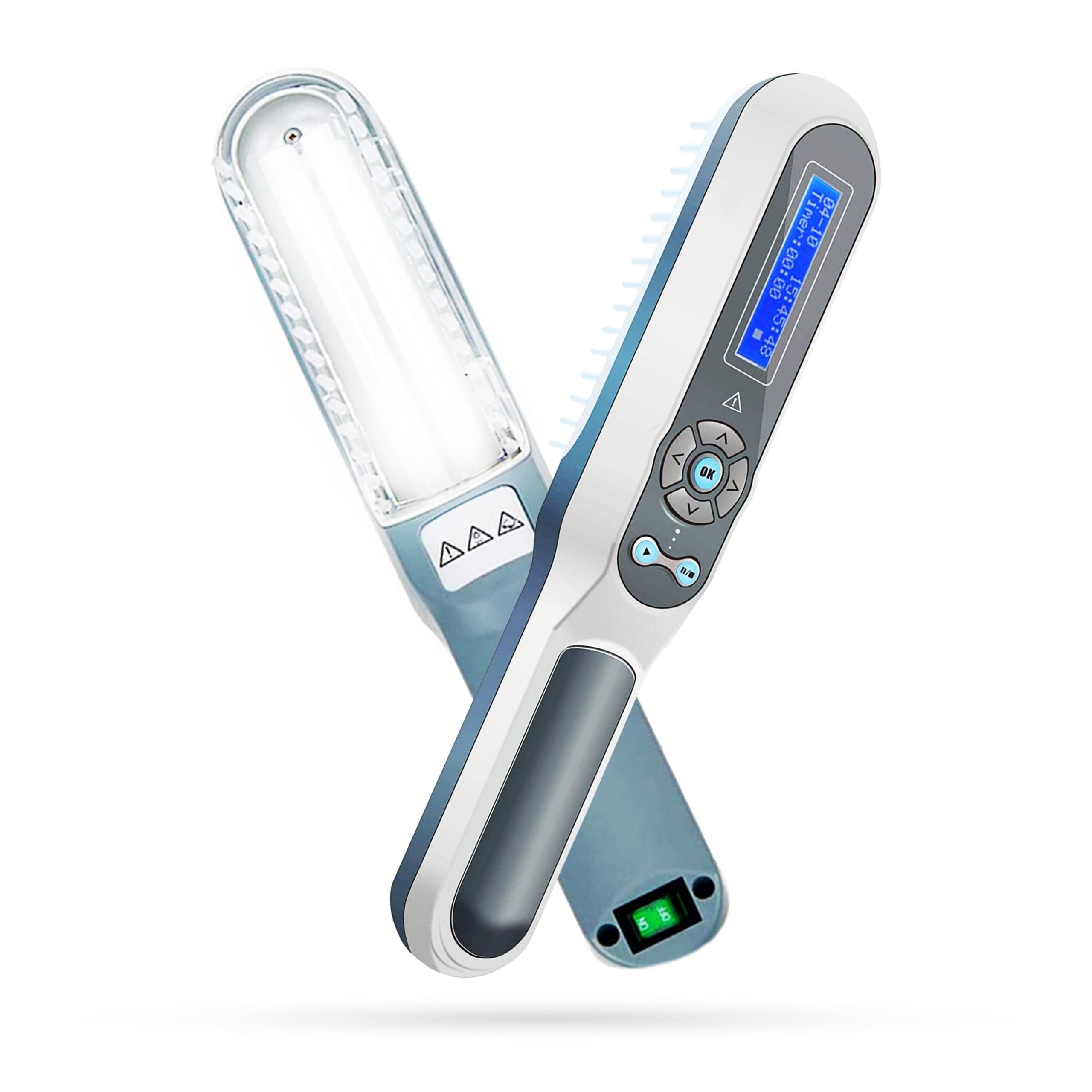
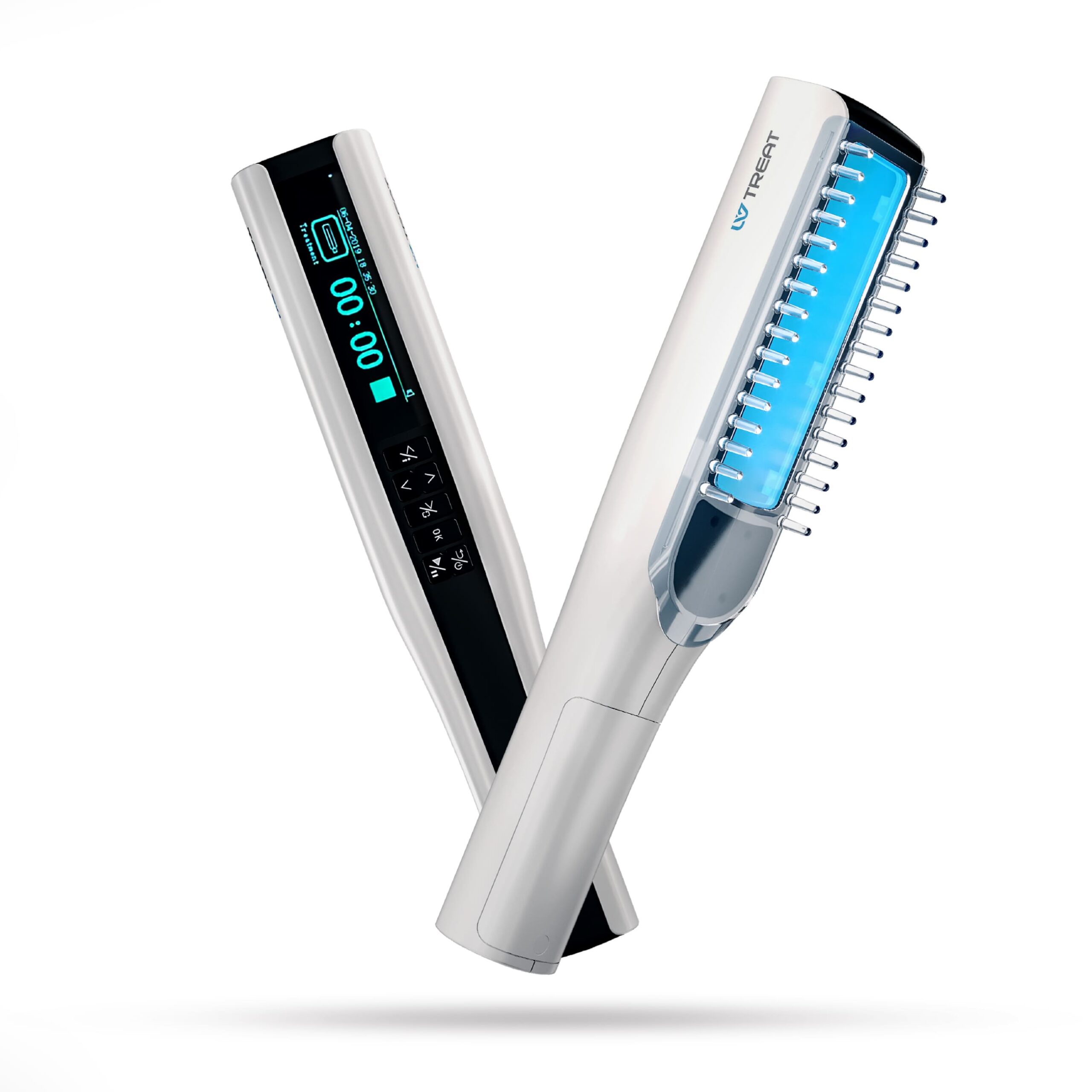
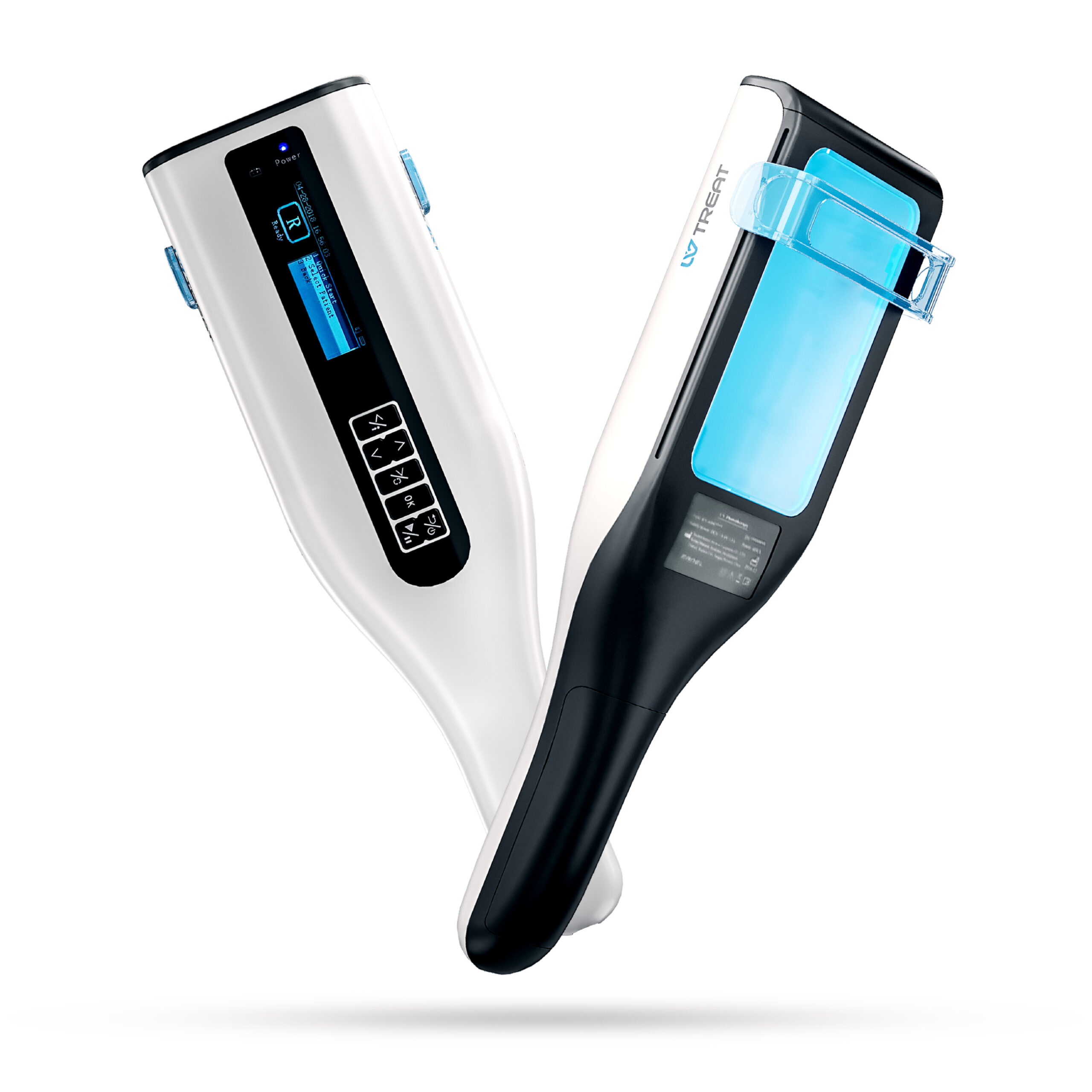
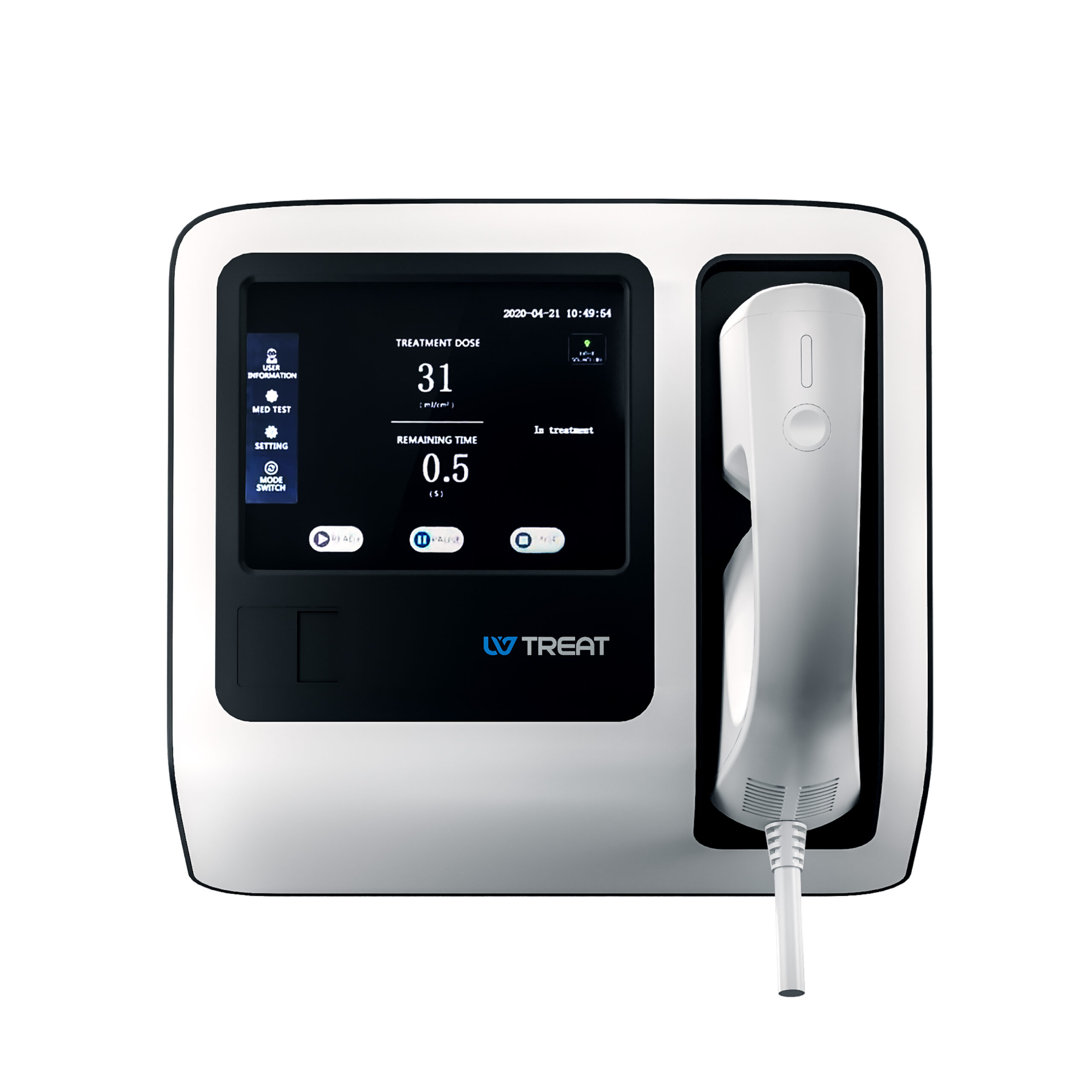
Narrowband UVB light is still the go-to treatment for moderate to severe psoriasis when everything else has failed. This type of UV light has a really specific wavelength of 311-313 nm and it works by killing off the T-cells that are causing the problem and slowing down the growth of keratinocytes (which is the main problem with psoriasis). Studies have shown that getting UVB three times a week for a couple of months can give you around 70% improvement in your symptoms – which is not bad at all. In fact, some biologic agents don’t even get you that level of improvement. At the moment, the best advice is to try UVB light first, before moving on to stronger treatments like immunosuppressants. If that doesn’t work then you might need to try a higher intensity UV treatment or even laser treatment.
Atopic Dermatitis
For people who have got really bad atopic dermatitis that just won’t budge even when you use creams and ointments, phototherapy can be a lifesaver. Studies have shown that both narrowband UVB and medium-dose UVA1 light can help reduce inflammation and improve the health of the skin by killing off some of the problem cells and rebuilding the skin barrier. The good news is that UVB is safe and has fewer side effects than other treatments like immunosuppressants.
Vitiligo
NB-UVB light is the go-to treatment for vitiligo when everything else has failed. Essentially, it helps to stimulate the production of melanocytes (the cells that give you your skin colour) in the affected areas, which can lead to repigmentation in a high number of people. A lot of recent studies have shown that UVB can make a real difference and without too many side effects. It’s even the number one recommended treatment for widespread vitiligo at the moment.
Acne Vulgaris
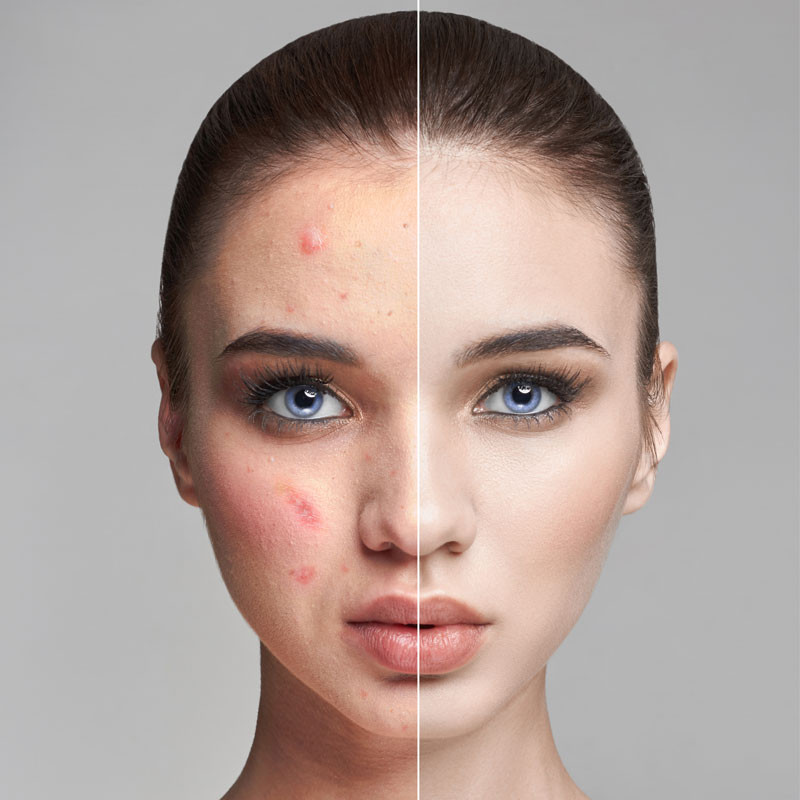
LED lights (specifically blue and red LED devices) have been approved by the FDA for use on mild to moderate acne. They work by zapping the bacteria that causes acne with blue light which destroys the bacteria and also by reducing inflammation with red light. Studies have shown that this can lead to a reduction in the number of breakouts and an improvement in the overall health of the skin.
Expanding Hospital Applications Beyond Dermatology
Autoimmune Diseases
Phototherapy has got immune-modulating properties which are now being used to treat a range of autoimmune diseases. In systemic sclerosis (scleroderma) both UVA1 and PUVA have shown to have benefits. Studies have shown that UVA1 can actually reduce skin thickening and improve joint mobility. It’s thought that this is because it kills off the T-cells that are causing the problem and stops collagen from developing in the affected tissues.
Multiple Sclerosis
MS is another area where phototherapy is showing a lot of promise. A 2025 study found that patients who had eight weeks of whole-body UVB three times a week saw some real benefits in terms of reduced inflammation and better disease scores. Similarly, research from back in the 80s showed that UVA light could have some benefits in terms of reducing joint inflammation in people with rheumatoid arthritis.
And then there’s alopecia areata (which causes hair loss). It turns out that a 2025 study in Japan found that a sizable percentage of people who had NB-UVB or excimer therapy saw some real hair growth – particularly if they were early-stage.
Wound Healing and Tissue Repair
Red light and near infrared light (600-1100nm)- part of a broader phenomenon known as photobiomodulation (PBM) – gives wounds a boost by working multiple ways to heal. A detailed 2025 review of PBM wraps up how all the evidence adds up to show that shining a light with LEDs or lasers really does improve fibroblast cell growth, gets collagen working, helps new blood vessels grow and reduces inflammation.[16] In some animal studies on wounds caused by diabetes and burns 630-810nm LED light really started to get wounds closed and kicked in some critical repair factors including VEGF and TGF-β.[16]
The way it works at a basic level involves cells absorbing 600-1100nm light in part through a compound called cytochrome c oxidase in mitochondria which then cranks up ATP production and fires off repair mechanisms.[16] The end result is PBM is used as a gentle pain-free way to help chronic ulcers and surgical wounds heal more quickly, with a lot of ongoing research aimed at using it to speed up healing in diabetic foot ulcers and other tough skin cases.
Infection Control
There are great light-based treatments that can directly kill off or disable germs without antibiotics. The UVC spectrum (200-280nm) is particularly good at that – it messes up microbial DNA by turning it into a useless piece of goo.[17] Studies have shown that UVC at 254nm can knock out bacteria like MRSA, E.coli and Pseudomonas , along with fungus, in a matter of seconds.[17] UVC- equipped robots are now stomping their feet in hospital wards and medical equipment.
Blue light (400-470 nm) has all sorts of antimicrobial properties because it gets porphyrins inside cells to start producing more reactive oxygen so that germs get killed without needing any extra medication.[17] The evidence shows 405nm LEDs can wipe out MRSA, Pseudomonas, E.coli and even Candida in biofilms.[17] Some people are even looking into the use of light combined with certain kinds of drugs like methylene blue or aminolevulinic acid as a last resort to tackle multi-resistant bugs.
Phototherapy in Cosmetic and Aesthetic Medicine
Anti-Aging and Skin Rejuvenation
LLLT – the use of red and near infrared light – has become super popular for giving skin a more even tone and reducing wrinkles. There have been studies that have shown red and near infrared LED light does indeed boost dermal collagen and elastin levels without harming the skin.[19] A 2014 study of 30 sessions of 611-850nm LED light really improved how even skin looked, felt, and looked in a skin condition study.[19] The way it works is similar to how it does for wounds – by boosting fibroblast activity through cytochrome c oxidase.[20] People can look forward to firmer skin, reduced fine lines, and a generally more even complexion after a course of treatment with minimal downtime.
Pigmentation Treatment
Light-based devices including lasers and intense pulsed light (IPL) target melanin to get rid of hyperpigmentation issues like sun-spotted skin, melasma, and after-inflammatory skin pigmentation. A 2017 review noted that laser and IPL treatments are good for melasma, but recurrence and pigment changes remain common problems.[20] Unlike UV treatments which damage DNA, IPL and lasers largely work through selective photothermal damage to melanocytes rather than DNA damage.
How Phototherapy Works
Phototherapy works through different mechanisms depending on the light used. UV light works primarily by kicking off a bunch of chemical reactions. UVB (280-320nm) penetrates the top layer of skin and causes DNA damage that leads to cells dying and also triggers vitamin D production.[2,3] It is also good at reducing inflammation – partly by reducing Langerhans cells and pro-inflammatory cytokines – which is why it is a big help with psoriasis and atopic dermatitis. UVA (320-400nm) gets a bit deeper into the skin and starts producing reactive oxygen species that start messing with the way fibroblasts and T-cells behave.[1]
Visible light works in different ways depending on the length of the lightwave. Blue light (400-500nm) gets porphyrins inside cells to make singlet oxygen which kills bacterial cells – which is why it is good at killing acne and other microbes. Red (620-750nm) and near-infrared (750-1100nm) light goes a bit deeper into the skin and gets absorbed by cytochrome c oxidase in mitochondria which boosts ATP production and creates all sorts of signals inside the cells that promote healing.[16]
Clinical Evidence and Research
A study from 2025 found that people with early multiple sclerosis got some great benefits from having NB-UVB phototherapy 3 times a week for 8 weeks. This treatment really helped reduce inflammation in their blood and showed up better on MRI scans. This is some solid evidence that UV light can really be a powerful tool for controlling the immune system.[12] And in the dermatology field, a 2025 study showed that around 50% of people who got UV therapy for alopecia areata started to see some really nice hair regrowth. Especially if they got started with the treatment right when their condition first started.[14]
Researchers using meta-analyses found that red and near-infrared LED therapy makes wounds heal way faster for people with diabetic foot ulcers and burns. They’ve even been doing some animal studies where they show that animals with LEDs on their wounds are healing way faster – and their wounds look a lot healthier too.[16] Lab experiments continue to show that UVC and blue light are super good at killing off bad germs that are hard to get rid of with other treatments. There are even some clinical trials going on right now to see if UVC light can help heal infected diabetic ulcers.[17] Some cosmetic companies are even using LED photobiomodulation to improve the look of people’s skin – and the studies all show that this approach really works.[19]
Benefits of Using Phototherapy
So just what makes phototherapy stand out from other treatments? First off, it’s a non-invasive treatment that allows doctors to target the exact areas of the body that are causing problems, rather than having to give you a whole bunch of medication that might have side effects. Studies have even shown that phototherapy gives you a response rate comparable to some heavy-hitting systemic treatments – and with much fewer side effects.[4,5] And for people with atopic dermatitis, NB-UVB is an especially good option because it’s a lot safer than some of the other treatments that are used.[6] One thing to keep in mind is that phototherapy is generally considered safe for people who can’t take some other kinds of medication, like pregnant women, though doctors will want to keep an eye on your folate levels.[21]
Risks & Safety Considerations
While phototherapy has a lot of benefits, there are some risks to be aware of – and plenty of reasons why doctors will have to be super careful when using it. If you get too much of the light at once, you can end up with some nasty sunburn, itching, or even blisters. Long-term use of UV light can also start to take a toll on your skin, leaving you with wrinkles & increasing your risk for skin cancer.[1,2] And some people who use phototherapy can end up with actinic damage, or even in some severe cases – non-melanoma skin cancer, melanoma, or even cataracts, especially if you use PUVA therapy.[4]
Doctors have to be super careful with patients who have conditions like lupus, or with people who’ve had melanoma in the past – they’re usually ruled out from getting UV treatment altogether. On the other hand, if you have a debilitating condition like severe psoriasis, the benefits of phototherapy often outweigh the risks.[4] The treatment needs to be tailored to each patient’s individual needs, and doctors will need to keep a close eye on how your skin is reacting.[4]
The Future of Phototherapy
Now that we’re getting into some really high-tech stuff – researchers are starting to use AI to get better at figuring out what wavelength and how much light is just right for each individual patient.[18] Some researchers are even using built-in sensors and machine learning algorithms to let patients get just the right amount of light to the skin that needs it, and to automatically adjust things so that patients don’t end up getting too much or too little light.[18] And maybe one day – we’ll see implantable phototherapy systems that use fiber-optic catheters or tiny little LED lights that you can put inside the body to help with things like inflammatory bowel disease or arthritis.[18]
Novel approaches that use optogenetics and photopharmacology are also on the horizon – these new approaches let doctors control the cells directly, in ways that are much more targeted than just using light.[18]
Conclusion
Phototherapy has a great history – it started out as a bunch of folk remedies and has now become an evidence-based medical treatment that’s really effective not only in dermatology, but also in other diseases like autoimmune disorders and wound healing. When you use phototherapy right – with the right patients and the right kind of monitoring – it’s safe, it’s effective and you can get some really amazing results. And with all the new technology coming in, we’re going to see phototherapy do a lot more and a lot more safely.
References
-
Revisiting the history and importance of phototherapy in dermatology. Journal of the American Academy of Dermatology. https://www.jaad.org/article/S0190-9622(17)31342-7/fulltext
-
A short history of phototherapy, vitamin D and skin disease. PubMed. https://pubmed.ncbi.nlm.nih.gov/27892584/
-
History of phototherapy in dermatology. PubMed. https://pubmed.ncbi.nlm.nih.gov/22739720/
-
British Association of Dermatologists and British Photodermatology Group guidelines for narrowband ultraviolet B phototherapy 2022. http://bpg.org.uk/wp-content/uploads/2023/10/BAD-and-BPG-guidelines-for-narrowband-UVB-phototherapy-2022.pdf
-
Narrowband‐Ultraviolet B Phototherapy for Psoriasis Treatment in Skin of Color: A Systematic Review and Meta‐Analysis. PMC. https://pmc.ncbi.nlm.nih.gov/articles/PMC12411661/
-
A Comprehensive Review of Phototherapy in Atopic Dermatitis: Mechanisms, Modalities, and Clinical Efficacy. PMC. https://pmc.ncbi.nlm.nih.gov/articles/PMC11043791/
-
Weekly phototherapy is an effective therapy for patients with vitiligo. PMC. https://pmc.ncbi.nlm.nih.gov/articles/PMC10636619/
-
Effectiveness of Narrowband Ultraviolet on Vitiligo: A Systematic Review. MDPI. https://www.mdpi.com/2673-6179/4/4/16
-
Blue light acne treatment. DermNet NZ. https://dermnetnz.org/topics/blue-light-acne-treatment
-
Blue-Light Therapy for Acne Vulgaris: A Systematic Review and Meta-Analysis. PMC. https://pmc.ncbi.nlm.nih.gov/articles/PMC6846280/
-
Utility of phototherapy in patients with systemic sclerosis: Systematic review. PubMed. https://pubmed.ncbi.nlm.nih.gov/35357072/
-
Proteomics confirms immune stabilizing effects of narrowband UVB treatment in patients with clinically isolated syndrome and multiple sclerosis. ScienceDirect. https://www.sciencedirect.com/science/article/pii/S2211034825005309
-
Ultraviolet-A light in the treatment of rheumatoid arthritis. PubMed. https://pubmed.ncbi.nlm.nih.gov/3440328/
-
Phototherapy for Alopecia Areata: Local vs Whole-Body UV Shows Similar Results. POCN. https://www.pocn.com/phototherapy-for-alopecia-areata-local-vs-whole-body-uv-shows-similar-results/
-
Skin Exposure to Narrow Band Ultraviolet (UVB) Light Modulates the Human Intestinal Microbiome. Frontiers. https://www.frontiersin.org/journals/microbiology/articles/10.3389/fmicb.2019.02410/full
-
From light to healing: photobiomodulation therapy in medical disciplines. PMC. https://pmc.ncbi.nlm.nih.gov/articles/PMC12751248/
-
Light based anti-infectives: ultraviolet C irradiation, photodynamic therapy, blue light, and beyond. PMC. https://pmc.ncbi.nlm.nih.gov/articles/PMC3831650/
-
Challenges and opportunities in next-generation LED therapeutic devices. Light: Science & Applications. https://www.nature.com/articles/s41377-025-01990-z
-
A Controlled Trial to Determine the Efficacy of Red and Near-Infrared Light Treatment in Patient Satisfaction, Reduction of Fine Lines, Wrinkles, Skin Roughness, and Intradermal Collagen Density Increase. PMC. https://pmc.ncbi.nlm.nih.gov/articles/PMC3926176/
-
A review of laser and light therapy in melasma. PMC. https://pmc.ncbi.nlm.nih.gov/articles/PMC5418955/
-
The effect of narrowband ultraviolet B phototherapy on serum folate level. PMC. https://pmc.ncbi.nlm.nih.gov/articles/PMC8111802/