Roughly half of nail pathology in dermatology practice is onychomycosis (1), and it happens again in about 25% of successfully treated patients (2). Standard options come with well-known drawbacks — hepatic surveillance for oral terbinafine, single-digit cure rates for topical lacquers used alone (12), and $200–500 per laser session without strong mycological evidence to justify the expense. These limitations have made UV light toenail fungus therapy a point of growing clinical interest. The photobiology behind it is well established. What remains unresolved is a practical one: whether enough UV energy can penetrate a dense keratin nail plate to produce meaningful fungal kill in vivo.
 Medically reviewed by
Published on November 05, 2024
Does UV Light Kill Toenail Fungus? Evidence, Safety, and Treatment Guide
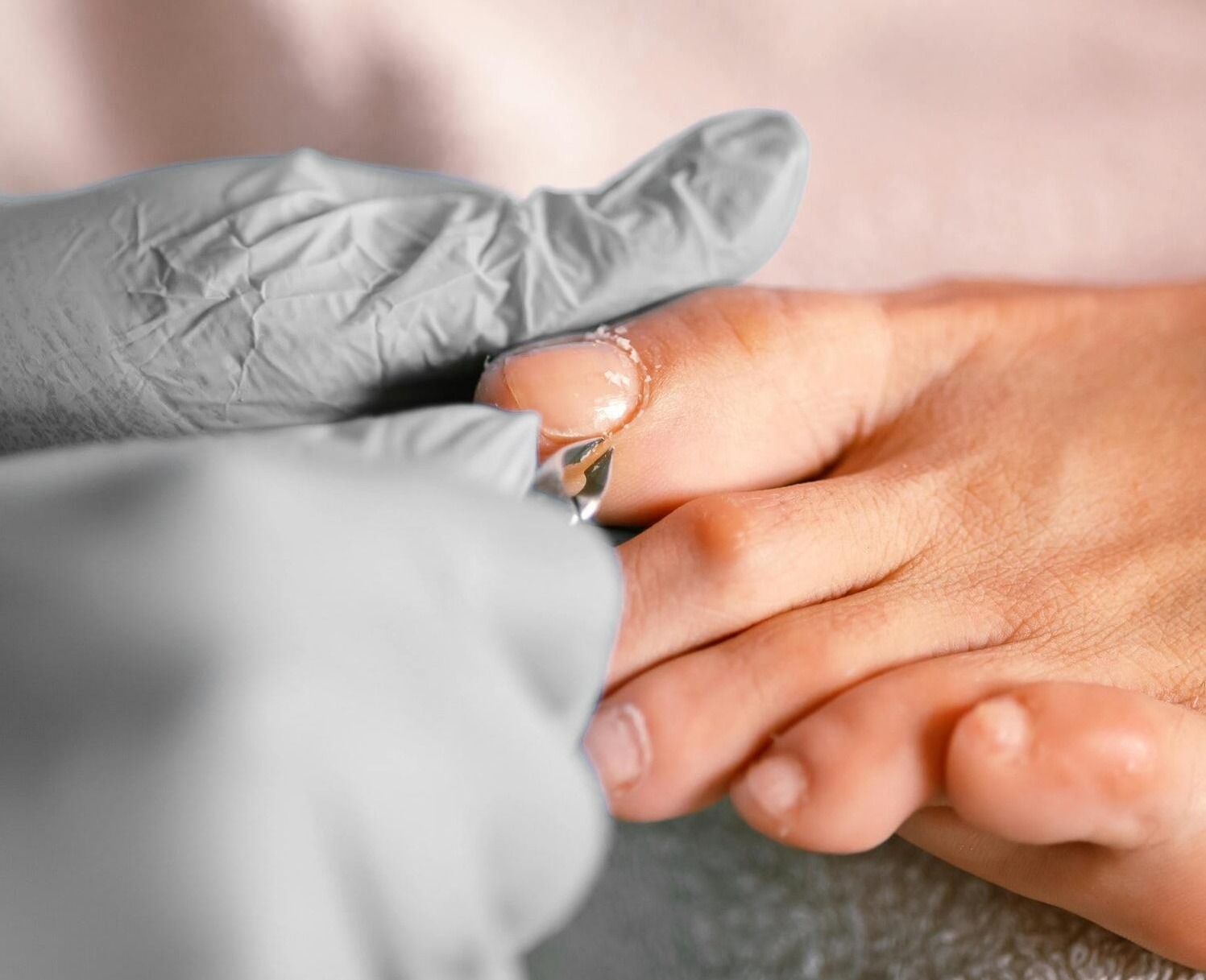
What Is Toenail Fungus (Onychomycosis)
Trichophyton rubrum is recovered from about 45% of culture-positive toenails (3). Next in frequency is T. mentagrophytes; non-dermatophyte moulds and Candida account for a variable share that depends on geography and immune status (4). Global prevalence is estimated at 10%. In patients over 70, diabetics, and those with compromised immunity, it exceeds 30% (4).
Fungal entry occurs at the distal or lateral fold. Once established in the subungual space, dermatophytes break down keratin gradually; discoloration, subungual debris, plate thickening, and onycholysis follow over weeks to months. Most patients present late, often with more than one nail affected. The growth rate of the great toenail is 1.5–2 mm per month. Full replacement of the plate requires 12–18 months. No available treatment accelerates that process.
Thick nails are not always fungal nail infection. Onychauxis causes can be due to repeated trauma, poor peripheral circulation, psoriasis, or genetics. It looks enough like onychomycosis on a clinical exam that misdiagnosis happens regularly when lab testing is skipped.
Does UV Light Work for Toenail Fungus
Ultraviolet radiation kills dermatophytes in the laboratory — that finding is reproducible and well documented. Nouri’s group at Shiraz University grew T. rubrum and T. mentagrophytes on culture plates and hit them with UV-A, UV-B, and UV-C (5). Colony counts dropped under all three; UV-B worked particularly well against specific strains. Dai’s team at Mass General took it a step further — UVC at 254 nm, applied at 120 mJ/cm², killed 99.9–99.999% of dermatophytes in suspension (6). What drives the fungicidal effect is DNA damage: pyrimidine dimers form, replication stalls, and at high enough doses the cell does not recover.
Does UV light kill fungus beneath a toenail, though? Smijs et al. addressed this directly in 2013 by mapping both the wavelengths that inhibited T. rubrum and the wavelengths that could actually pass through human nail plate (7). Maximal antifungal activity was at 280 nm, squarely in the UVC range. Nail plate transmittance at 280 nm was essentially zero. The wavelengths capable of killing the organism could not reach it through intact nail. UVA penetrates nail tissue with less resistance, but its fungicidal effect is weak by comparison. That mismatch is the core problem for UV light therapy for toenail fungus as a standalone intervention.
How UV Treatment Works
In practice, protocols for UVB therapy onychomycosis are relatively simple. Nails are trimmed, cleaned, and filed thin before each session — reducing plate thickness is the single most impactful step for improving UV delivery to the subungual compartment. The digit is then positioned under a narrowband UVB lamp (311–313 nm) for 5–20 minutes per session, three to four times weekly, for a duration measured in weeks to months. Urea-based keratolytics or nail-softening agents applied before irradiation reduce the optical barrier further; the logic is identical to debridement-enhanced topical drug delivery. Nails exceeding 2 mm in thickness benefit most from aggressive filing, since UV transmittance decreases steeply through dense keratin.
Photodynamic therapy (PDT) follows a different mechanism. A photosensitizing compound — methylene blue, aminolevulinic acid, or methyl-5-aminolevulinate — is applied to the nail and allowed to absorb. Light activation at a specific wavelength (typically 450–700 nm via diode laser) generates reactive oxygen species within fungal cell membranes. Alhamdani et al. published a systematic review in 2025 pooling aPDT trial data for onychomycosis (8). Onychomycosis Severity Index scores dropped by 30–90% across included studies. When fractional CO₂ laser was used before PDT to perforate the nail and improve photosensitizer absorption, some protocols reached 100% mycological cure — though the authors were careful to flag how much the treatment parameters varied between trials. Regardless of indication — adult nail fungus, pediatric dermatologic conditions — the same phototherapy variables govern the result: wavelength selection, dose per session, and how consistently the intervals are maintained.
Effectiveness and Limitations
No major dermatologic society currently endorses UV phototherapy as standalone treatment for toenail onychomycosis, and the data explain why. The AAFP reviewed photodynamic and plasma-based approaches in 2021 and concluded that larger randomized trials are needed before clinical adoption can be justified (2). What exists in the published light therapy nail fungus literature is mostly small — under 50 patients per study, no placebo or active comparator arm, endpoints that differ between research groups, and follow-up durations that make cross-study comparison unreliable. No multicenter trial has compared UV monotherapy head-to-head with oral terbinafine.
Combination regimens paint a different picture. Adding UV to an existing regimen — whether that regimen is topical, systemic, or debridement-based — appears to improve results beyond what any one of those treatments achieves on its own. The division of labor makes sense pharmacologically: UV reduces what is growing on the nail surface and surrounding skin, while oral or topical drugs go after organisms embedded deeper in the bed and matrix. Shoe disinfection with UV-C targets the environmental fungal reservoir behind the well-documented 25% relapse rate (2) — a practical benefit that rarely gets attention in treatment planning.
Worth noting: UV carries no hepatotoxic risk, creates no drug interactions, and needs no lab work. For a patient on multiple medications, a patient whose liver enzymes are already elevated, or a patient who completed a full terbinafine course without cure — UV-based antifungal treatment offers a way to add therapeutic pressure without systemic liability.
UV vs Other Treatments
Terbinafine at 250 mg daily for 12 weeks is what both the AAD and the British Association of Dermatologists recommend first for dermatophyte toenail onychomycosis. Mycological cure in meta-analytic data sits around 70%; complete cure — meaning both negative culture and a normal-looking nail — is lower, somewhere in the 38–50% range depending on the study population (9, 10). One pharmacokinetic advantage terbinafine has over other options: it binds to keratin and remains detectable in the nail plate for months after the patient stops taking it.
Itraconazole is the first-line choice when Candida or non-dermatophyte moulds are identified. Fluconazole is used off-label in the US, as it does not carry FDA approval for onychomycosis (10).
Topical agents — ciclopirox 8%, efinaconazole 10%, tavaborole 5% — are safer but substantially less effective on their own: clearance in 8–20% of patients, limited to mild-to-moderate disease without matrix involvement (12). Nail plate impermeability explains the low cure rates. Adding debridement or oral agents to topical antifungal treatment improves results, but for anything beyond superficial white onychomycosis, topical monotherapy alone is insufficient.
The laser vs UV question comes up frequently. Nd:YAG at 1064 nm passes through nail plate far more efficiently than UV wavelengths — a clear physical advantage. One study observed 86.7% visual improvement after 24 weeks with optimized diode laser settings (13). That said, FDA clearance for laser covers temporary cosmetic improvement only; mycological cure was not an endpoint. Sessions cost $200–500 and insurance coverage is rare.
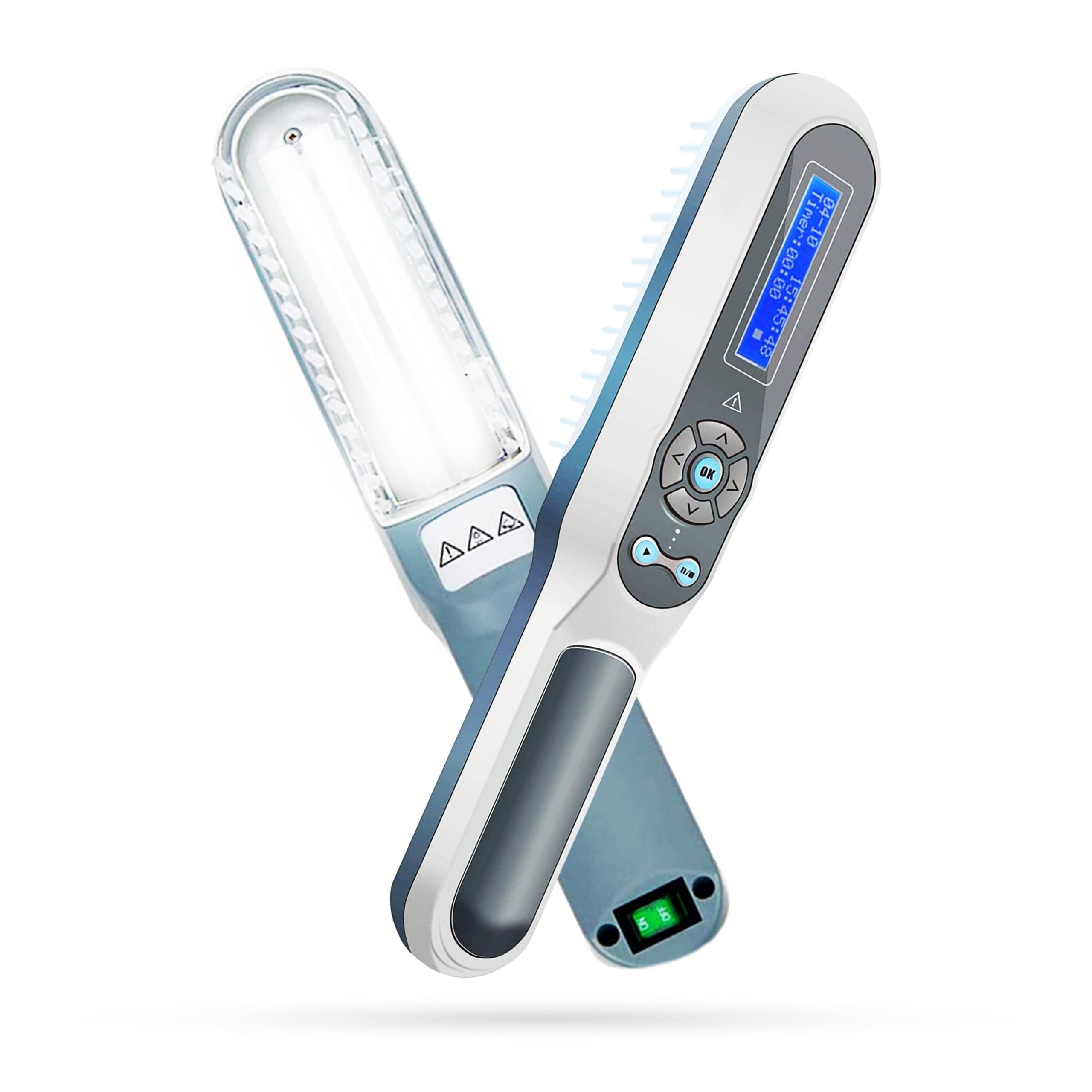
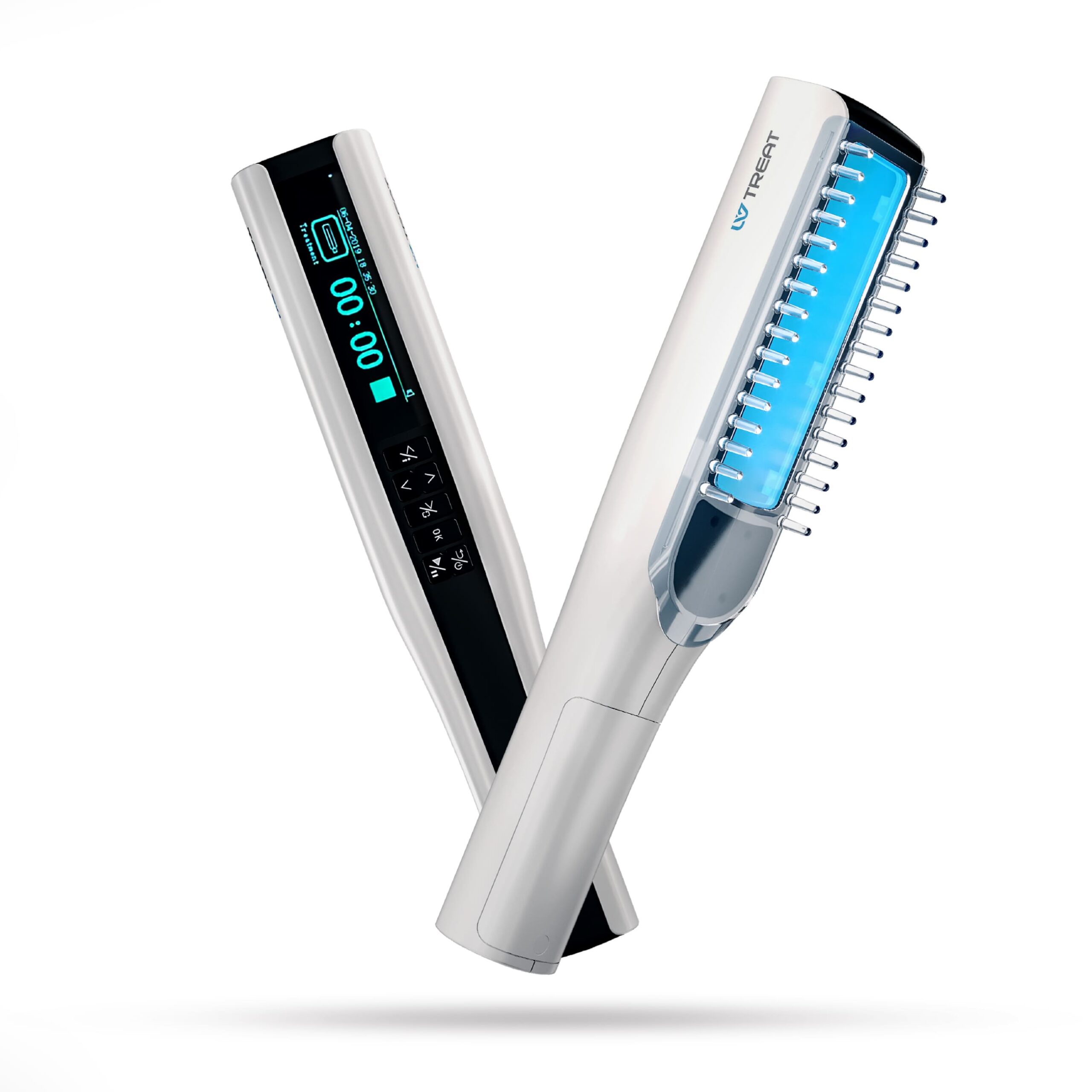
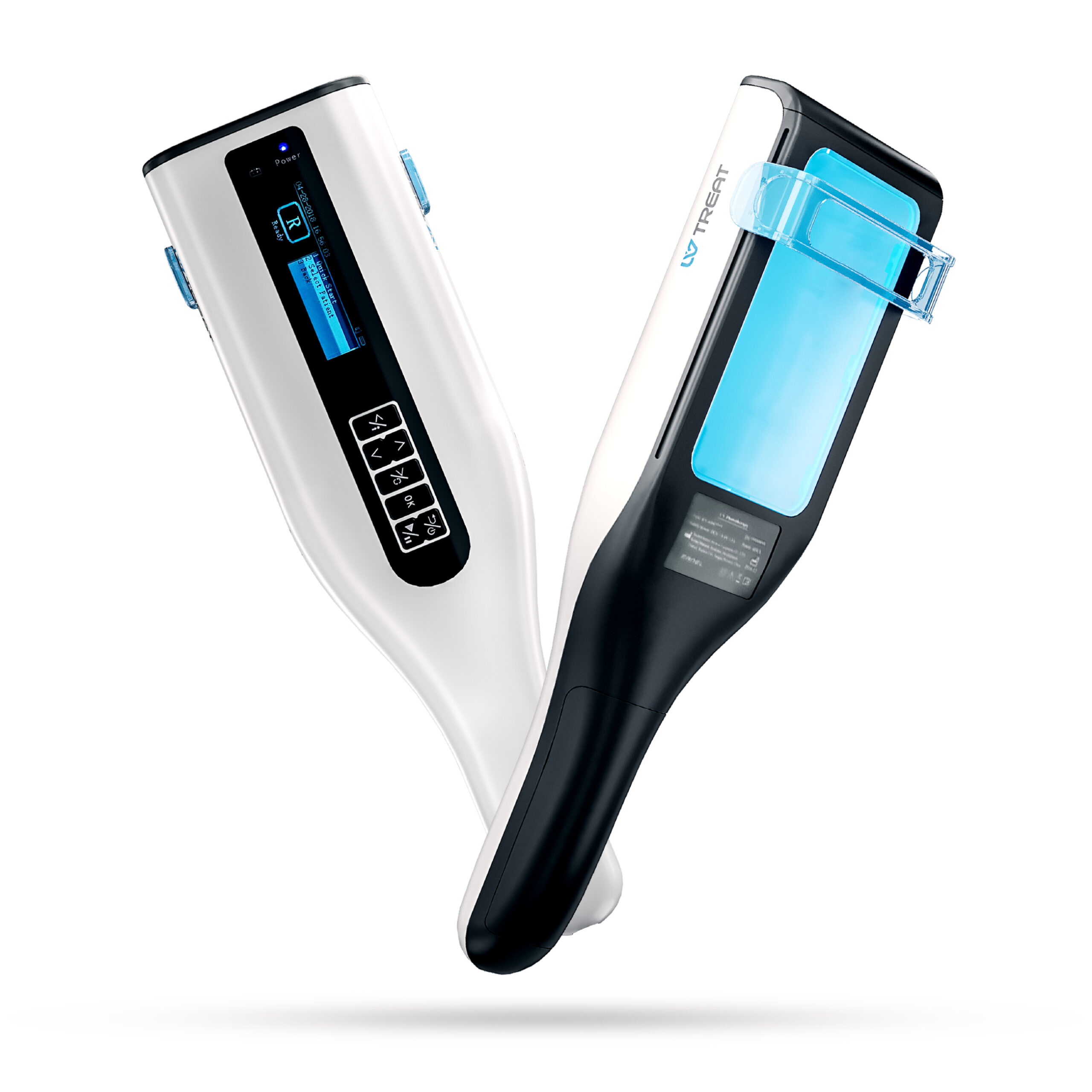
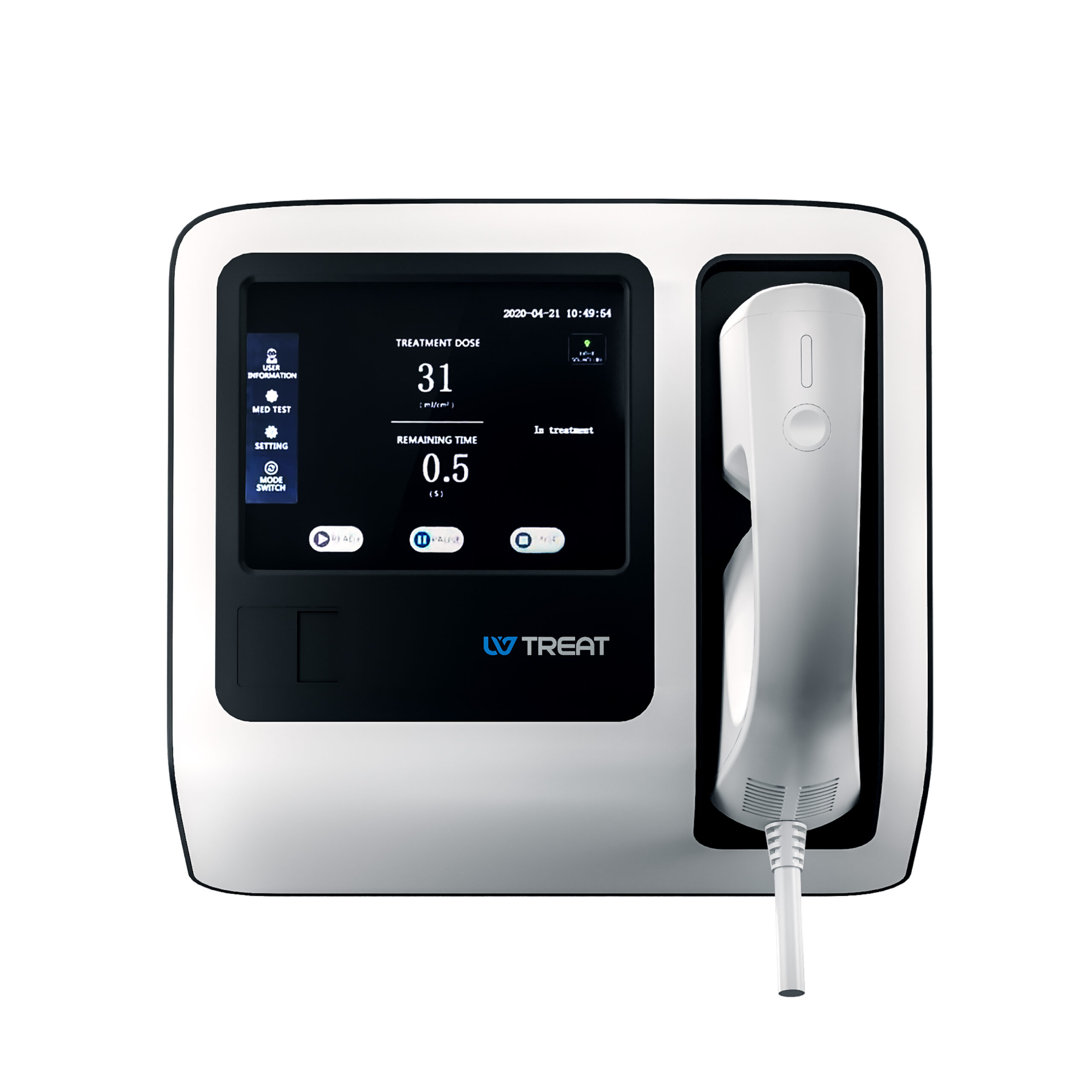
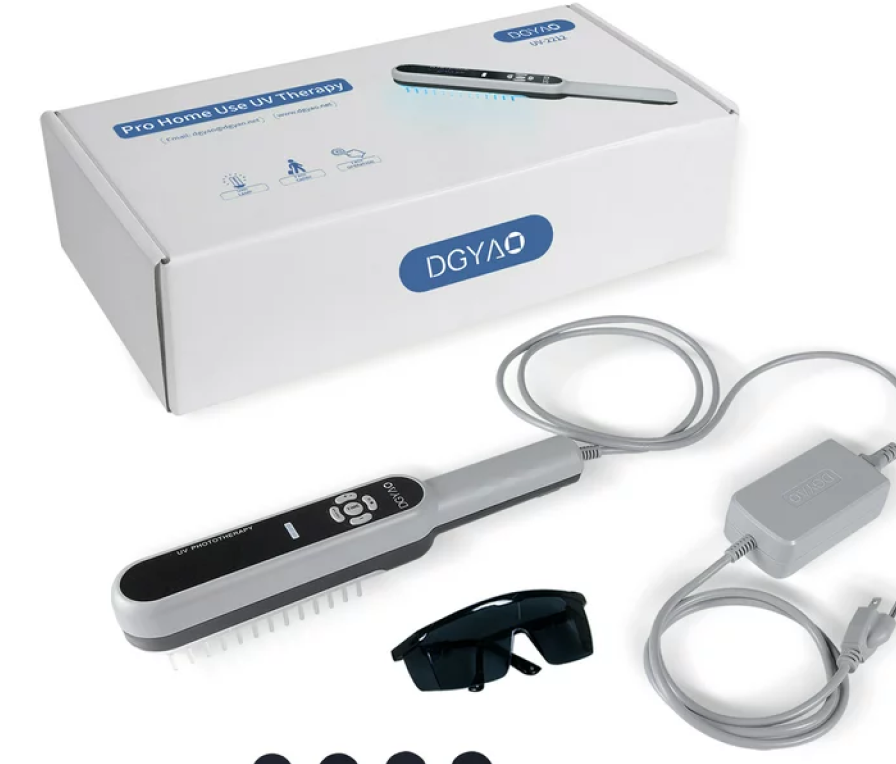
Devices from UV Treat cost a fraction of what laser sessions run and carry none of the systemic risks associated with oral terbinafine or itraconazole. Published clinical data supporting their use, on the other hand, remain limited compared to either established modality.
Safety and Risks
Acute UVB overexposure produces erythema. Over time, cumulative doses to the same skin area increase the likelihood of squamous and basal cell carcinoma — a concern that applies even when the target is the nail and not the skin itself. Zinc oxide, built-in apertures on the device, or simple physical barriers should cover periungual tissue at every session. For a more detailed overview, see our guide for safety of a UV lamp.
Patients should also know that UV dries the nail plate over time. Nails that are already compromised can look worse before they look better — a detail worth mentioning at the start of treatment, not after. UVB and UVC both damage the cornea and lens; UV-rated eye protection is not optional.
Then there is the diagnostic question, which applies to every treatment on this list and not just UV. Psoriasis, lichen planus, traumatic changes, and subungual melanoma can all look like onychomycosis on exam. Starting antifungal treatment without confirming the fungus means treating a condition that may not be there — and losing months in the process. KOH prep, fungal culture, PAS staining, or PCR should confirm onychomycosis before any antifungal treatment begins — AAD, AAFP, and British Association of Dermatologists guidelines all agree on this point (2, 12).
Conclusion
UV light destroys dermatophytes in vitro. Nail plate opacity at the most effective germicidal wavelengths limits reliable clinical translation. Published evidence positions phototherapy as a useful supplement within multimodal onychomycosis management — not as a standalone treatment.
The therapeutic backbone remains the same: confirmed diagnosis, oral terbinafine for moderate-to-severe infections, topical agents for milder cases, debridement, and environmental decontamination. UV adds antifungal pressure without systemic toxicity, and research into optical clearing agents, fractional laser-assisted delivery, and newer photosensitizers may expand its role in time.
References
- Leung AKC, Lam JM, Leong KF, et al. Onychomycosis: An Updated Review. Recent Patents on Inflammation & Allergy Drug Discovery. 2020;14(1):32–45.
- Rodgers P, Bassler M. Onychomycosis: Rapid Evidence Review. American Family Physician. 2021;104(4):359–367.
- Sigurgeirsson B, Baran R. The prevalence of onychomycosis in the global population — a literature study. JEADV. 2014;28(11):1480–1491.
- Gupta AK, Wang T, Polla Ravi S, et al. Global prevalence of onychomycosis in general and special populations. Mycoses. 2024;67(4):e13725.
- Nouri H, Haghani I, Shokohi T, et al. The Efficacy of Ultraviolet Irradiation on Trichophyton Species Isolated From Nails. Jundishapur J Microbiol. 2015;8(8):e22039. https://pmc.ncbi.nlm.nih.gov/articles/PMC4548401/
- Dai T, Tegos GP, Rolz-Cruz G, et al. Ultraviolet C inactivation of dermatophytes: implications for treatment of onychomycosis. Br J Dermatol. 2008;158(6):1239–1246.
- Smijs TGM, Jachtenberg JW, Pavel S, et al. An investigation into the inhibitory effect of ultraviolet radiation on Trichophyton rubrum. Lasers Med Sci. 2014;29(4):1373–1381.
- Alhamdani F, et al. Antimicrobial photodynamic therapy in onychomycosis management: A systematic review. Photodiagnosis Photodyn Ther. 2025.
- Kreijkamp-Kaspers S, Hawke K, et al. Oral antifungal medication for toenail onychomycosis. Cochrane Database Syst Rev. 2017.
- Falotico JM, Lipner SR. Updated Perspectives on the Diagnosis and Management of Onychomycosis. Clin Cosmet Investig Dermatol. 2022;15:1933–1957.
- Terbinafine. StatPearls.
- Nail Fungus: Diagnosis and Treatment. AAD.
- Bristow IR, et al. The Efficacy of Phototherapy for the Treatment of Onychomycosis. Photonics. 2021;8(9):350.
FAQ
-
Per-session costs are substantially higher, and long-term mycological cure data for laser remain weak.
-
In vitro — yes. Through intact nail — not reliably. The plate is opaque at germicidal wavelengths. UV has a role in combined regimens but published data do not support it as a standalone cure.
-
Sessions last 5–20 minutes depending on device output and protocol. Treatment schedules typically call for 3–4 weekly sessions. Partial clinical improvement may emerge within 4–8 weeks; complete nail replacement requires 12–18 months irrespective of modality.
-
Rarely. Without treatment, onychomycosis tends to spread across the plate and to neighboring nails. Topicals work for mild cases; moderate-to-severe disease responds better to systemic therapy than to observation.
-
Yes, however there are safety rules that should be followed. UV-rated eye protection are required at every session. Patients on tetracyclines, fluoroquinolones, or thiazides should get dermatologic clearance first.