UVB Handheld Lights

Info
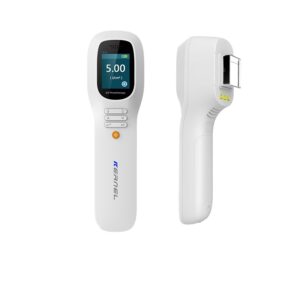
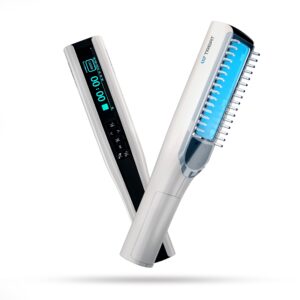
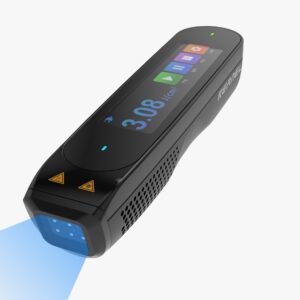
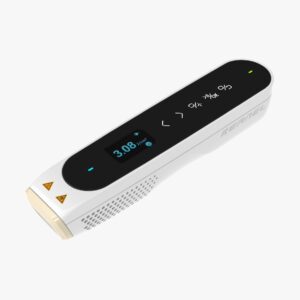
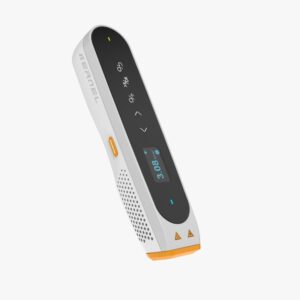
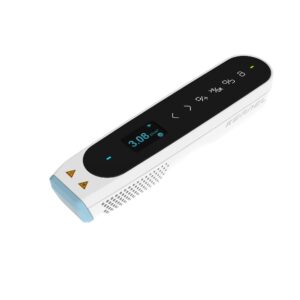
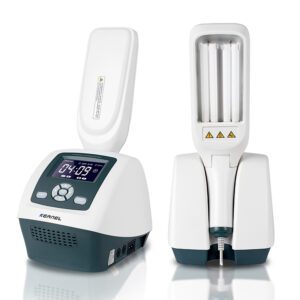
A handheld UVB phototherapy device is a small lamp that delivers narrowband UVB at around 311 nm to a defined area of skin (1). Dermatology clinics use handheld UVB devices for localized phototherapy when a full-body cabin treatment is unnecessary. Typical targets are a single plaque, a strip of scalp, the knuckles, or a perioral patch – localized conditions that do not require full-body phototherapy. The form factor matters in practice: a clinician can position the source at a fixed distance from the target, irradiate for seconds to minutes, and move on. That fits well into a busy dermatology workflow where most appointments involve a small number of recalcitrant areas rather than diffuse disease.
Key Benefits of Handheld UVB Therapy Devices
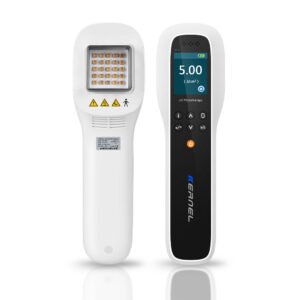
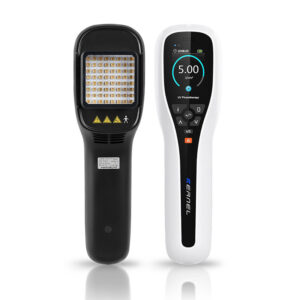
A handheld UVB lamp has a fixed emission window – typically around 5 × 2 cm on compact wands and up to 12 × 4.5 cm on larger handhelds. Treatment is delivered within that window: the operator positions the face of the lamp over the affected skin, fixes the distance with a comb or spacer (usually 3 cm), and runs the session timer. There is no beam shaping, which is what separates the handheld category from 308 nm excimer systems. Lesions larger than the aperture are treated by stepwise repositioning. Across the Kernel KN-4003 and KN-4006 series, irradiance ranges from 0.6–7.5 mW/cm² using Philips 311 nm PL-S lamps. Dose calculations follow the same MED-based principles used in full-size NB-UVB cabins. (2). The 311 nm wavelength itself is the range cited by AAD/NPF psoriasis guidelines and the 2022 BAD narrowband UVB guidelines for psoriasis, vitiligo, and other photoresponsive disease (3, 4)
For clinics, the practical advantages of a UVB handheld lamp are straightforward: portability between treatment rooms, fast warm-up, simple per-session dose control, and the ability to treat anatomic regions that don’t fit comfortably in a cabin (scalp under hair, between fingers, behind the ear). A handheld uvb phototherapy lamp also supports treatment of pediatric and elderly patients who tolerate short, seated sessions better than standing in an enclosed unit (5).
Professional Handheld UVB Systems for Dermatology Clinics
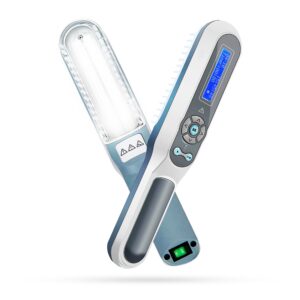
Professional handheld UVB light generally falls into three formats. Corded narrowband uvb units – continuous power, stable irradiance, longer session capacity, and predictable lamp hours (typical Philips-tube service life around 500 hours). Cordless rechargeable wands are the best option for mobility, which helps in multi-room clinics or when treating bed-bound patients. Larger handheld panels, sometimes called mini-panels, sit between a true wand and a partial-body cabin and are useful for treating moderately sized areas like the lower back or a single shin.
Most devices deliver irradiance in the 0.6–7.5 mW/cm² range and ship with comb attachments for scalp work, fixed-distance spacers, UV-protective goggles, and integrated timers. Clinics tend to integrate these into stepped care: handheld narrowband uvb for focal disease or maintenance, with referral to cabin or excimer laser treatment when such output isn’t enough (3).
Using Handheld UVB Devices in Clinical Practice
A phototherapy nurse or technician sets the starting dose either from a measured MED or from the skin phototype, mounts the spacer, runs the timer, and logs the joules delivered. Between patients the lamp is wiped down and rolled to the next room. Nothing about the protocol is complicated – that’s part of why these units fit easily into existing clinic schedules. Staff training is short, cleaning is simple, and replacement tubes are widely available.
Modern dermatology practices use handheld uvb therapy lamps alongside topical therapy or biologics – not in place of them (4). Recent multicenter data from the LITE trial (n=783) confirmed that home and in-office narrowband UVB are clinically equivalent for plaque psoriasis, supporting the role of handheld devices in continuity-of-care protocols (6). A well-built handheld uvb phototherapy lamp pays for itself quickly in a busy practice because it converts otherwise unbillable touch-ups into structured, documented procedures.
UVTREAT supplies professional handheld narrowband UVB systems to clinics worldwide, with corded and cordless 311 nm wands, and full clinical documentation. Pair our handheld units with our UVB therapy light cabins and NB UVB lamp panels to build a complete in-office phototherapy workflow.
References
- Eleftheriadou V, Thomas K, Ravenscroft J, et al. Feasibility, double-blind, randomised, placebo-controlled, multi-centre trial of hand-held NB-UVB phototherapy for the treatment of vitiligo at home (HI-Light trial). Trials. 2014;15:51. https://pmc.ncbi.nlm.nih.gov/articles/PMC3923442/
- Aydoğan K, Karadoğan SK, Tunalı Ş, et al. The efficacy and safety of targeted narrowband UVB therapy: a retrospective cohort study. Turkish Journal of Medical Sciences. https://www.ncbi.nlm.nih.gov/pmc/articles/PMC7018302/
- Elmets CA, Lim HW, Stoff B, et al. Joint American Academy of Dermatology – National Psoriasis Foundation guidelines of care for the management and treatment of psoriasis with phototherapy. J Am Acad Dermatol. 2019;81(3):775–804.
- Ling TC, Clayton TH, Crawley J, et al. British Association of Dermatologists and British Photodermatology Group guidelines for narrowband ultraviolet B phototherapy 2022. Br J Dermatol. https://pmc.ncbi.nlm.nih.gov/articles/PMC9542627/
- Wiss K, Paquette GM, Harris JE, et al. Narrowband ultraviolet B phototherapy in pediatric vitiligo: a retrospective study. J Am Acad Dermatol. 2023. https://www.jaad.org/article/S0190-9622(23)00190-1/fulltext
- Gelfand JM, et al. Home- versus office-based narrowband UVB phototherapy for patients with plaque or guttate psoriasis: the LITE randomized clinical trial. 2024.
- Khandpur S, et al. Clinical efficacy and safety of home-based handheld NB-UVB device therapy in vitiligo: a systematic review and meta-analysis. 2025.
FAQ
- Handheld UVB devices are used for localized phototherapy treatment of psoriasis, vitiligo, eczema, scalp involvement, and other focal skin conditions. (2, 7).
- Price, targeted dose, possibility to use at home, fast room-to-room use, and access to areas that don't fit in a cabin (scalp, web spaces, behind the ear). They're also suitable for short pediatric sessions and follow-up touch-ups between cabin visits (5).
- Yes. Clinical-grade handheld units use the same 311 nm narrowband output as cabin systems, support documented per-session dosing, and meet the medical-device standards expected for in-office dermatology equipment. They're a standard tool in modern phototherapy practice (3, 4).