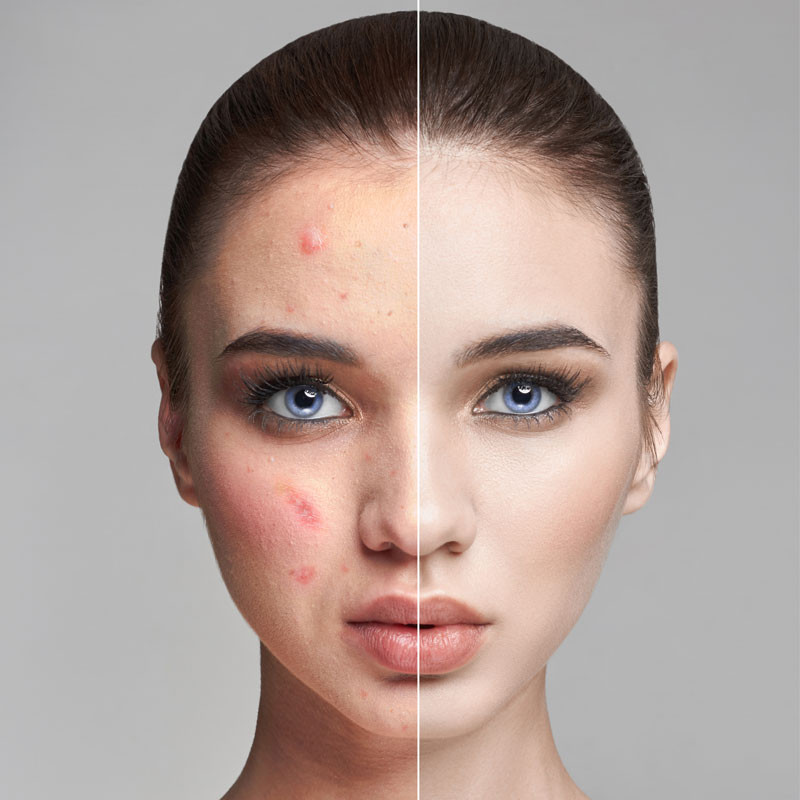
Excimer Laser 308 nm
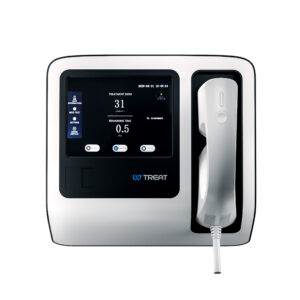
Info
In modern dermatology practice, the 308 nm excimer laser has earned a steady place among targeted UVB options, and most clinics that regularly treat chronic plaque conditions now keep one on hand. The way the device works is straightforward enough – it puts UV energy directly onto the affected skin and skips everything around it, which fits well with localized psoriasis, isolated vitiligo patches, stubborn eczema flares, and other presentations that simply haven’t budged with first-line therapy. As for the underlying evidence, the 2019 AAD–NPF phototherapy guidelines settled the question for localized plaque psoriasis specifically: the modality received a Grade A recommendation, supported by the clinical trial data available at the time of publication (1).
Targeted 308nm Excimer Light Technology
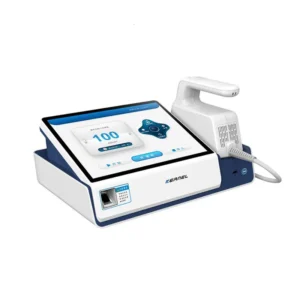
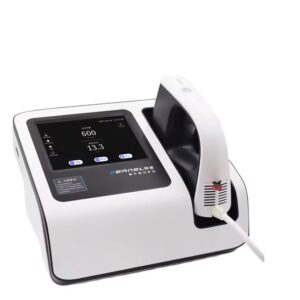
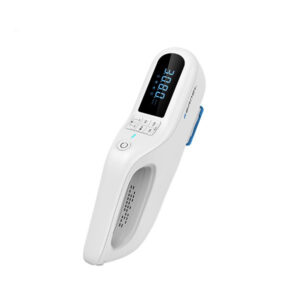
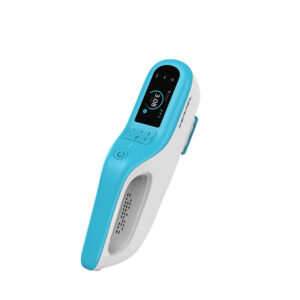
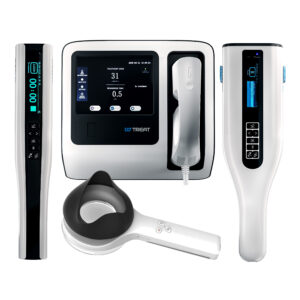
A xenon-chloride gas discharge inside the device generates the 308 nm UVB. From there, a handpiece or fiber-optic light guide carries the beam to the patient, with the operator placing it directly on the lesion. Because the dose isn’t spread across the whole body, per-session fluence runs higher than what a UVB cabin can safely deliver (2, 3).
Inside treated tissue, the 308 nm wavelength drives apoptosis of pathogenic T-cells and pulls keratinocyte turnover back toward baseline. In vitiligo lesions, the same wavelength wakes up melanocytes and pushes melanin production forward (3). Excimer lamps emit at the same wavelength with comparable clinical results – what separates the laser is higher fluence delivered through a smaller footprint (3).
Professional Applications in Modern Dermatology
The device carries FDA clearance for psoriasis, vitiligo, atopic dermatitis, and leukoderma (3). In day-to-day practice, dermatology excimer laser therapy is used most often for:
- Plaque psoriasis with BSA under 10%, particularly scalp, palmoplantar, and nail forms (1, 4)
- Focal and segmental vitiligo. Combined with topical tacrolimus, treatment achieves over 75% repigmentation in resistant sites (3)
- Atopic dermatitis on less than 20% BSA. Pruritus, lichenification, and S. aureus density on lesional skin all decline (3)
- Off-label evidence in alopecia areata, mycosis fungoides at stages IA–IIA, prurigo nodularis, granuloma annulare, and morphea (3, 4)
In their 1997 Lancet report, Bónis and colleagues documented plaque clearance in a mean of 8.33 sessions versus roughly 30 sessions for whole-body NB-UVB (3). That ratio still drives the operational appeal of laser uvb in localized disease.
Why Clinics Integrate Excimer Phototherapy Systems
The case for adding excimer light therapy is operational as much as clinical:
- Targeted output. The handpiece confines UVB to the lesion. That matters at sites where a full-body cabin or UVB Narrowband Lamps array exposes far more skin than needed – genitals, ears, scalp.
- Compact installation. Cart-mounted units fit a standard treatment room. No dedicated phototherapy suite required.
- Short sessions. Most appointments run 5–10 minutes. Lesions typically begin responding within 6–8 visits (1).
- Lower lifetime UV burden. Higher per-session fluence on a smaller area cuts cumulative UV exposure compared with whole-body protocols (3).
- Service-line fit. Practices building out light-based dermatology often run an excimer 308 nm laser alongside red light therapy and led photodynamic therapy, with a uvb handheld light for take-home use.
- Schedule efficiency. Two or three sessions per week (1), with fewer total visits to clearance than non-targeted phototherapy.
Practices evaluating a system should pay closest attention to fluence stability, spot uniformity, how the dosimetry is controlled, and whether the unit carries FDA clearance. Day-to-day dose reproducibility ultimately rises and falls with hardware quality.
References
(1) Elmets CA, Lim HW, Stoff B, et al. Joint American Academy of Dermatology–National Psoriasis Foundation guidelines of care for the management and treatment of psoriasis with phototherapy. J Am Acad Dermatol. 2019;81(3):775–804.
(2) DermNet NZ. Excimer 308-nm light treatment. https://dermnetnz.org/topics/excimer-308-nm-light-treatment
(3) Hartmann Schatloff D, Retamal Altbir C, Valenzuela F. The role of excimer light in dermatology: a review. An Bras Dermatol. 2024;99(6):887–894.
(4) Mehraban S, Feily A. 308nm Excimer Laser in Dermatology. J Lasers Med Sci. 2014;5(1):8–12.
FAQ
- This refers to a form of targeted UVB therapy that uses a xenon-chloride laser or lamp tuned specifically to 308 nm. What sets it apart from broader phototherapy is that the beam is aimed at the lesion itself, so healthy skin around the treatment area never gets dosed at all (2, 3).
- You'll find them in dermatology practices, academic centers, and dedicated phototherapy units. The most common indications are localized psoriasis, vitiligo, and atopic dermatitis (1, 3).
- A standard NB-UVB cabin works by lighting up the entire body at once, but at a relatively modest intensity per visit. The excimer takes the opposite approach - it concentrates a much higher dose onto just the affected patch, and that's the reason localized psoriasis tends to clear in roughly one-third of the sessions a cabin protocol would otherwise require (3).
- Fluence stability, spot size, dosimetry, footprint, service support, and FDA clearance. Return on investment tracks case volume in localized psoriasis, vitiligo, and difficult-to-reach sites (1).