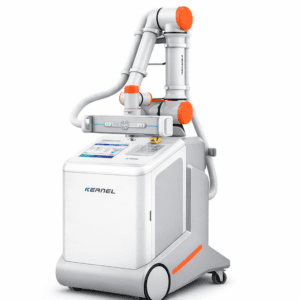
X-ray Radiation Therapy System
Info
Professional superficial X-ray radiation therapy systems are widely used in dermatology clinics, oncology centers, and modern medical facilities for non-invasive treatment procedures involving superficial tissue applications. Modern systems are designed to support controlled radiation delivery, optimized clinical workflows, and integration into professional treatment environments. Alongside advanced imaging systems and modern superficial radiation therapy systems, superficial radiation therapy equipment has become an important component of contemporary dermatology and oncology practices (1)(2).
Modern Superficial Radiation Therapy Systems
Modern superficial radiation therapy systems are developed for professional clinical use where controlled low-energy X-ray delivery is required for superficial treatment applications. These systems are commonly implemented in dermatology and oncology environments where medical professionals require precision, workflow efficiency, and configurable treatment parameters.
Advanced platforms such as the Kernel Superficial X-ray Radiation Therapy System XT-5600 and XT-5601 are designed to support modern medical workflows through integrated control systems, adjustable operating configurations, and optimized treatment management (3)(4).
Modern systems may include touchscreen interfaces, programmable treatment settings, workflow management software, and configurable applicators that help healthcare providers optimize clinical operations. Many facilities also combine superficial radiotherapy with additional dermatology treatment technologies depending on procedural requirements and clinical specialization.
A professional superficial radiation therapy machine is typically designed for controlled low-energy radiation delivery in dermatology and oncology environments.
According to Cancer Research UK, superficial radiotherapy is commonly used for treatment applications involving areas close to the skin surface, making these systems particularly relevant for dermatology-focused medical facilities (2).
Applications and Benefits for Medical Facilities
Superficial radiation therapy systems implementation supports modern treatment workflows that require controlled superficial radiation delivery and efficient patient management.
Healthcare facilities often select professional radiation therapy systems because of their workflow flexibility, configurable treatment settings, and compatibility with modern clinical environments. Systems may be integrated with additional dermatology radiation therapy platforms, diagnostic imaging equipment, and digital treatment management systems.
In dermatology environments, clinics frequently combine superficial radiation therapy systems, and professional UV therapy lights used for non-radiation phototherapy of inflammatory skin conditions such as psoriasis and vitiligo, to create broader treatment capabilities. In modern dermatology environments, superficial radiation therapy equipment is often integrated with confocal microscopy that assists clinicians with high-resolution skin imaging and diagnostic evaluation before treatment procedures.
Professional systems can help clinics improve operational consistency, treatment planning efficiency, and equipment scalability while supporting modern healthcare infrastructure requirements (1)(2).
Choosing Professional Radiation Therapy Equipment
When selecting professional superficial radiation therapy equipment, clinics and medical facilities should evaluate several important factors, including system functionality, workflow integration, treatment configuration options, and operational requirements.
Medical providers often consider:
- System configuration and radiation delivery capabilities
- User interface and workflow efficiency
- Integration with existing clinical infrastructure
- Serviceability and technical support
- Facility space requirements
- Digital workflow compatibility
- Long-term operational scalability
Facilities that already use superficial radiation devices, or dermatology radiation therapy systems may also prioritize compatibility with existing dermatology and oncology workflows.
The overall cost of superficial radiation therapy equipment depends on factors such as system configuration, workflow functionality, software integration, and treatment capabilities. Clinics with larger patient volumes may require more advanced systems designed for expanded clinical operations and multi-room use.
Professional superficial radiation therapy systems continue to play an important role in dermatology and superficial oncology practices where clinics require flexible, workflow-oriented equipment for modern medical environments (1,3,4).
References
- https://sensushealthcare.com/
- https://www.cancerresearchuk.org/about-cancer/treatment/radiotherapy/external/types/superficial-skin-radiotherapy
- https://uvtreat.com/product/kernel-superficial-x-ray-radiation-therapy-system-xt-5600/
- https://uvtreat.com/product/kernel-superficial-x-ray-radiation-therapy-system-xt-5601/
FAQ
- Dermatology clinics, oncology centers, hospitals, outpatient treatment facilities, and specialized medical practices focused on superficial treatment procedures (1)(2).
- SRT radiation therapy is a form of low-energy external radiation therapy designed for treatment applications involving tissues located near the skin surface. It is commonly used in dermatology and specialized oncology environments (2).
- Clinics should evaluate system functionality, workflow integration, treatment configuration options, operational requirements, technical support availability, and compatibility with existing medical infrastructure before purchasing (3)(4).