HomeArticlesMohs Surgery vs Radiation for Skin Cancer: Which Treatment Is Better?
Written byAbby Gould,MD; Board-Certified Dermatologist
Published on July 21, 2026
Mohs Surgery vs Radiation for Skin Cancer: Which Treatment Is Better?
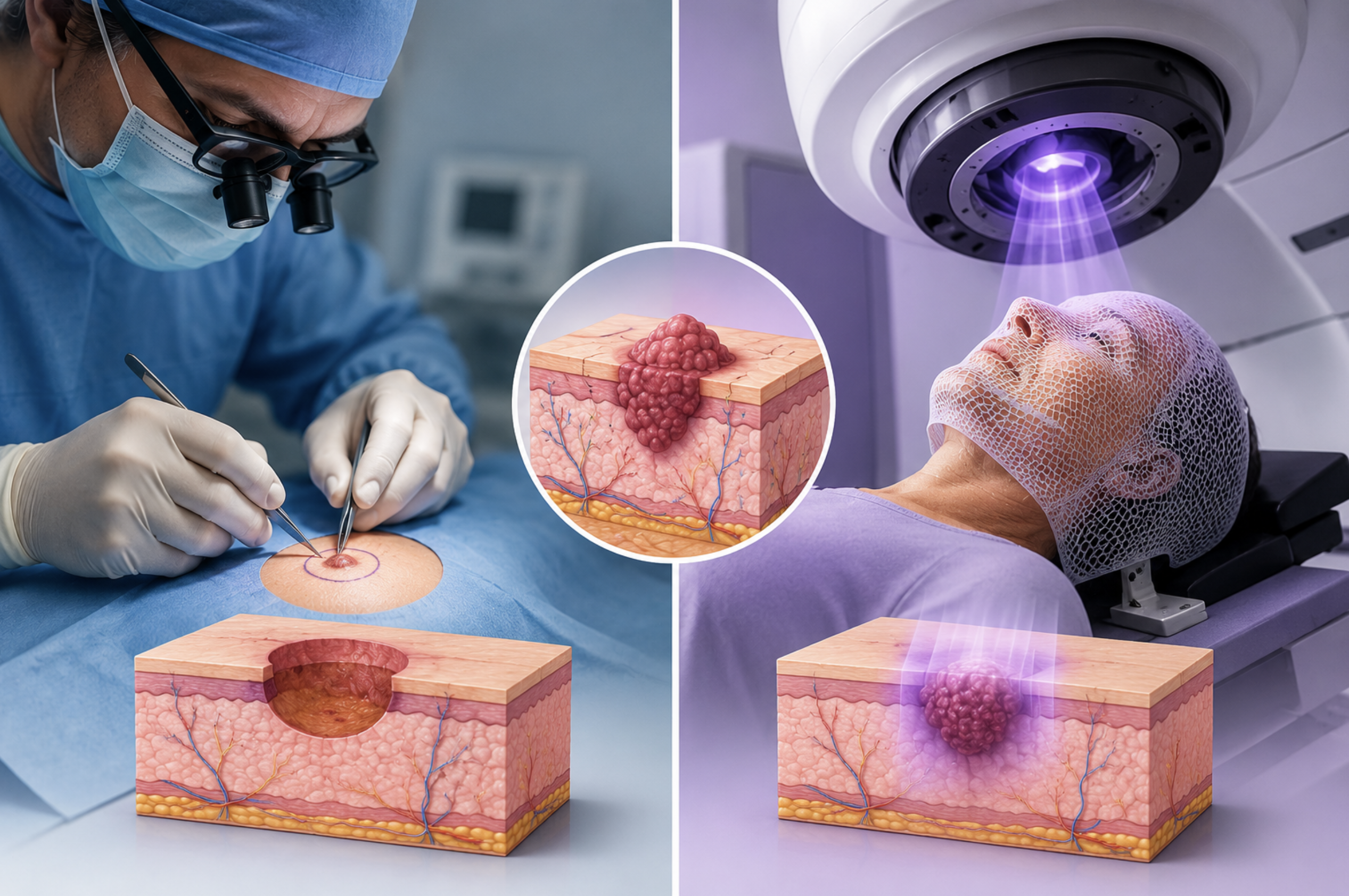
Patients diagnosed with non-melanoma skin cancer are usually told they have options, and the two that come up most often are Mohs surgery and radiation therapy. Both are established, well-studied treatments for basal cell carcinoma (BCC) and cutaneous squamous cell carcinoma (SCC), the two most common forms of skin cancer. Naturally, the first question I hear in clinic is some version of mohs vs radiation – which one cures it better?
Much depends on the tumor: its type, its location, and the way it behaves histologically. The patient’s age and general health weigh on the choice just as heavily. The sections that follow set out how each treatment works, whom it tends to suit, and where its limits lie in the mohs vs radiation comparison.
What Is Mohs Surgery?
Frederic Mohs worked out the basic idea in the 1930s. His early version took days and relied on chemical fixation; the technique we use now is finished in a single day with fresh-frozen tissue (1). Precision is what it is known for. Patients often want to know how does Mohs surgery work, and the answer lies in the sequence of the procedure itself.
The surgeon begins by removing the visible tumor along with a narrow margin of surrounding skin. That specimen is then divided and color-coded so that each edge can be traced back precisely to its position in the wound, after which the surgeon examines the complete margin under the microscope while the patient remains in the office. Clear all around, and the case is done. If cancer sits at one edge, the surgeon returns to that single mapped point and takes a little more, nothing else. Layer by layer, until the margins come back clean. Because the whole margin is examined while the patient is still in the chair, there is no guessing about whether the cancer is out, and the wound is usually repaired the same afternoon (1, 2).
When is Mohs surgery recommended? Selection follows the Appropriate Use Criteria (AUC) developed jointly by the American Academy of Dermatology and the Mohs surgery societies (3). The criteria weigh anatomic location, tumor features, and patient factors. So-called “Area H” – the central face, eyelids, nose, lips, ears, as well as the genitals, hands, and feet – almost always favors Mohs because tissue there is functionally and cosmetically precious (2, 3). Aggressive or poorly defined tumors, recurrent cancers, and cancers in immunosuppressed or transplant patients are also strong candidates (1, 3).
The main Mohs surgery benefits are high cure rates, maximal preservation of healthy skin, and immediate margin confirmation, all in a single visit under local anesthesia (2, 4). Mohs surgery recovery is generally straightforward. Discomfort in the first day or two is usually managed with acetaminophen and ibuprofen, and while some bruising and swelling may last around a week, most patients resume their normal routine shortly thereafter (4).
What Is Radiation Therapy for Skin Cancer?
Radiation therapy provides a way to treat skin cancer without an incision. In terms of how does radiation therapy work for skin cancer, focused beams of ionizing radiation damage the DNA inside the tumor cells, so that cells unable to repair themselves stop dividing and gradually die (5). The sessions themselves are painless and brief, though a full course is spread across many visits over several weeks (6).
When is radiation used for skin cancer? In practice, skin cancer radiation is most valuable for patients who cannot tolerate surgery or decline it – the very elderly, the frail, those on multiple blood thinners, or patients whose wounds heal poorly (6, 7). It is also useful when surgery would be disfiguring, and in the postoperative setting when margins cannot be fully cleared or when there is perineural (nerve) involvement (8). This mirrors current guidance: the American Society for Radiation Oncology recommends definitive radiation as primary treatment for patients who are not surgical candidates, and conditionally to preserve appearance and function (8).
Radiation Therapy vs Superficial Radiation Therapy
Not all skin cancer radiation treatment is the same. Conventional, or external-beam, radiation uses higher-energy beams that reach deeper tissues, which makes it the appropriate choice for larger, more advanced, or node-involved tumors (6). Superficial radiation therapy (SRT) works on a different scale. It uses low-energy kilovoltage X-rays – roughly 50 to 100 kVp – that penetrate only a short distance, so the dose concentrates in the skin and largely spares deeper structures (9). SRT is best suited to well-defined, superficial tumors, typically those less than about 2 mm deep and 2 cm across (7).
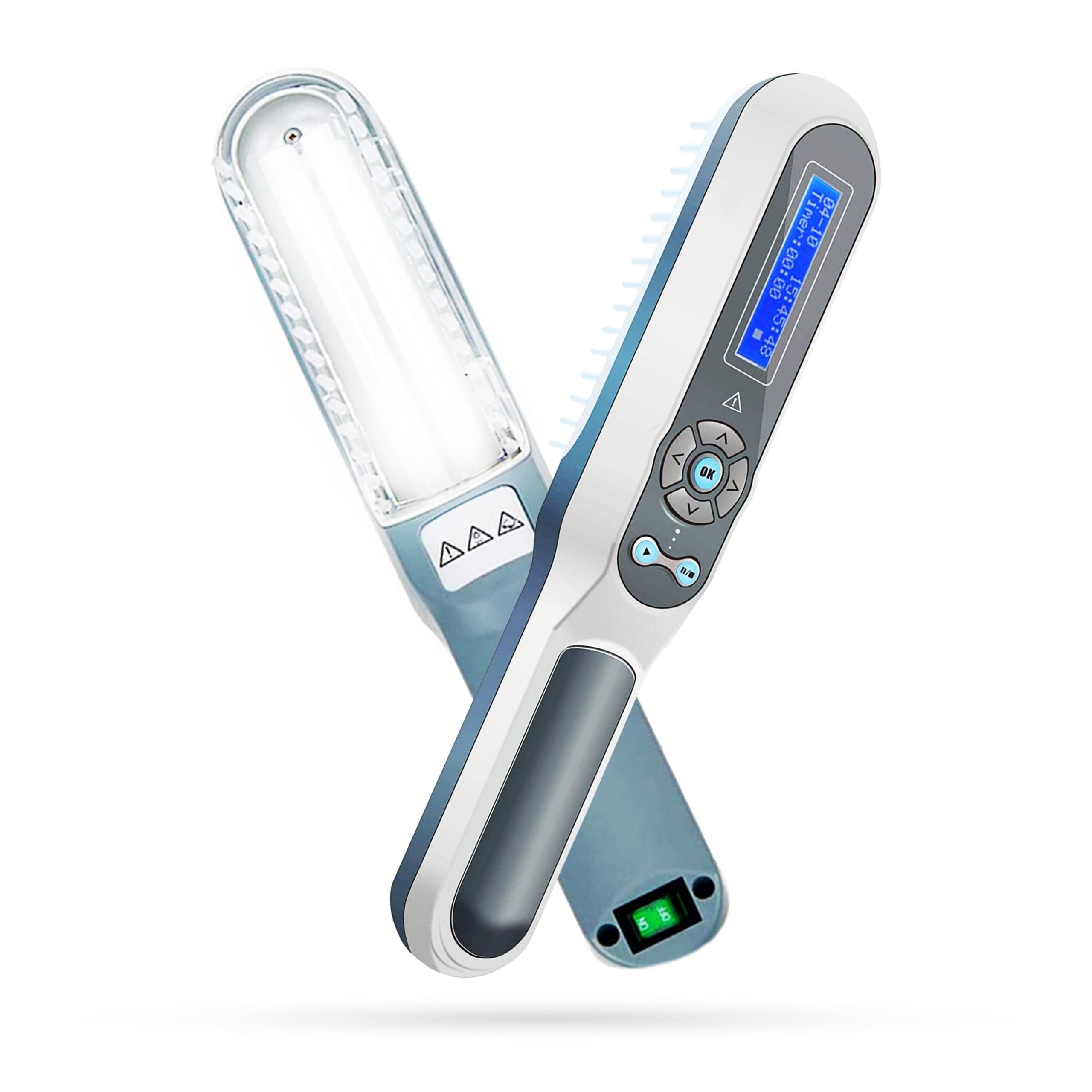
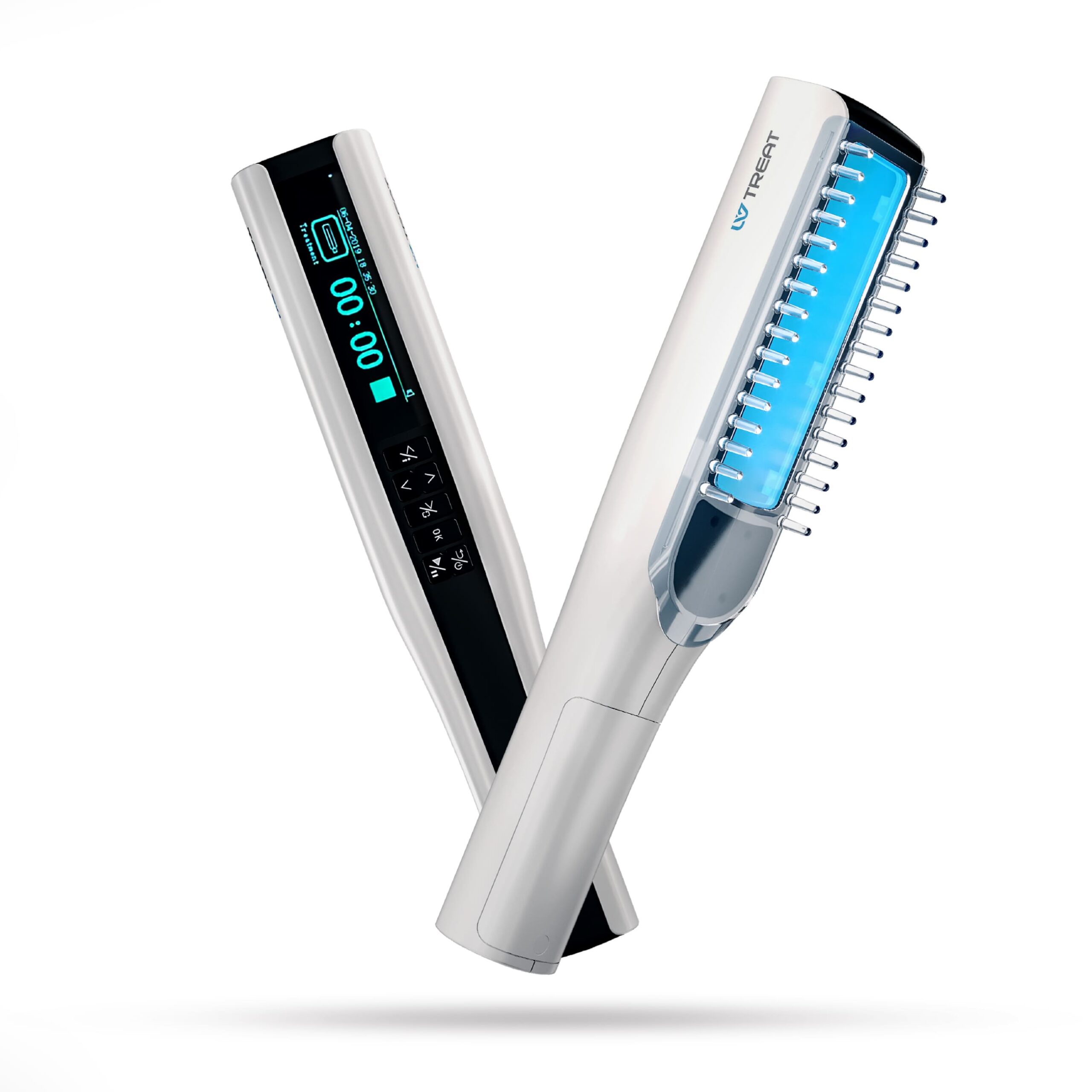
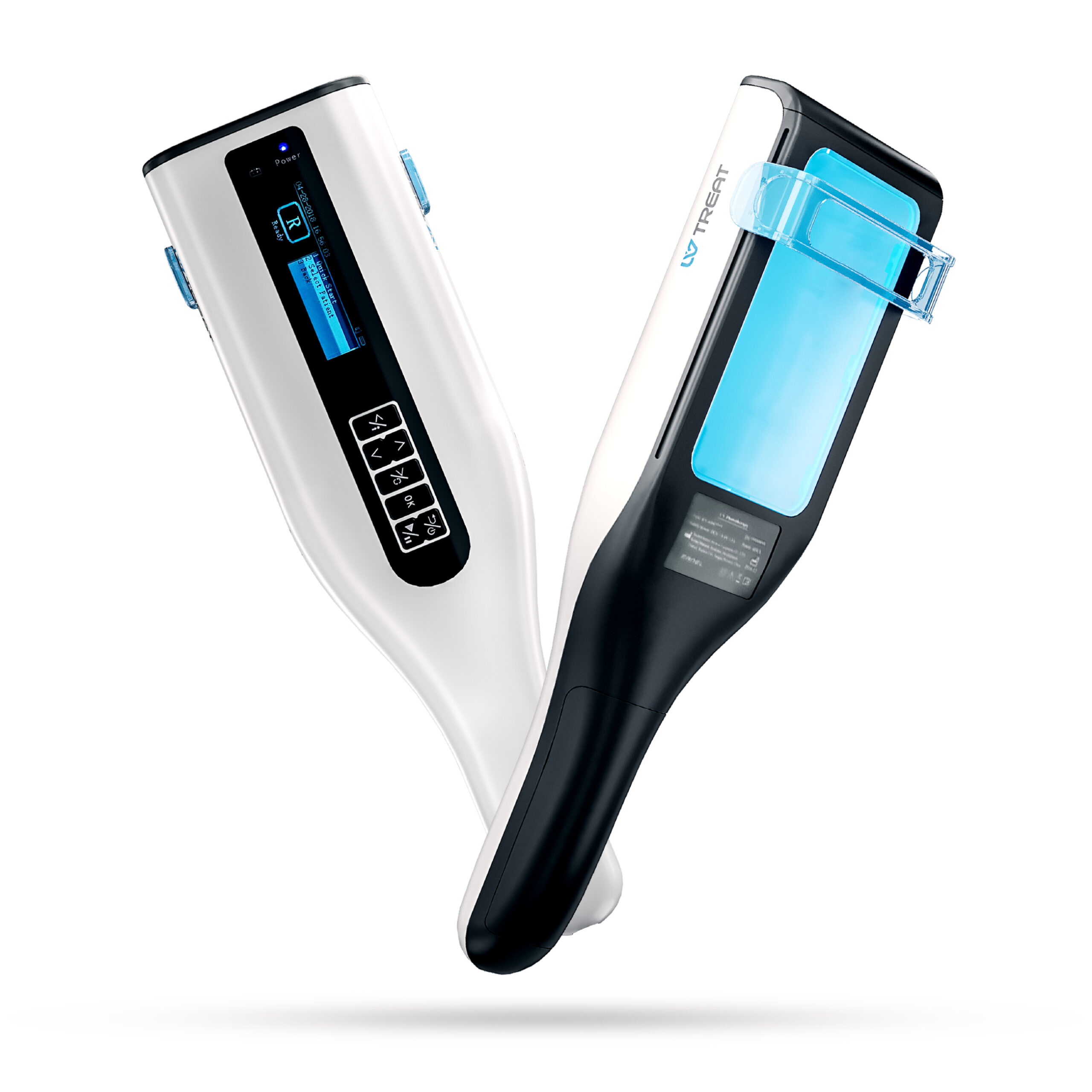
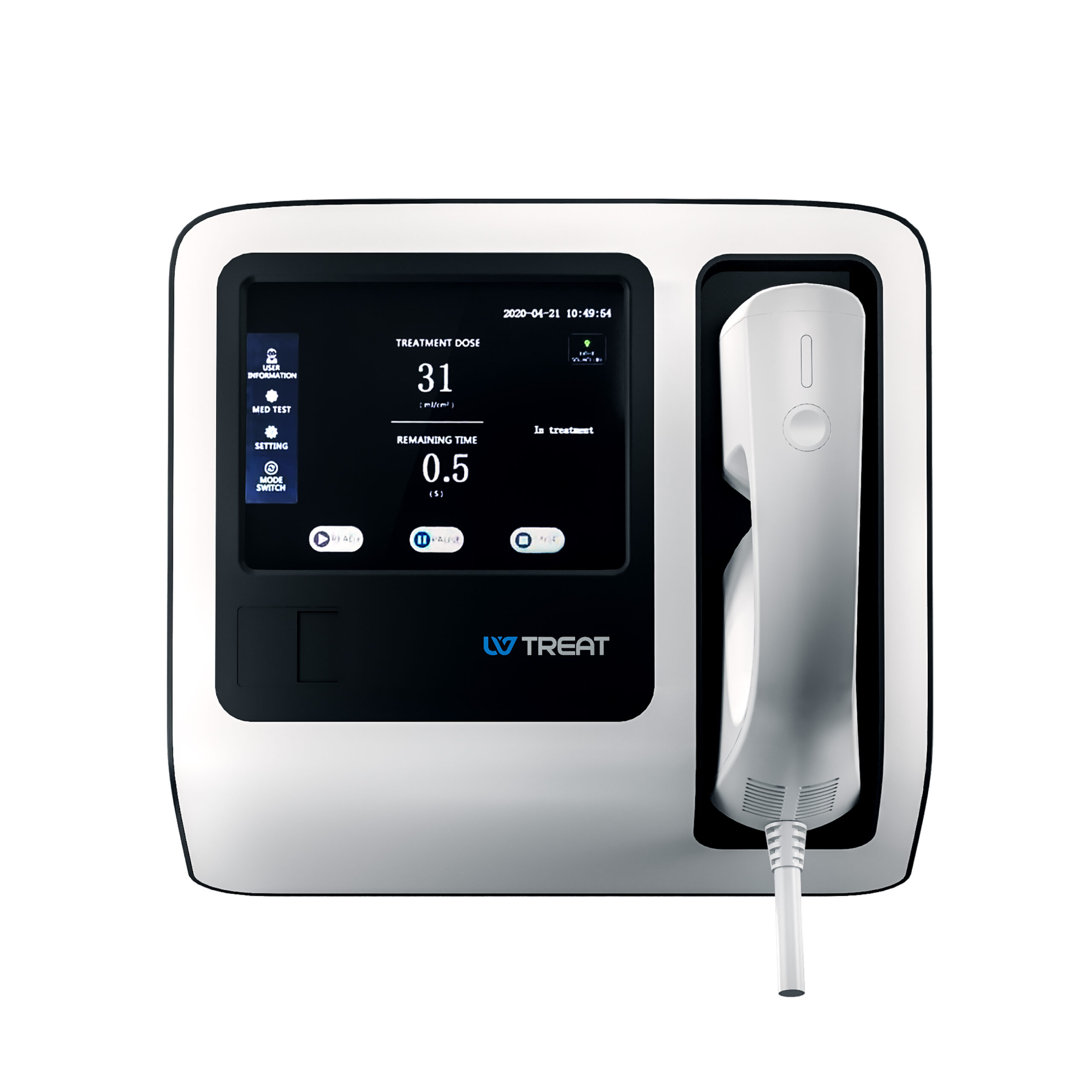
A more recent refinement, image-guided SRT, pairs the treatment with high-resolution dermal ultrasound (around 22 MHz) so the clinician can measure tumor depth and adjust the energy accordingly (9, 10). These modernX-Ray Radiation Therapy Systems have broadened the non-surgical options for selected patients. It is worth distinguishing SRT from aphototherapy device, which uses ultraviolet light to treat inflammatory conditions such as psoriasis rather than to destroy cancer.
Mohs Surgery vs Radiation: How to Decide
The decision of surgery or radiation for skin cancer comes down to a handful of practical factors.
Effectiveness. Mohs offers the highest cure rate of any skin cancer treatment – commonly cited between 97% and 99% for primary BCC and SCC – supported by 5- and 10-year follow-up data (2, 4). SRT also performs well in appropriate cases; reported local recurrence averages around 4.2% for BCC and 6.4% for SCC (7), and image-guided SRT series have reported local control above 99% in short-term follow-up (10, 11). One important caveat drives much of the professional debate: Mohs confirms cure histologically under the microscope, whereas radiation success is judged clinically or by imaging, which can miss disease hiding at the edges. Many SRT studies are also retrospective with relatively short follow-up, and a Journal of the American Academy of Dermatology analysis found SRT-treated cancers more likely to recur than those treated with Mohs (6, 4).
Cosmetic outcomes and recovery. Mohs leaves a surgical wound and scar but preserves the most tissue possible, which usually gives excellent long-term cosmesis on the face (2). Radiation avoids a wound entirely, though irradiated skin can change over the years – thinning, small visible vessels (telangiectasias), and pigment shifts may appear well after treatment ends (12).
Treatment duration. Mohs is normally completed in one day. A radiation course typically runs 15 to 30 sessions, several times weekly over several weeks (6, 13).
Patient and tumor factors. For facial lesions and cosmetically sensitive sites, Mohs is the usual first line (2, 3). For older or medically fragile patients, radiation can be the kinder path (7). Because radiated tissue is harder to operate on if the cancer returns, and because the field carries a small long-term risk of a new radiation-induced cancer, radiation is generally reserved for older patients rather than younger ones (12). Non-invasive imaging such as reflection confocal microscopy can help characterize lesions and monitor the skin over time, whichever treatment is chosen.
Whatever the tumor type, these decisions are individualized and belong in a shared conversation between patient and treating physician.
Benefits and Limitations of Mohs Surgery and Radiation Therapy
Benefits of Mohs Surgery
Mohs preserves healthy tissue, delivers the highest cure rates for appropriate tumors, and provides complete margin assessment with same-day results and reconstruction (1, 2, 4). Because it is finished in one visit, it is also cost-effective relative to a multi-week radiation course (13).
Limitations of Mohs Surgery
It is still surgery. It requires local anesthesia, creates a wound that needs repair, and carries a small risk of bleeding, infection, or scarring (4). It is not the right choice for every patient – those who genuinely cannot tolerate a procedure, or who refuse one, are better served by another approach.
Benefits of Radiation Therapy
Radiation is non-surgical, needs no cutting or anesthesia, and leaves no immediate wound, which makes it valuable for poor surgical candidates and for cancers in areas where surgery would be difficult (6, 7). It can treat cosmetically sensitive sites, plays a defined postoperative role, and image-guided approaches can address more than one lesion in a session (8, 10).
Limitations of Radiation Therapy
There is no histologic proof of clearance, long-term cure rates are generally lower than Mohs for many scenarios, and the course demands many visits (4, 6). Side effects range from acute radiation dermatitis to late tissue changes appearing years later, and the field carries a small secondary-cancer risk (12). Cost is another consideration: a 2026 Medicare analysis found image-guided SRT ran substantially more expensive than a representative Mohs case – on the order of 217% higher for a 12-session course and up to roughly 559% higher for longer courses – alongside a sharp rise in utilization that has prompted appropriate-use scrutiny (14).
Key Differences at a Glance
Factor
Mohs Surgery
Radiation Therapy (incl. SRT)
Approach
Surgical, layer-by-layer excision
Non-surgical, ionizing radiation
Margin confirmation
Yes – 100% margin checked histologically
No histologic confirmation
Typical cure/control
~97–99% (long-term data) (2,4)
BCC ~4.2% / SCC ~6.4% recurrence for SRT; >99% short-term control for image-guided SRT (7,10,11)
Duration
Single day
~15–30 sessions over weeks (6,13)
Anesthesia/wound
Local anesthesia, surgical wound
None; no immediate wound
Best-suited patients
Most BCC/SCC, especially high-risk and facial
Poor surgical candidates, older patients (6,7)
Long-term skin changes
Scar, usually good cosmesis
Possible late radiation skin changes (12)
Neither treatment is universally better. Mohs is the benchmark for cure and margin control, while radiation remains an important, guideline-supported option for well-chosen patients. Guidelines from the NCCN, AAD, and ASTRO converge on the same principle: surgery is the preferred curative treatment for most BCC and SCC, with definitive radiation reserved primarily for those who cannot undergo or decline it (3, 8, 15). Modern superficial X-ray radiation therapy systems have genuinely expanded the non-surgical menu for selected skin cancer patients – a welcome development, provided the indication is right.
Share
References
Cleveland Clinic. Mohs Surgery: For Skin Cancer, Procedure, Risks, Recovery. Cleveland Clinic health library.
Vanguard Skin Specialists. Mohs Micrographic Surgery vs. Radiation Therapy.
Mohs Micrographic Surgery Appropriate Use Criteria (AUC) Guidelines. StatPearls, NCBI Bookshelf (NBK603719).
Dermatology and Skin Health. Radiation vs Mohs: Comparing Your Options.
City of Hope / CancerCenter.com. Skin cancer care: Mohs surgery or radiation?
Mohs Micrographic Surgery: AAD Guidelines on Superficial Radiation and Brachytherapy. StatPearls, NCBI Bookshelf (NBK614170).
Likhacheva A, et al. Definitive and Postoperative Radiation Therapy for Basal and Squamous Cell Cancers of the Skin: Executive Summary of an ASTRO Clinical Practice Guideline. Practical Radiation Oncology. 2020.
Analysis of Image-Guided Superficial Radiation Therapy (IGSRT) on Early-Stage Non-Melanoma Skin Cancer in the Outpatient Dermatology Setting. PMC10356872.
Yu L, et al. The Treatment of Non-Melanoma Skin Cancer with Image-Guided Superficial Radiation Therapy: An Analysis of 2917 Lesions. PubMed 33547631.
Updated Results of 3,050 Non-Melanoma Skin Cancer Lesions Treated with High-Resolution Dermal Ultrasound-Guided Superficial Radiotherapy. PMC11930008.
Adverse Effects of Radiation Therapy. StatPearls, NCBI Bookshelf (NBK563259); Roswell Park Comprehensive Cancer Center, radiation dermatitis patient education.
Schlessinger MD; Derm of Philly. SRT and IG-SRT vs Mohs – treatment sessions and cost overview.
Superficial Radiation Therapy Costs Exceed Mohs Surgery for Nonmelanoma Skin Cancer. Medscape, March 2026 (Medicare data analysis, 2018–2022).
Comparative Analysis of US Guidelines (AAD, NCCN, ASTRO) for the Management of Cutaneous Squamous Cell and Basal Cell Carcinoma. PMC10872771.
FAQ
The usual reason is that surgery is not a safe or acceptable option for the patient, whether because of advanced age, frailty, a bleeding tendency, or skin that heals poorly. Radiation also has a role after surgery, in cases where the margins cannot be fully cleared or a nerve has become involved (7, 8).
La radioterapia trata el tumor con haces de radiación ionizante dirigidos con precisión, que dañan el ADN de las células cancerosas hasta que ya no pueden sobrevivir. No se requiere incisión y el tratamiento se administra gradualmente en varias sesiones cortas (5, 6).
En la mayoría de los carcinomas basocelulares y espinocelulares, la radioterapia sigue siendo la mejor opción, ya que ofrece las tasas de curación a largo plazo más altas y confirma márgenes libres de tumor al microscopio, razón por la cual suele ser la primera elección. Sin embargo, esta ventaja no se mantiene en todos los casos. Cuando un paciente no es apto para la cirugía, la radioterapia se convierte en la opción más sensata. En última instancia, el tumor y el estado de salud general del paciente determinan cuál es el enfoque adecuado (2, 4, 8).
Sin duda, puede lograrse, siempre que el caso esté bien seleccionado. Los tumores superficiales y los pacientes que no son candidatos a cirugía suelen responder bien, con altas tasas de control local. Lo que la radioterapia no puede hacer es igualar las tasas de curación a largo plazo de la cirugía de Mohs en todos los casos, ni puede confirmar al microscopio que se haya eliminado hasta la última célula cancerosa (6, 7).
La razón habitual es que la cirugía no es una opción segura ni aceptable para el paciente, ya sea por edad avanzada, fragilidad, tendencia al sangrado o mala cicatrización de la piel. La radioterapia también tiene un papel importante después de la cirugía, en los casos en que los márgenes no se pueden extirpar por completo o se ha visto afectado un nervio (7, 8).
To provide the best experiences, we use technologies like cookies to store and/or access device information. Consenting to these technologies will allow us to process data such as browsing behavior or unique IDs on this site. Not consenting or withdrawing consent, may adversely affect certain features and functions.
Functional Always active
The technical storage or access is strictly necessary for the legitimate purpose of enabling the use of a specific service explicitly requested by the subscriber or user, or for the sole purpose of carrying out the transmission of a communication over an electronic communications network.
Preferences
The technical storage or access is necessary for the legitimate purpose of storing preferences that are not requested by the subscriber or user.
Statistics
The technical storage or access that is used exclusively for statistical purposes.The technical storage or access that is used exclusively for anonymous statistical purposes. Without a subpoena, voluntary compliance on the part of your Internet Service Provider, or additional records from a third party, information stored or retrieved for this purpose alone cannot usually be used to identify you.
Marketing
The technical storage or access is required to create user profiles to send advertising, or to track the user on a website or across several websites for similar marketing purposes.