Written by Anna Chacon,MD; Board-Certified Dermatologist Published on July 24, 2026
Full-Body vs Localized UVB Phototherapy: Which Treatment Approach Is Better?
Ultraviolet B phototherapy has been part of dermatologic practice for the better part of a century, and it remains one of the most dependable non-invasive options for chronic inflammatory skin disease. Long before biologics arrived, controlled exposure to ultraviolet light was already clearing psoriasis and calming stubborn eczema. What has changed is the precision. Modern narrowband UVB and targeted delivery systems let clinicians decide not only whether to use light, but where to put it.
That second decision is the one patients rarely hear about. Treatment can be delivered to the whole body or restricted to the affected areas alone, and the choice is far from trivial. It shapes how many sessions a patient needs, how much unaffected skin gets exposed, and which piece of equipment sits in the treatment room. This article looks at both strategies side by side, the evidence behind them, and how the decision actually gets made in clinic.
Why Treatment Coverage Matters
Skin disease does not distribute itself evenly. One patient walks in with a few thick plaques on the elbows and knees; another has psoriasis covering half the body surface. The same diagnosis, radically different pictures. Coverage – the amount and distribution of skin you intend to treat – is one of the first things a dermatologist weighs before writing a phototherapy prescription.
The underlying principle does not change between approaches. Whether the light reaches one patch or the entire trunk, it works the same way at a cellular level (explained below). What changes is the geometry. Full body UVB phototherapy delivers a uniform dose across all exposed skin at once. Localized UVB phototherapy concentrates the light on defined lesions and leaves everything else untouched.
Neither is inherently better. They answer different clinical questions. A person with widespread involvement is poorly served by treating one lesion at a time, and someone with a single resistant plaque gains nothing from irradiating skin that was never diseased. Matching the coverage to the disease is where good phototherapy begins. (1, 2)
What Is the Difference Between Full-Body and Localized UVB Phototherapy?
To understand the difference, it helps to answer a more basic question first: how does UVB phototherapy work? UVB light in the 311–313 nanometer range – the narrow band that gives narrowband UVB phototherapy its name – penetrates the epidermis and upper dermis, where it acts on the immune cells driving skin inflammation. It triggers apoptosis of activated T-lymphocytes, depletes antigen-presenting Langerhans cells, and shifts the local cytokine balance away from the inflammatory pathways that keep conditions like psoriasis and eczema active. In vitiligo, the same wavelengths do something different: they stimulate melanocyte precursors in the hair follicle to proliferate and migrate outward, driving repigmentation. (1, 3) For a fuller primer, see What Is UVB Phototherapy?
Narrowband UVB replaced older broadband devices as the standard of care because it delivers the therapeutic wavelengths while cutting out the shorter, more burn-prone portion of the spectrum. Better clearance, fewer burns, and a safer cumulative profile. (1, 2)
The two approaches diverge in delivery, not biology.
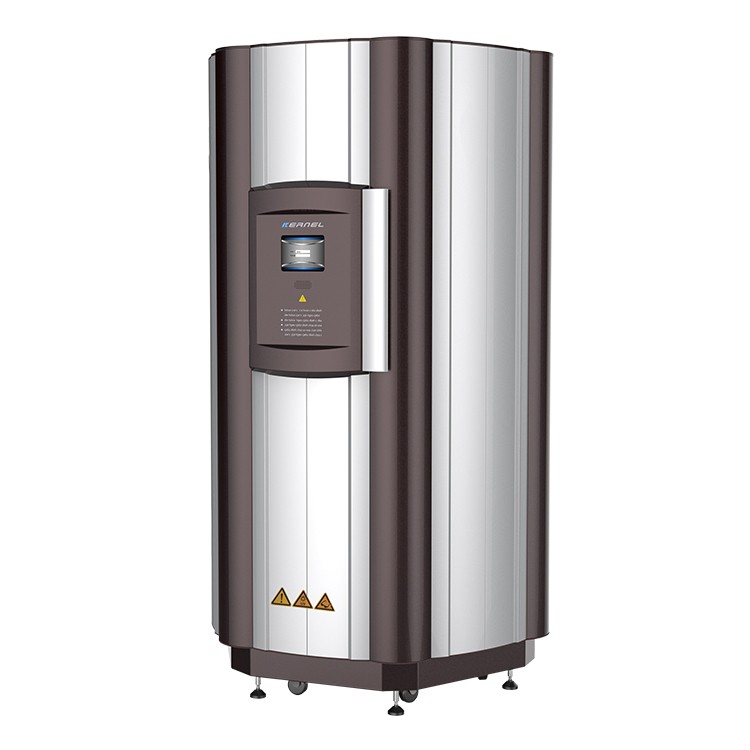
Full-body treatment is carried out in a walk-in cabinet lined with vertical fluorescent or LED lamp arrays. The patient stands inside for a timed exposure – often under a minute early in the course, lengthening as tolerance builds – and the entire skin surface receives a calibrated dose in a single session. This is where UV cabinets do their work, and it is the practical meaning of whole body phototherapy.
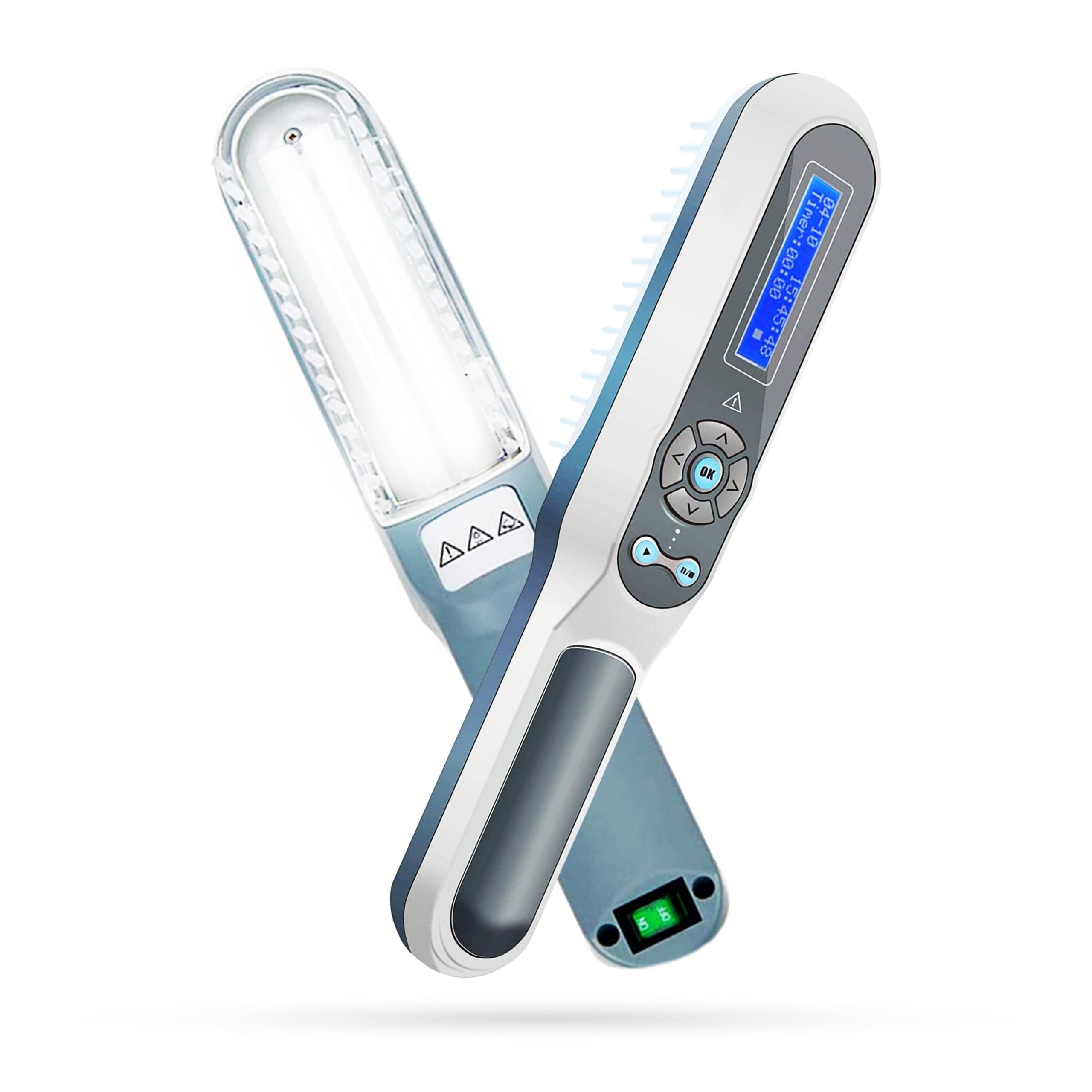
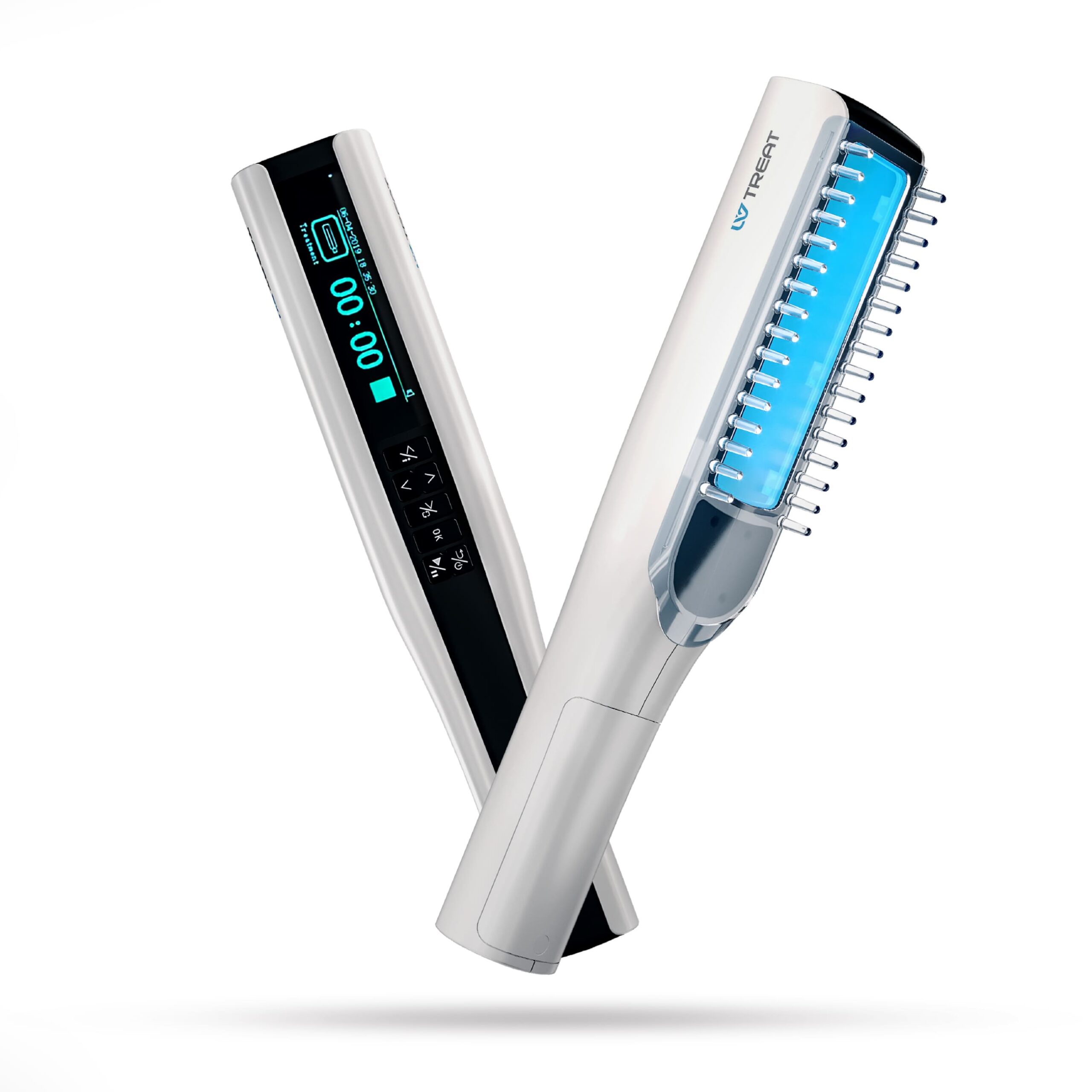
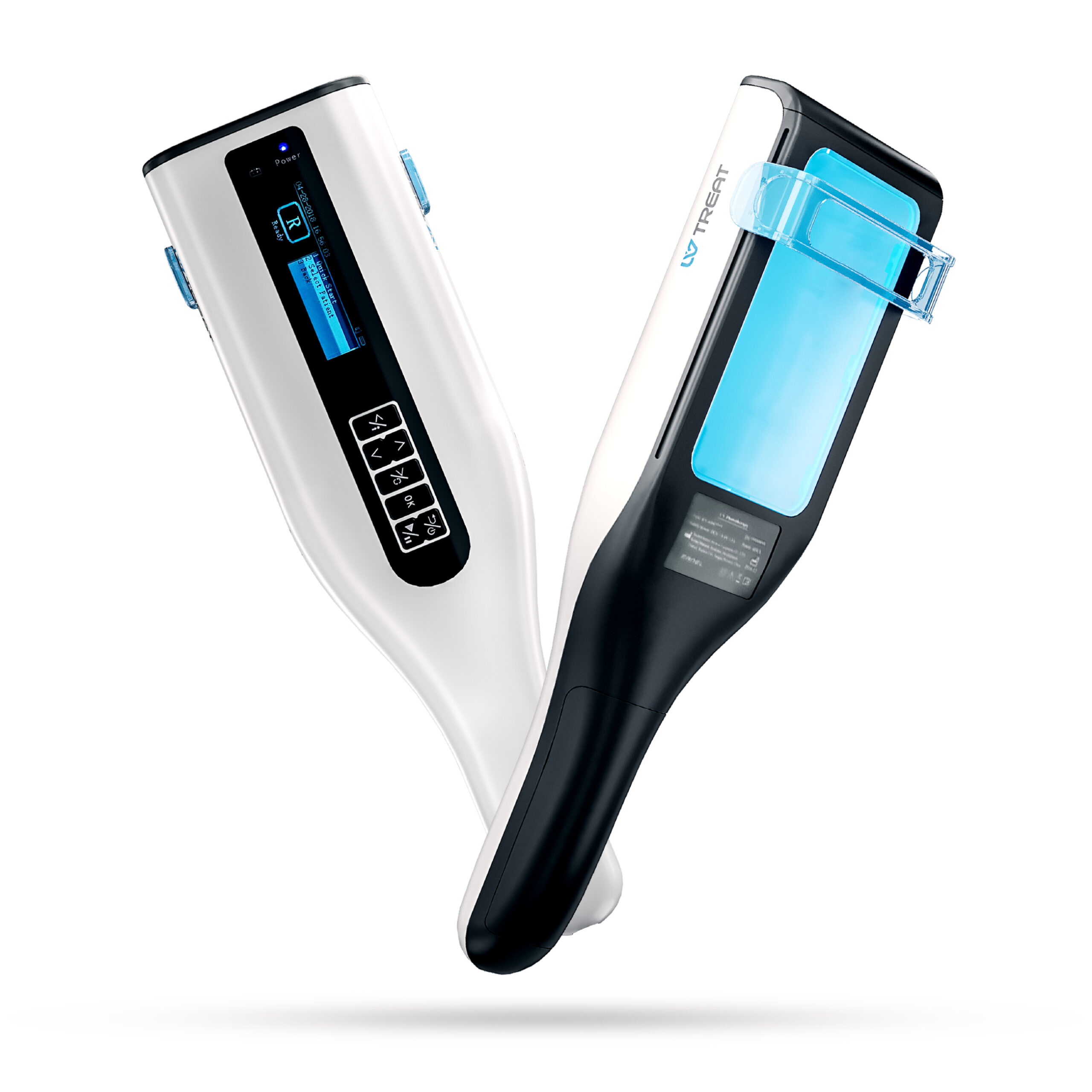
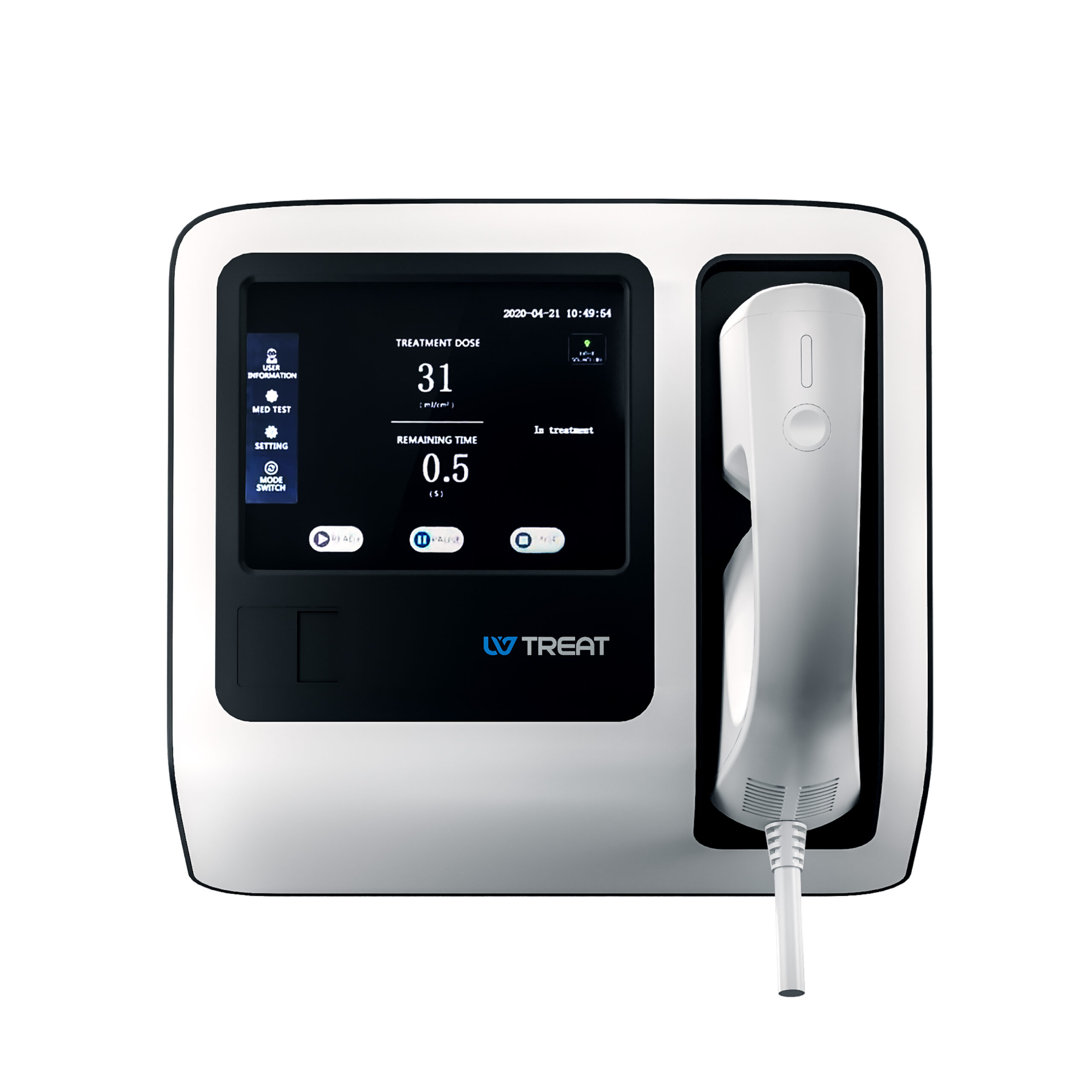
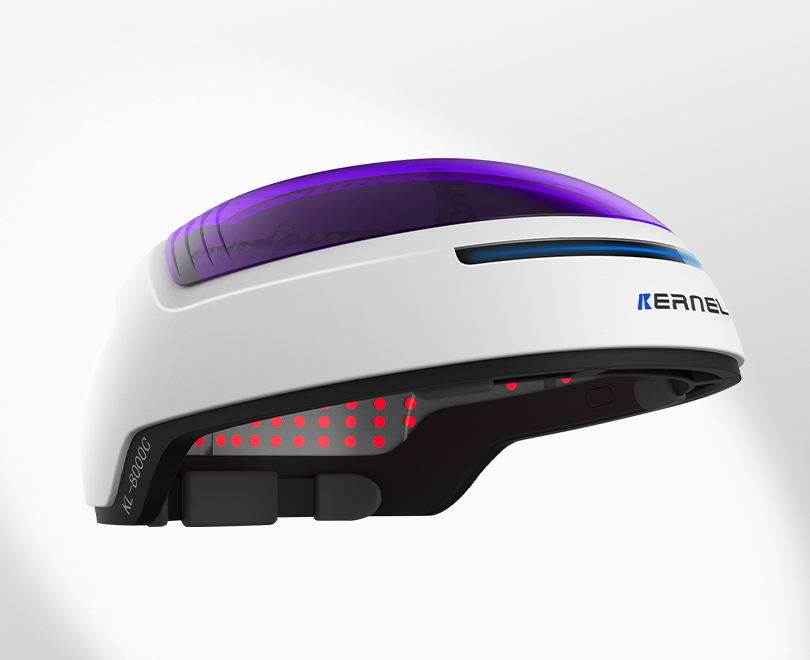
Localized treatment uses smaller devices aimed at specific areas: UVB panels for regional coverage such as the trunk or a limb, handheld units for scalp and small patches, and targeted systems like the 308 nm excimer laser or excimer lamp for individual resistant lesions. The affected skin can be dosed more aggressively because the surrounding healthy skin is shielded.
Both run on a similar rhythm – most protocols call for UVB treatment sessions two to three times a week, with the dose escalated gradually according to the patient’s response and skin type. (1, 2)
When Full-Body UVB Phototherapy May Be Recommended
The clearest indication for whole-body treatment is extent. When is full-body phototherapy recommended? As a rule, when the disease is widespread enough that treating it piece by piece would be impractical or impossibly slow.
Generalized plaque psoriasis is the classic example. Once involvement climbs past roughly ten percent of the body surface – and often well before that, when plaques are scattered across trunk and limbs – a cabinet treats everything in one short exposure. This is the setting most people picture when they think of UVB phototherapy for psoriasis, and the evidence supporting it is substantial: narrowband UVB produces marked clearance in the majority of patients with plaque disease, with response rates that have kept it in frontline guidelines for years. (1, 4)
Extensive vitiligo is the second major indication and UVB phototherapy for vitiligo is one of the best-studied uses of whole-body treatment. When depigmented patches appear across multiple body regions, whole-body narrowband UVB is the recommended first-line phototherapy, and treating the entire surface also helps the new pigment blend more evenly than spot-treating would. (3) Generalized atopic dermatitis is a third: for adults and older children whose eczema covers large areas and resists topical control, UVB treatment for eczema in a full-body cabinet is a well-established option. . (5, 6)
Cabinet treatment is also used for other conditions that involve the whole integument, such as early-stage mycosis fungoides and generalized pruritus. (5, 7) The advantage across all of these is efficiency. A single short exposure treats an area that would take many separate localized sessions to cover, and every region receives the same reproducible dose – which matters for both fairness of response and safety tracking.
When Localized UVB Phototherapy May Be the Better Option
Localized treatment earns its place whenever the disease is confined. If a patient has three plaques and nothing else, putting them in a full cabinet means irradiating a large area of skin for no clinical reason. Restricting the light to the lesions themselves avoids that.
Limited plaque psoriasis is the typical candidate – a handful of stubborn plaques, or disease clustered on the elbows, knees, or scalp. Localized vitiligo fits the same logic: isolated patches, particularly on the face or a single limb, respond well to targeted narrowband UVB or the excimer laser, which can concentrate higher doses on the depigmented skin than a cabinet safely could across the whole body. (3) Hand and foot dermatitis is another strong indication, since these regions are anatomically suited to panel or localized units and often shrug off treatment that works elsewhere.
Targeted delivery has two real advantages. It spares uninvolved skin from cumulative ultraviolet exposure, which matters over a lifetime of intermittent treatment. And because the surrounding skin is protected, resistant lesions can be pushed to higher, faster-acting doses. The excimer approach in particular tends to reach a response in fewer sessions for suitable localized disease. (3)
The limitation is equally plain: localized methods do not scale. Treating widespread disease one region at a time is slow, and chair time adds up quickly once more than a few areas are involved. For anything approaching generalized disease, the cabinet remains the sensible choice.
How Dermatologists Choose the Right Treatment Approach
In practice the decision is rarely made on a single factor. It is a judgment that pulls several threads together.
Diagnosis and disease distribution come first. A precise read on how much skin is involved, and where, usually settles the broad question of cabinet versus targeted device before anything else is considered. Disease severity modifies that – thick, long-standing plaques may warrant the higher doses a targeted system allows, even within otherwise limited disease.
Patient age carries weight. Narrowband UVB has a strong safety record and is used across the age range, including in children and during pregnancy, where its avoidance of systemic drug exposure is a genuine advantage. (1, 2) Younger patients facing decades of potential treatment are also exactly the group in whom sparing healthy skin from unnecessary exposure matters most, which can tilt the choice toward a localized approach when the disease allows it.
Skin phototype guides dosing rather than strategy, but it shapes the whole course: starting doses and escalation are calibrated to how a patient’s skin responds, and misjudging this is the usual cause of treatment burns. Previous response to phototherapy is informative too – a patient who cleared well in a cabinet before is a reasonable candidate to return to one.
Finally, the practical realities. Clinic workflow, appointment length, travel burden, and how many sessions a patient can realistically commit to all feed into the plan. A treatment that works on paper but that the patient cannot attend two or three times a week is not the right treatment. For clinics themselves, the reality that multi-indication phototherapy helps clinics serve a broader patient population – psoriasis, vitiligo, eczema, and more from the same equipment base – increasingly informs how treatment rooms are built out. Alongside all of this sits an obligation to safety: regular phototherapy safety audits, accurate dose records, and cumulative exposure tracking are part of responsible practice, whichever approach is used. (2)
It is also worth stating who should not be treated. Who is a candidate for UVB phototherapy? Most patients with the conditions above are, but there are firm exclusions. Photosensitive disorders such as lupus erythematosus and xeroderma pigmentosum, a personal history of melanoma or significant non-melanoma skin cancer, and current use of photosensitizing medications all count against phototherapy and call for careful individual assessment before any light is prescribed. (1, 2)
Full-Body vs Localized UVB Phototherapy at a Glance
Table 1. Comparison of full-body and localized UVB phototherapy
| Feature | Full-Body UVB Phototherapy | Localized UVB Phototherapy |
| Primary equipment | Walk-in UVB cabinet / booth | UVB panel, handheld unit, 308 nm excimer laser/lamp |
| Area treated | Entire skin surface in one session | Defined lesions only |
| Best suited to | Widespread or generalized disease | Limited, isolated, or resistant lesions |
| Typical indications | Generalized psoriasis, extensive vitiligo, generalized eczema, early mycosis fungoides | Limited plaque psoriasis, localized vitiligo, hand/foot dermatitis, scalp disease |
| Exposure to healthy skin | Unaffected skin is irradiated | Unaffected skin is spared |
| Dosing per lesion | Limited by whole-body tolerance | Higher targeted doses possible |
| Efficiency for large areas | High | Low – impractical for widespread disease |
| Session frequency | Typically 2–3× per week | Typically 2–3× per week |
Choosing the Right Approach for Long-Term Care
Set side by side, the two strategies are complementary rather than competing. Full-body treatment answers the problem of extent – it covers large, scattered, or generalized disease quickly and uniformly. Localized treatment answers the problem of precision – it concentrates light where it is needed and protects the skin that is not. The equipment follows the same split: cabinets exist to treat the whole surface, while panels and targeted devices exist to treat defined areas. One is not an upgrade of the other. They are different tools for different jobs.
This matters over the long run because chronic skin disease is, by definition, a moving target. A patient may begin with generalized psoriasis managed in a cabinet, clear substantially, and then be left with a couple of resistant plaques better handled by a targeted device. The reverse happens too. Treatment that stays fixed while the disease evolves is treatment that eventually underperforms.
The honest answer to “which is better” is that the question is incomplete without the patient in front of you. UVB therapy for skin diseases works best when the coverage strategy is matched to that individual’s diagnosis, disease extent, skin type, and circumstances – and reassessed as those change. Anyone considering phototherapy should have that conversation with a dermatology specialist rather than assuming one format suits every case. Well-run clinics keep both UV cabinets and UVB panels available precisely so the protocol can fit the patient instead of the other way around. Patients managing inflammatory disease can read more about the condition-specific approach in resources on phototherapy for eczema and related topics.
References
- Elmets CA, Lim HW, Stoff B, et al. Joint American Academy of Dermatology–National Psoriasis Foundation guidelines of care for the management and treatment of psoriasis with phototherapy. J Am Acad Dermatol. 2019;81(3):775–804. https://doi.org/10.1016/j.jaad.2019.04.042
- Ling TC, Clayton TH, Crawley J, et al. British Association of Dermatologists and British Photodermatology Group guidelines for the safe and effective use of psoralen–ultraviolet A therapy 2015. Br J Dermatol. 2016;174(1):24–55. https://doi.org/10.1111/bjd.14317
- Mohammad TF, Al-Jamal M, Hamzavi IH, et al. The Vitiligo Working Group recommendations for narrowband ultraviolet B light phototherapy treatment of vitiligo. J Am Acad Dermatol. 2017;76(5):879–888. https://doi.org/10.1016/j.jaad.2016.12.041
- Nast A, Smith C, Spuls PI, et al. EuroGuiDerm guideline on the systemic treatment of psoriasis vulgaris – Part 1: treatment and monitoring recommendations. J Eur Acad Dermatol Venereol. 2020;34(11):2461–2498. https://doi.org/10.1111/jdv.16915
- Sidbury R, Davis DM, Cohen DE, et al. Guidelines of care for the management of atopic dermatitis: section 3. Management and treatment with phototherapy and systemic agents. J Am Acad Dermatol. 2014;71(2):327–349. https://doi.org/10.1016/j.jaad.2014.03.030
- Garritsen FM, Brouwer MW, Limpens J, Spuls PI. Photo(chemo)therapy in the management of atopic dermatitis: an updated systematic review with implications for practice and research. Br J Dermatol. 2014;170(3):501–513. https://doi.org/10.1111/bjd.12645
- Trautinger F, Eder J, Assaf C, et al. European Organisation for Research and Treatment of Cancer consensus recommendations for the treatment of mycosis fungoides/Sézary syndrome – update 2017. Eur J Cancer. 2017;77:57–74. https://doi.org/10.1016/j.ejca.2017.02.027